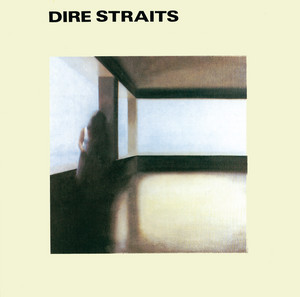
Really loved Mark and Knopfler guitars and John Issley basslines are pretty underrated. A Timeless classic that has his own unique sound, specially if you consider the fact that includes Sultans of Swing which has probably one of the greatest solos ever recorded.
Many people comes to this record looking for Dreams and thinking Fleetwood Mac it's a One Hit Wonder or that besides this song and Landslide they don't have much to offer. The truth is, this record as a whole is a nice gateway to rock and roll if you let go yourself by the mesmerizing and soft Adult Oriented Rock sound that can be also found in bands like Chicago, Boston or REO Speedwagon that were paving the way to the adult contemporary sound that would blast radio stations at the time.
Fleetwood don't deny their blues and folk beginnings here but they actually give it a more pop oriented production, with Christine and Stevie voices so you can actually see why it's a record that divide their fans. Either way you love it or you prefer their earlier days when they were more blues rock and less keyboard.
Definitely a record everyone should listen to. Easy access to the band and to rock and roll history itself.
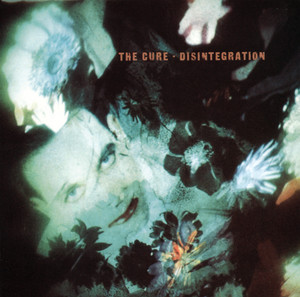
A record with basically no skips. An exceptional masterpiece that brings you a big breeze of joyful melancholy with the mellow and charming lyrics and voice from Robert Smith and the tight basslines from Simon Gallup. A Seminal piece in new-wave, post punk, and goth rock that everyone involved in goth subculture, from elders to babybats have craved and listened to.
The kind of album you look for if you are looking for somethink dark but not gritty, sad but not grievous. It's romantic, nostalgic, special, and it will probably bring you a lot of memories while you listen to, whenever it's your first listen or the number 300th in a row.
An anthology of songs that defined a whole subculture, and for many persons also a whole generation.
Worldbeat. There is only a word that can describe such a perfect and beautiful album like this one, and it's that exact word.
Many people will relate more to Peter Gabriel from his carrer as vocalist on Genesis but this is the album from his solo catalogue that makes you realize he was going always for more.
Heavily influenced by Traditional brazilian and African music, and with songs that ranges from Sledgehammer that introduces the use of a Shakuhachi, the japanese bamboo flute and the drums by Manu Katche, the famous french-ivorian drummer to the iconic duet with Kate Bush on Don't Give Up and including a love song like In Your Eyes which introduces the Senegalese musician Youssouf N'Dior singing on his native language, Wolof you can tell exactly what Mr. Gabriel tries to bring to the table which such a variety of sounds and this eclectic mix of cultures.
The fact that he manages to produce such a record, so easy to listen with a well crafted convergence of influences from all around the globe makes it a gem that everyone should listen not only as an introduction to his carreer but to world music itself.
Back in the day, Detroit had Techno, Chicago had House, Bristol and Manchester had Big Beat and Big Beat as a genre has his own way of being described: Woodstock 99. It wasn't just The Chemical Brothers headlining night two while Limp Bizkit, Rage Against The Machine and Metallica were on the other side of the festival, releasing one of the most furious, destructive, and significant moments in music history. Fatboy Slim himself also lived terrified moments that same Saturday when a group of people stole a van and started to driving it inside the Rave Tent after crashing with it, forcing him to interrupt and subsequently abandon his set.
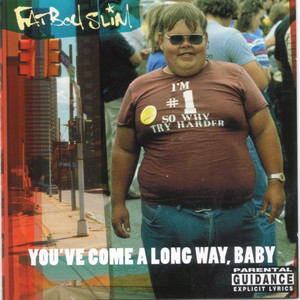
One year prior to this event he had released this record. An album that paved the way to a generation of electronic music heavily inspired on breakbeats and house. Alongside The Prodigy, and The Crystal Method coming from North America, Fatboy Slim managed to make a name for himself on a select group of artists that were releasing banger after banger consolidating rave culture as we known it today and this collection of songs it's not exception to that rule.
The fact that 4 of his most recognized singles are on the first 5 songs of this album it was indeed a warning: I don't came to make people dance. I came to conquer.
And like Julius Caesar himself, he eventually came in, and with songs like "Right Here, Right Now" as an opening track followed by "The Rockafeller Skank" he eventually conquered us all. Electronic Music and rave culture was never the same after this record, and specially, after that Woodstock 99 night.
Many things have been written about this record in particular. But looking back to it, there it's still something special about it 15 years later. The truth it is indeed, that Adele knew how to capture the young angst and bitterness that comes after a breakup in such a special way that no matter how much has passed by, anthems like Rolling in The Deep, Rumour Has It and Someone Like You still makes it into radio and still makes it into the memory of a lot of fans.
She it's certainly not the same young adult she was back then, but fortunately for her, she was fortunate enough to find out this earlier in her carreer some of the heavyweights in music industry and wrote these collection of songs with some of the greatest producers like Rick Rubin, Ryan Tedder from One Republic, and even Dan Wilson from Semisonic.
The whole crew brought her massively talented heart and spirit and gave her voice a special place that has kept evolving through the years. Heavily influenced by folk and Motown Soul but also in country and blues the direction of the record it's absolutely different to his predecesor 19, Yet the arrangements are so well crafted that even the version from Lovesong (originally by The Cure) doesn't seem to be out of place and has its own way in this anthology of sounds that feels more like a balm for the soul rather than a pop album.
Probably if it weren't for that breakup who knows where this album would be. Maybe lost in time and space. Fortunately for us, Adele also evolved as a person, and the maturity she gained with this record has been a crucial part for her carreer to the point that, just like all of these melodies, she has aged like a fine wine and 15 years later we still keep singing these songs like they are part of our own deepest sensations.
The name of Klaus Dinger probably doesn't ring a bell to many persons around the world. But when you realize it is actually the mastermind of one of the most memorable and influential drum rhythm patterns that has ever existed in rock and roll, everything starts to make sense.
the "Motorik" wasn't just a drum pattern. It tried to reflect and show how factories in germany were sounding back in the day. It was a Germany that was trying to lift not only his economy but also his own image to outsiders after the World War II and the horryfing effects it had in both his people and the rest of the world.
Krautrock in Berlin and Dusseldorf emerged as a way of saying "we are different now" and both cities were seemingly trying to really point it out and when Klaus himself went to found Kraftwerk with Florian Schneider, people began to take seriously a new movement inspired by the will of progress and envisioning a new future. It was a whole nation trying to show to the world that they changed. Or at least, they were making an attempt.
Klaus Dinger never survived the ambitions of the rest of his partners and he moved on from Kraftwerk after a few shows. Kraftwerk eventually made their own path to become the electronic pionneers we all known today but when it comes to NEU! and specially when it comes to this NEU! 75, their third record, you can tell why Klaus parted ways with his previous band.
While the first part of the record with songs like Isi and Seeland are influenced by ambient and even some noisy sound on keyboards, the side two it is considered by many to be one of the precursors on punk music since the Motorik drum pattern and the sharp tone of guitars can be heard in all of it's glory in "Hero" and "E. Musik". ¿A proto-punk album? To many people, indeed it is.
Sadly the past came knocking the door and NEU! would eventually disband after musical differences between both Dinger brothers Klau and Thomas, and the other creative side, Michael Rother who wanted to pursue ambient and a psychedelic side in contrast with the agression, fast paced rock music.
The result of both musical directions it is manifested in this album in such a dramatic way, that these songs actually have their own ability of merging you into this musical tension that co-existed between them with every track.
It is not a good record, but it isn't also a bad one. It is just a record. One that proves that sometimes when you are trying to leave the memories from a war they come back to haunt you in ways you could never expect.
Unconventional, eclectic, astonishing. These are 3 words specifically made to describe a record that was born after the frustration from his mixtape Nostalgia, Ultra.
Frank Ocean wiped out the entire structure and gave these songs a whole new embodiment bringing into the table a cozy, flawless and mellow sound that has his roots in R&B and neo-soul.
With Pharrell Williams as one of the producers, and featuring collaborations with Andre 3000, Earl Sweatshirt, Tyler The Creator, and guitarist John Mayer, The californian debuted at number 2 in Billboard 200 making a name for himself with this debut album that still today surprises many people due to to the influences that ranged from Sly and The Family Stone, Marvin Gaye, Stevie Wonder and even Pink Floyd and Jimi Hendrix.
From the first track you can tell that these amount of great artists served as an inspiration for an album that even when more than a decade has passed by, we still need to talk about as one of the most amazing pieces in contemporary R&B. Relying also on noise and film dialogues that function as interludes and with lyrics about Ocean's sexuality, you can perceive that there is something that feels somehow erotic and naughty in this anthology of songs.
Definitely a collection of sounds you don't wanna miss out if you are new to the genre, or if you wanna explore something outside the standards.
Pain, disgrace, the absolution despair that comes after the romance it's gone. There is a reason why Bjork said back in the day ""The only way I could deal with that was to start writing for strings; I decided to become a violin nerd and arrange everything for 15 strings and take a step further." and when you listen to this record, those three words that appears at the beginning, Pain, disgrace and absolution, are assumed by your body, mind and soul in a way that makes you feel them completely.
Many people will ask why, or how can be that possible and the truth it's almost a decade later, Vulnicura it's still one of the most greatest records the Islandic Singer has ever released. Conceived after her breakup with contemporary artist Matthew Barny, Bjork decided to sit down next to the famous LGBTQ+ venezuelan producer Arca after his managed sent her one of her mixtapes.
The whole record was designed and made in almost two weeks, but despite the fast development, it is indeed a release designed to make you feel a chaotic nostalgia, through the electronic beats and the string arrangments made by both.
With songs like Stonemilker as the opener or the astonishing Black Lake this one its Definitely a work that has become in a unique piece of art and worth the listen despite the sorrow it may bring.
¿What could happen when you put on a recording studio a New York band with an australian producer that it's the nearest thing you can find for a dictator, screaming them "You are gonna make a fantastic record, and that means you are gonna have to play better!"?
The truth it's everyone in Blondie minus Debbie Harry and Chris Stern disliked each other. in words of Mike Chapman, the producer we are talking about here "they weren't the greatest musicians they had a juvenile approach to life, and they were tough. They just wanted to have fun"
Mike Chapman encouraged Chris Stern to focus on writing songs instead of playing guitar and spent a lot of time fixing many aspects of the album, like voices or some basslines from Nigel Harrison who threw a synthetizer at him during a session.
The approach of the producer to the band was bsically expecting them nothing more than perfection and with singles like One Way or Another, Picture This, Heart of Glass and a version of Hanging by The Telephone (originally by The Nerves) as the opener, you can tell Parallel Lines it's probably one of the most distinguished albums in new wave and power pop and it's indeed really close to perfection.
The tension exploded so much during this record and made Blondie so mature in terms of how they make music, that they actually kept working with Chapman during the next 4 studio albums, before the breakup in 1987. Stein and Harry reformed Blondie in 1996 but the damage was done.
A generation of frontwomans including Shirley Manson from Garbage and Gewn Stefani from No Doubt, were taking what this record did to a whole new level.
Parallel Lines still remains as a masterclass not only on how to deal with tensions and creave frustration but also, as the permanent reminder that womans also have their own space to shine... Even when there is a man screaming at the other side of the screen. After all, Debbie herself said it: "I only knew him because of his reputation. Our aminosity came in because he was L.A and we were New York"
Maybe this is the best thing that can happen in music. To see how differences can come into play to make us feel more connected with ourselves. There are albums made for that and this is, probably without a doubt one of them.
It is 1994. A massive success it's going on Trent Reznor life, after releasing his first album Pretty Hate Machine that it's considered one of the greatest debuts in music history.
What he decides for the next one? Going insane.
Literally, going insane. Downward Spiral it's a concept album it's a chronicle about the self destruction of a misantrophic protagonist. Through the songs we discover how he goes into a state of madness, isolation, alienation, dehumanization and eventually suicide after killing the idea of a god in his mind.
It's a metaphorical Downward Spiral that explores themes like drugs, sex, power, depression and a complete lose of control.
The tour for the record was completely chaotic as the album itself. Dark lights, almost no ilumination with the members of the band attacking themselves, destroying instruments after the set. Woodstock 94 saw the peak of this with Trent Reznor almost completely covered in mud (same as Green Day would do it a date later on the same festival) going wild at the crowd.
If you consider the fact that he actually moved to the house were Charles Manson and his group killed Sharon Tate to record the album in a home studio he called "Le Pig" you can tell where the caos came from, and why Reznor finally decided to go instead of choosing another place. His constant need for isolation, struggling with depression and addictions, it is not only just a semi-autobiograph, it's allegorical, deep and raw.
Samples, distorsions, sound collages, a massive explosion of industrial rock, techno, heavy metal and electronic. It is A record that was written to remember how cruel we are as a society sometimes, how absurd we are as humans and that everything can become nothing in just the blink of an eye.