Of all the bands to become megastars, Pink Floyd has to be the oddest. Long songs, often dealing with mental anguish, cold delivery from singers and little roll to their rock. I have to tip my cap to 1970s listeners, their drugs and/or stereo systems for making Pink Floyd a massive band despite its experimental and adventuresome approach to music. Some of the coldness and lack of a groove leads parts fo "Wish You Were Here" to become ponderous, most notably "Welcome to the Machine." I find that song to be chilling in many ways, even though like "Have a Cigar" it focuses on getting caught in the maws of the record industry. That theme pales in comparison to the heartbreak lyrically and sonically of the title track and the epic two part suite "Shine on You Crazy Diamond." The numerous graceful touches of multiple players makes the instrumental passages to "Diamond" quite effective. Having listened to a few Floyd albums recently, I am realizing their great use of guest back-up vocalists. They always add a needed note of soul to the technical sheen. And in closing, I always find the "two lost souls swimming in a fish bowl in "Wish You Were Here" moving.
Rating Distribution
Rating Timeline
Taste Profile
Breakdown
By Genre
Top Styles
By Decade
By Origin
Albums
You Love More Than Most
| Album | You | Global | Diff |
|---|---|---|---|
|
There's A Riot Goin' On
Sly & The Family Stone
|
5 | 3.29 | +1.71 |
|
Music From Big Pink
The Band
|
5 | 3.35 | +1.65 |
|
It Takes A Nation Of Millions To Hold Us Back
Public Enemy
|
5 | 3.36 | +1.64 |
|
Surrealistic Pillow
Jefferson Airplane
|
5 | 3.51 | +1.49 |
|
Moondance
Van Morrison
|
5 | 3.68 | +1.32 |
|
Dr. Octagonecologyst
Dr. Octagon
|
4 | 2.69 | +1.31 |
|
Talking Book
Stevie Wonder
|
5 | 3.71 | +1.29 |
|
Let It Bleed
The Rolling Stones
|
5 | 3.8 | +1.2 |
|
In Rainbows
Radiohead
|
5 | 3.86 | +1.14 |
|
Innervisions
Stevie Wonder
|
5 | 3.87 | +1.13 |
You Love Less Than Most
| Album | You | Global | Diff |
|---|---|---|---|
|
Slippery When Wet
Bon Jovi
|
1 | 3.29 | -2.29 |
|
Vento De Maio
Elis Regina
|
1 | 3.03 | -2.03 |
|
Hot Fuss
The Killers
|
2 | 3.73 | -1.73 |
|
Live At The Regal
B.B. King
|
2 | 3.66 | -1.66 |
|
Hotel California
Eagles
|
2 | 3.58 | -1.58 |
|
Arrival
ABBA
|
2 | 3.52 | -1.52 |
|
That's The Way Of The World
Earth, Wind & Fire
|
2 | 3.5 | -1.5 |
|
Bossanova
Pixies
|
2 | 3.37 | -1.37 |
|
If I Should Fall From Grace With God
The Pogues
|
2 | 3.32 | -1.32 |
|
Bad Company
Bad Company
|
2 | 3.25 | -1.25 |
Artists
Favorites
| Artist | Albums | Average |
|---|---|---|
| Beatles | 2 | 5 |
| Stevie Wonder | 2 | 5 |
5-Star Albums (14)
View Album Wall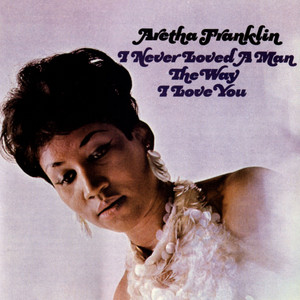





Popular Reviews
Live albums seem like cheating. I guess the point of the list is essential records, however issued. In terms of the "art of records,” it seems like only studio should count, but that is a debate for another time. I actually prefer their studio albums as the cleaner sound allows me to fully enjoy their ferocious assault. Live things get a bit muddled. Plus, unlike most bands, there is no way that Motorhead could play their material any faster, louder and pounding than the studio versions. You do get most of their best material from the first records. The band is incredibly tight and as stripped down to the bones as any outfit in rock. They play with Ramones like-intensity, but with the chops of a prog rock band. These guys have layers even if they reduce rock to its most basic qualities. The absolute mayhem in the best sense of the word that the music presents cannot be overstated. A glorious, controlled racket.
1-Star Albums (2)


All Ratings
Thought less of it than I remembered. A few of the songs combined psychedelic sounds, melody and child-like sentiment that can be poignant. Too many of them fell short musically. Prefer other records of they've made.
I tried to think of an "all-time classic" where the ballads are by far the best songs. I guess Blue comes to my mind. "Caroline, No" and especially "God Only Knows", plus the experimentation with percussion sounds make it worthy of a classic. However, I cannot say I am moved by the other songs. It is chamber pop as for me, nothing swings, grooves or rocks to my ears.
King Kunta and i, not surprisingly, were my top tracks. Absolutely killer grooves, although the latter snags its riff from the Isley Brothers "Who's That Lady." Multi-tasking for much of the album, but other tracks did not grab me that much. I missed the joke and commentary, because I am old and white, but is it original to offer lyrics in two songs, at least, about your dick? One day I will listen with a lyric sheet, which might help me get the album's classic status.
Of all the bands to become megastars, Pink Floyd has to be the oddest. Long songs, often dealing with mental anguish, cold delivery from singers and little roll to their rock. I have to tip my cap to 1970s listeners, their drugs and/or stereo systems for making Pink Floyd a massive band despite its experimental and adventuresome approach to music. Some of the coldness and lack of a groove leads parts fo "Wish You Were Here" to become ponderous, most notably "Welcome to the Machine." I find that song to be chilling in many ways, even though like "Have a Cigar" it focuses on getting caught in the maws of the record industry. That theme pales in comparison to the heartbreak lyrically and sonically of the title track and the epic two part suite "Shine on You Crazy Diamond." The numerous graceful touches of multiple players makes the instrumental passages to "Diamond" quite effective. Having listened to a few Floyd albums recently, I am realizing their great use of guest back-up vocalists. They always add a needed note of soul to the technical sheen. And in closing, I always find the "two lost souls swimming in a fish bowl in "Wish You Were Here" moving.
What keeps this album from perfection? Like many soul records of the 1960s, Franklin was compelled to throw in cover of R&B standards like "Good Times", which while pleasing are far from the high stakes battles in the ballads, and lack the rocket fuel of the albums justly famous upbeat numbers. When the oft-recorded "standards" match Franklin's talent , such as "Drown in My Own Tears" and "A Change Is Gonna Come", she excels at carving out unique and personalized versions. With small criticism out of the way, this album falls squarely in my top 20 of all-time, and given the day cracks the top 10. Praising Aretha's singing is a waste of space as you will just end up stating that she was the greatest of all-time; case closed. Having just praised the use of back-up vocals on other records, it must be said that Franklin's sisters, Erma and Carolyn, and Cissy Houston provide the most famous support in pop music history. It takes a singer of Aretha's caliber to match, let alone, outshine them. The band has too many stellar moments to name here. First, and foremost, Aretha's piano playing looms large, pushing the tracks in a harder direction, which allows Spooner Oldham's electric piano to become the groovy, dark element that the songs require. The arrangements keep the horns from becoming too intrusive as they color rather than overwhelm most tunes, with King Curtis' solo on "Respect" being another reason it ranks among the greatest songs ever recorded. Like all superb records, the deeper cuts raise "I Never Loved a Man" to its exalted status. While not completely unknown, the title track and "Dr. Feelgood" best exhibit the combination of Franklin's piano playing and singing, boosted by Oldham's and the back-up singers' contributions. "Save Me" somehow never got the attention it deserved. Nearly as funky as Franklin's later monster groove song, "Rock Steady", it is a quintessential piece of stripped down R&B. The rhythm section sticks to the simple chords in relentless fashion pushing Franklin, and just her, no back-up singers, to epic heights. The lyrics lack the poetry of "Respect" and "Natural Woman," but Franklin sends them soaring as she pulls out her full arsenal of vocal skills to challenge the gritty instrumental underneath her.
It would be harsh to call my two recent listens to Aladdin Sane disappointing, but the album did not stand out as much as I remembered. Part of the problem is that I love the versions on Davide Live at the Tower for many of these songs. Some people malign that records, but to me tracks like "Cracked Actor" and "Watch That Man" leap off the record whereas they are merely good on "Aladdin Sane." Also, except for the closing track "Lady Grinning Soul", I do not find the ballads and mid-tempo songs up to Bowie's usual standards. Lack the heart rendering, theatrical and tenderness of his best work. But it is still a damn fine record. "Jean Genie" can compete with the best of Bowie's hard rock stompers. I might actually prefer his version of "Let's Spend the Night Together" to the Stones. The title song seems like a cross between Ziggy and the Sigma Sound era Bowie about to happen. The band excels on "Panic in Detroit" as the bass pulses while the drums reach into a more expressive direction than the straight rock of the rest of the record. It's tough being great. Bar set high, and this record almost cleared it.
A bit surprising and disappointing that as a rock fan who was 26 when this album first came out that I do not think I gave it a full listen until now. Unfair to develop views based on a few listens of hit songs and bits of what I read. Will I go back and play "Dookie" on my own; probably not. This type of rock does not hold interest for me now. Of the three big hits, I genuinely enjoy "Longview," but find "Basket Case" and "When I Come Around" unappealing. That fact alone might limit further plays. Some of the unfamiliar tracks were solid, such as the first three songs and "Welcome to Paradise." They slammed power chords in a tuneful manner. "Pulling Teeth" and "She" featured some variety in vocal, and putting the bass more in the front than Billie Joe Armstrong's Who-Ramones-Jam guitar. Armstrong certainly has a way with melody, which allows the bass and quite often the drums to flourish. Or do the bass and drums lift up his songs? Maybe with more listens (I expect American Idiot will make an appearance on this list), I will be able to move past my dislike of Armstrong's vocals. One day, Thom Yorke's vocals stopped bothering me, and Radiohead became a great band to my ears. It never happened with Morrissey. Like The Foo Fighters and White Stripes, Green Day has helped breath a little life into the decrepit 30 year decline of the rock and roll corpse. I respect them for that contribution.
Jeff Beck “Truth” THREE AND A HALF STARS I have had an up and down relationship with this album. Started out as unimpressed, but then felt like Beck’s guitar and the hard rock template it established made the album worthy of the hefty reappraisal it has received over the last decade. With this last listen and others recently, I find myself leaning towards my original rating of the album. Like early Led Zeppelin, “Truth” is often at the mercy of its cover selections. Personally, I do not find even the original blues versions of “Rock Me Baby” and “You Shook Me” all that interesting. As songs they scratch the surface of best blues earthiness, and do not come close to the menace, bawdy rebel fun and declaratory power of better songs. In the hands of countless rock bands who covered them, they border on dull. The same can be said for “Greensleeves” and “Ol Man River.” The Rod Stewart who was about to appear on The Faces records and his own solo albums is not here on this record. He has a pleasing rasp, but can’t seem to quite get to the heart of songs like he would just a few years later. Ronnie Wood on bass and Micky Waller on drums are capable, but there was not a single moment where they stood out. I am sure other listeners will disagree. A swirling cover of “Shapes of Things”, the endless fascinating, what might have been sounds of “Beck’s Bolero” and the demon snarl of “Ain’t Superstitious” save the record. Beck’s guitar on the latter may be the rudest belch on any rock record. Few instrumentalists in rock can create a sound that burrows into your brain. Notice a sound, not a riff. Unlike the large pantheon of great British 1960s guitar players, Beck lacked the ability to compose riffs that carried songs. This album and its follow-up exposed those limitations. With Rod and Woody not yet writing endearing tracks that they brought to the Faces, The Jeff Beck Group comes up short in my eyes.
This album has earned high praise for 60 years from a variety of critics. It is a pleasing album with even the downtrodden songs featuring a humorous take on the character's plight. When a song deals with immoral behavior, King offers jovial advice to the audience. Adding some grit, King tosses off some stinging, precise single-note runs that helped to put his name at the top of many bluesman lists. Having heard this album, a later live one at "Cook County Jail" and seeing King in person, the above features are all too familiar. King played show after show, and the routine barely seems to have altered, at least in this period, if ever. Like a blues Louis Armstrong, King played a role, perhaps his true persona, over and over for literally 1,000s of shows. It has some fine qualities, but is middle of the road. Sam Cooke took similar criticism for this bland pop when he issued a "Live at the Copa." After his death, "Live at the Harlem Square" came out featuring Cooke cutting loose to show true soul and gospel powers. Maybe a recording exists of King in similar fashion, and I have missed it. It could be that King's slightly less urban take on the jump blues of Louis Jordan and T-Bone Walker is not my cup of tea. The "Cook County" album has more moving moments in it compared to the nightclub stylings and banter here. My apologies to a legend, but thumbs down.
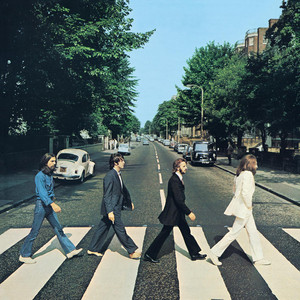
The Beatles - “Abbey Road” FIVE STARS After hearing this record literally my entire life, the most recent listen brought two firsts as I used headphones and streamed it. Both may have helped bring out some new qualities on my 726th listen to “Abbey Road.” I have always felt it is the most produced Beatles’ record. It sounds like a different era of recording compared to their last two records, let alone “Meet the Beatles.” At times it drifts into overproduction as the songs become too manufactured and depersonalized. However, the headphones also brought out their greatness as studio musicians and craftsmen. The more obvious ones like Ringo’s drumming on “Come Together” and “The End,” as well as how he keeps “Here Comes the Sun” from becoming too wimpy. As usual in my more recent Beatles’ listening, Paul stands out with slinky electric piano on “Come Together” and numerous songs with his bass counterpoints. The latter almost became too busy as I honed in on it. Lastly, I always had to flip the record after the abrupt end to “I Want You.” I enjoyed how “Here Comes the Sun” quickly appeared, well, kind of like its title. Hard to give it anything, but the highest rating when an album starts with “Come Together” and “Something.” The medley section has so many moments that stand out. One last “yeah, yeah, yeah” in “Polythene Pam.” John harkens back to a bit of psychedelia with “Because” and “Sun King.” The amazing segue from “Pam” to “She Came in Through the Bathroom Window”, with similar seemlessness between the final four songs of the medley. Nearly every song on the album could be a children’s song. Lessons abound about behavior, carrying burden and positivity. Mr. Mustard, Pam, Maxwell and all of “Octopus Garden” could come from Roald Dahl or Maurice Sendak. The child-like aspect can be both endearing and annoying, helping to make “Abbey Road” only my 6th-7th favorite Beatles album. The first side drops quite a bit after the opening two songs. Paring down both “Oh, Darling” and “She’s So Heavy” would help. For all the doom/stoner rock forerunner of “Heavy” it usually leaves me like many of Led Zeppelin’s 7-10 minutes blues numbers: let’s get this over with boys. It is an album made by the greatest band in the world when they had honed all of their skills to the highest professional level. Those skills make it a near perfect masterpiece.
Justice: “The Cross” THREE STARS * I wonder why out of the 1,000s of electronic albums this one made the list. Only the 11th album on our listening expedition, perhaps another two dozen of the genre await. Since I am not an expert on the subject, and I did not explore any background to the group or record, there could be groundbreaking qualities that I missed. This 2007 effort is certainly a fine one with an interesting mix of qualities. “Phantom Part I and II” have a disco funk quality that livens up the record. Those two give way to “Valentine”, which has a great piano part. The opening track, “Genesis”, immediately grabbed my attention with an insistent bass line. The record also included some noise elements that seized my attention, although not always in the best manner. At times they tossed vocal urging and messages like the beginning of “Tthhee Ppaarrttyy” that I found more distracting than useful. It is easy to gloss over impressive segments of instrumental music. Without vocals, and often clear definitions of different songs, I can fade in and out as a listener. Is there enough to this record and others to keep me listening for an entire record? File away to come back for another session? This one definitely qualifies, but would it have done so without the artificial requirements of the 1,001 albums project?
It took three disjointed listens of this album for it to land with me. Drum loops and bass lines would grab me. Next, Dr. Octagon (Kool Keith) would be reviewing his latest patient in gross out fashion as he seems to specialize in medical issues that are not discussed in polite company. He shifts gears to visit the outer planets in an updated/forerunner version of Afrofuturism. The snippets were amusing and striking, and after bearing down a bit my pleasure rose. The rollicking organ driven “Earth People” licks off a three song streak that sent me bouncing through my empty classroom on a Monday morning. His Tracy Morgan style raps and vocals were endearing in a drunk, crazy Uncle manner. Aside from the anatomy lessons, Kool Keith references a bevy of fellow musicians ranging from the Grateful Dead to Kurt Cobain to repeating the chorus of Christopher Cross’ “Sailing.” Those links are immediately followed with lyrics about enzymes, eggs, LA nights and robots. It reminds me of R.E.M.’s “It’s the End of the World.” Definitely a word salad to enjoy. Unlike a comedy record, I believe Dr. Octagonecolgyst will get better with future listens. I’ll pick up on more of the jokes and musical references. Kool Keith has created an enormous collage that will reward multiple looks.
There are multiple ways I could assess this legendary record. The drug-filled circumstances of its creation that led to Sly Stone’s one-man band effort. The combination of a murky production and technological firsts with Sly’s use of drum machines. I’ll go with the stark turn of attitude that marked the album. If people know the band it is from their endearingly upbeat, huge beat filled songs that represented the apex of late 1960s hopefulness and oneness through music. Lyrics carried a message that would suit wokefulness of any generation. They would not seem out of place on “Sesame Street.” And then this record. Bruce Springsteen’s “Nebraska” came to mind while listening. The master of Wall of Sound rock who found hope in pulling out of dead end towns in a series of American muscle cars, dropped a record of murderers, ne'er-do-wells and their kin. Set to only an acoustic guitar and harmonica on a tape recorder, “Nebraska” offered a bleak assessment of the familiar characters in Springsteen’s world. But even that album closed with “Reason to Believe.” This record neither plunges to depths of “Nebraska”, lyrically or musically, but nor does it offer the bonds and shreds of hope that occasionally make their way through Bruce’s darkness. “Luv” must meet “Haight.” The two brothers in “Family Affair”, well at least they both love Mom. It’s all murky and unclear as Sly can barely raise his voice. He is reduced to sore throat whispers and croaking. When he attempts an actual vocal, the high notes crack. Only rarely do we get the enchanting back and forth vocals between the band members that marked their earlier work. Sly twice slows the album to an extended crawl with "Africa Talks to You 'The Asphalt Jungle'" and “Thank You For Talking to Me Africa.” The keyboards jab in and out. The guitars refuse to play hard rock and James Brown style scratching. It is a challenging record. Like “Nebraska” and “Astral Weeks” from Van Morrison, “There’s a Riot Goin’ On” gains greatness in subtle fashion. Its originality and daringness do not jump out due to the loss of blockbuster songs, but repeated listens bring out those qualities. Sly can still write a groove, he’s just turned the knob down. His lyrics are forthright, self-lacerating and all too accurate for the era. It is an unbearably sad record as Sly and whatever hope one associates with the 1960s disappear in a desperate, bedroom album.
When I saw “Wild Gift” as the X album I was a bit surprised as I am more familiar with “Los Angeles” and “Under the Big Black Sun.” I thought those two were seen as the “classics” for X. Who knows maybe all three will end up on this list, but I wholeheartedly support including “Wild Gift.” The songs seem tighter and more varied than my memory of other X records. (I reserve the right to change my opinion with relisten of the two albums above.) The classic X combination of punk-a-billy mixed with the Exene and John Doe combo voices stands out on “White Girl”, “Once Over Twice” and my favorite track “In This House I Call Home.” They have the familiarity of the best duet teams, which helps their short story observations stand out. The unexpected small touches raised the bar for the album. Even a straight rockabilly tune “Beyond and Back” gets pushed forward due to D.J. Bonebrake’s drumming. The same holds true for straight ahead punk smashers like “We’re Desperate.” Better still was the Talking Heads rhythms and Byrne style vocals that opened “Adult Books” that caught me off guard almost as much as the pure heavy metal riffs in “Adult Bookstore.” I will bet that John Doe and Exene’s singing comes up short for many people. It requires multiple listens to get used to the shouting, not quite perfect pitch shouting. They are not a pleasing sound to my ears, or stereotypically “fun”, but like the rest of the groups they fit the songs. For supposed punks, X knew how to compose, play and record great tunes.
Going to admit that it was difficult to assess this record. I could only find a series of videos on YouTube, which meant I needed to check for the song titles. Shame on me: I failed to seek out the names in my two listens. One other failure on my part was not listening close enough to understand if there was a theme to "Tank Battles." I assumed that the title and her German background meant some sort of commentary on war, but I cannot cite a lyric to point in any direction. My simplistic take is that the album echoes the German cabaret singers as well as Marianne Faithful's updated version of that style from "Broken English." Unlike that record, I did not hear anything too radical in Krause's take on the traditional approach. Her voice had enough gravel in it, and the music itself had the swing menace, or menacing swing of the Brecht-Weill catalog. My apologies, Fraulein Krause.
I gave this album three listens hoping I would fall under its sway, but it never happened. Bossa nova, samba and other Brazilian styles have yet to click with me. It has no bite, boogie or oddball features to hold my attention. A few acoustic guitar records have made my list of records to own. This one was dull to my ears. I suppose a subtle romantic tide is supposed to wash over me, but I came away with little. The record also has late 1970s jazz fusion sounds. The methods of recording, and effects musicians used at the time border on Muzak. They have a brittle artificial sound that hits my high register in an annoying fashion. While countless reviews tout the skills of these players, both American and Brazilian, I cannot get into the instrumental passages. Regina did not bother me as much as the music, however she could not transcend it either. I will await further Brazilian style records on the list, and hope for the better.
An editor’s note to start the review: I listened to the American version of this record, because it is the one I have owned for decades. I miss three outstanding tracks from the British one: “Nowhere Man”, “If I Needed Someone” and “Drive My Car.” The major gain is “I’ve Just Seen a Face.” I would rate the non-North American one even higher due to the extra songs. “Girl”, "Norwegian Wood” and “In My Life” showed that John could write ballads just as well as Paul. (It seems stereotypical to state that the John's are superior because they never fall into the sentimentality of a Paul song like “Michelle”, but it is true.) In the U.S. release, George only gets one song, “Think for Yourself”, which is the best rocker on the record. A buzzsaw fuzzed out bass and guitar, plus a touch of John/Dylan’s disdainful lyrics. Ringo gets a solid version with country tinged “What Goes On.” No slighting Paul as “You Won’t See Me” and “I’m Looking Through You” are first-rate pop songs that match the surprisingly forlorn lyrical theme of the album. The latter quality lifts the album into new heights for the group. Weariness and love’s near misses prevail throughout the record. “Drive My Car” would throw off the balance in many ways for me. I suppose “The Word” foreshadows “All You Need Is Love”, but otherwise the group brought a bittersweet tone to the record that echoed 1965’s other massive British hit “Satisfaction” in a downbeat manner. Hard to imagine that this record was about to be topped by the next ones.
I will be generous towards this record’s ranking since I fell deeply for Mann’s songs in the film Magnolia. Earlier Mann released the excellent I’m with Stupid, which this album preceded. I am hoping Stupid ends up on this list, or it will be a puzzling choice as Mann’s lone representative on this list. The album does not get to its best material until the second half, perhaps the B side. “Put Me on Top” had Mann’s special quality of pop rock. “Jacob Marley’s Chain” made me wish I knew more about the literary reference. “Mr. Harris” with its tale of a May-December romance had characters that were flawed and endearing. Those highlights lifted the record. On too many occasions something kept the songs from finding their way to my heart and mind. I felt like this was an artist who was not quite ready to let it all out. She seemed on the verge of cutting or moving lyrics, huge pop sounds, a personal acoustic ballad, yet she could not get there. I read an interview years ago where Bob Dylan said Chrissie Hynde needed to listen to more country music. He did not explain his advice, but I might offer the same to Mann 30 years ago. The pathos of country would have pushed these songs into a more powerful heart on the sleeve recording. I am not sure what exactly allowed Mann to pull that off on future albums, but not here. I found the musicianship particularly bland. The guitar solos actually worsened several songs, which seems nearly impossible to do. I could point fingers at her musical collaborator and producer Jon Brion. After all, he played the bulk of the instruments on the album. Ultimately, it is Mann’s record. She was no novice having been in the business for a decade. Having left ‘Til Tuesday to go out on her own, Mann receives lavish praise from me for her other work, so she is on the hook for this less than stellar album.
Huge fan of Smith’s XO, which ranks close to Nick Drake’s work in the heartbreaking sad pop-singer-songwriter canon. Figure Eight contains many of the qualities I loved about XO amidst a more majestic production. The insular quality of the earlier work that drew me in, is met with prominent string arrangements and electric guitar parts that contain sizable riffs. Considering Smith’s eventual suicide, these songs are filled with more life than XO’s sadness, which came out a few years earlier. Smith’s voice appeals to me. There seems to be some production effect to give it a wobbly, vibrating quality that adds an effect I enjoy. The bigger sound takes away from the direct connection of XO. I feel less of Smith’s situation, and how I might feel similar as the music swells. It is a tall order, but the orchestration does not push the songs to new heights like it did on the seminal works of Big Star and Love’s Forever Changes. Making that comparison as well as my first one to Nick Drake seems unfair to Smith who has made a strong record here. I will look forward to other Smith albums on this list.
I approached this album with less weight than listening to Pet Sounds. The latter has greatest of all time expectations that I have never quite gotten, while this reworking of its ill-fated follow up had far less of a burden to overcome. I found Smile far more pleasurable than Pet Sounds. Whimsical, child-like and imaginative are a few descriptions that come to mind. The use of innovative multi-part harmony singing as the lead instrument gave the record a strong dose of originality and fun. Maybe the absence of Mike Love’s grating nasal vocals boosted these songs as I found the singing wonderful. At times the vocals and elementary music class lyrics got in the way of the terrific bass and piano parts that supported the songs. For the most part I found everything complimented each other, and the numerous percussion instruments Wilson and his collaborators used were as interesting as the vocal parts. The more famed songs stuck out. Other stand-outs like “On a Holiday” were strong enough to make up for questionable tracks such as “Vega-tables” and the lyrics to “Roll Plymouth Rock.” Nice to see Brian Wilson overcome the obstacles that originally got in the way of this album
Great historical artifact and a nice record. Elliot’s love for the music carries the album as he exudes genuine affection for the songs and the performers associated with them. From a 21st Century perspective, Elliott taking on southern farmer folk tunes like “Boll Weevil Blues” seems like a mismatch, but that’s revisionist history. Elliott brings an energy to the material that has a genuine quality even if he was a doctor’s son from Brooklyn, not the cowboy troubadour character he became. Some of the material does not land with me. “Salty Dog”, “Bed Bug Blues” and “San Francisco Bay Blues” have charm, but seem more like campfire tunes than ones to put on an album. Elliott does not quite have the skills as a singer and guitarist to create versions of these songs that will stick in the mind. Give him credit for keeping the folk flame alive as Woody Guthrie was slowly dying and the Red Scare had gutted the careers of many performers. I am glad the list offered me the chance to actually listen to him after knowing his name for years.
I came with ears looking for aspects of The Eagles that I grudgingly admit to liking, but left finding this album quite dull. Certainly the title track deserves its status as a standard matching, say, The Doors "L.A. Woman" and "Riders on the Storm" for its vignettes about the seductive and destructive appeal of Los Angeles. While the reggae aspect of the song has the potential to drag it down, the band wisely limits it in favor of flamenco touches and the blazing guitar duel to close the track. Guitar work also allows another tale of L.A. excess, "Life in the Fast Lane" to grab hold of the listener. While not as compelling as ‘Hotel California”, it livens up the album. Lastly, most of the time I credit Don Henley as a singer. His voice seems limited in range, however its flatness serves the songs on many occasions. As the narrator, or at least a third party observer, Henley can stand back with his take on the disastrous foibles of the song’s characters. Aside from those songs and qualities, a recording that was bland. Glenn Frey’s lone lead vocal on “New Kid in Town” is at best Jimmy Buffet does a sad song. The whole second side of the record is lousy. “Victim of Love” has hard rock guitar chords that fail to add anything interesting. The band did make a wise decision by limiting Joe Walsh and Randy Meisner to one song each, because their vocals and tunes are particularly uninspiring. The Eagles had a chance to pull off a strong record with a typical 1970s epic final song. “The Last Resort” tells a straightforward story of Southern California, maybe much of the U.S.’, falling under suburban consumerism’s spell, and in the process robbing the land from the Indians. Henley and the musical arrangement, which includes orchestration, fail to bring any sort of poignancy or insight to the topic. Compare this song to the near simultaneous “Cortez the Killer” from Neil Young, which pared down the music to a wrenching guitar figure and then mixed in lyrics that gave the colonial exploitation tale a much wider perspective of pain. Perhaps Henley et. al. saw “The Last Resort” in the same vein as their friend Randy Newman’s “Sail Away” with its strings and anthem-like qualities. Newman brought a twisted view to tragedy as he stepped into the role of a slave trader trying to sell Africans on the wonders of America. Nothing remotely that original appears in this song, and I would argue on most of this album.
The star of this record remains Jimmy Page-producer. Even more than the debut album, Led Zeppelin II sounds ten years ahead of other recordings at the time. Only Abbey Road comes to mind as an album that stretched well beyond the 4-8track, mono recordings of the mid-late 1960s. Other factors were certainly at work to help separate this record from Cream, Jeff Beck’s Truth and the Yardbirds, but the booming sound leaps off the turntable. Page, and engineer Eddie Kramer, deserve the credit as the band used multiple studios to make this record, which means we cannot credit the special sound of any one place. Led Zeppelin II jumps to a new level from their excellent first album. Maybe creating the songs while playing an intense touring schedule got the band into the habit of speeding their music up. There is nothing plodding here such as “You Shook Me” and “I Can’t Quit You, Baby.” Even its most derivative song, “Bring It on Home”, eventually marshalls the power of the band. Led Zeppelin II’s massive influence could come off as a caricature to someone whose listening leans towards the 1990s onward. I liken it to the same fate as The Godfather from a movie goer familiar with the mob genre only from Goodfellas and The Sopranos. Familiar patterns might seem like tropes, instead of groundbreaking. The quiet-loud sequence of “Ramble On”, “What Is and What Should Never Be” and “Thank You” may sound like they are drawn from a palette rather than fairly well-crafted songs. Few later bands could pull this sweep off as majestically as Zeppelin does. The enormous leap in production undoubtedly gets aided by Page, Bonham and Jones. They bring subtle touches to the quiet-loud songs while locking into the stunning grooves that define the band. Some may call Plant the weak link as he falls back on an interpreter’s version of the blues in both his singing and lyrical ad-libs; the Tolkien lines of “Ramble On” were also fodder for Spinal Tap ridicule. However, his vocals often acted as another instrument matching the high-powered instrumentals. It takes a quality singer to keep up with this backing trio, and Plant was more than equal to the task. While the band never issued songs with the social-political commentary of The Who, they know how to lay down a groove second only to the Rolling Stones. This album, for better and worse, lacked the operatic blockbuster qualities of later records like Led Zeppelin IV and Physical Graffiti. It is less self-confident than those albums, but its looser playing makes Led Zeppelin II a more appealing record in terms of sheer fun. To knock this record out after only a year or so as a group speaks to their greatness.
I definitely got something out of this record. Iron Maiden gets high praise from the metal acts of the 1980s onward, and this album showed their influence as well as what influenced the group. Like the major bands of the 1970s (Yes, Rush and Led Zeppelin come to mind), two-three styles appear in the same song. The first three showed the influence of Zeppelin’s soft-loud shifts with instrumentals that show prog rock style playing. To their credit, Iron Maiden rips through their guitar parts in double time, which gave them a kick lacking in most progressive rock of the decade. The latter quality showed up enough that I could hear why Metallica and Megadeth cite them as a favorite band. Great to hear speed metal phrasing to give these longer songs a dose of kinetic energy. Unfortunately, I also heard the future of hair metal. The last three songs featured clear signs of the power ballad that became a horrible trait of late 1980s hair metal. This element appeared frequently, surprising me with their pop song quality. There was less operatic singing than what I have experienced in my brief listenings to Maiden, but less bombast did not make “Strange World” and “Charlotte the Harlot” any more palatable. On a closing side note, I know Iron Maiden got caught up in the “don’t listen because these guys are preaching Satanism” frenzy of the 1980s. Maybe there is heavy devil worshiping in the lyrics, but I did not hear anything approaching the “evil” of Black Sabbath or even Judas Priest. In fact more evil and more speed would have boosted the record.
I quite enjoyed this record when Primal Scream fully utilized certain elements. The band effectively and exuberantly tapped into gospel, dance and psychedelic styles on the best songs. The first three tunes, including an inventive reimagining of the Thirteen Floor Elevators “Slip Inside This House”, were great fun. Later “Come Together” came close to The Verve’s “Bittersweet Symphony” as a hand-waving anthem. I was surprised to see it was one of the less streamed songs on the album. Maybe it did not come as close as I suggested. Conversely, its second biggest streamer, “Loaded”, had pleasing elements that did not combine into a strong track. I felt the same about other songs when the band was more straightforward in its musical approach. A song like “Damaged” lacked the singing, playing and lyrics to equal Brit pop stalwarts Oasis. That style relies on strong melodies and choruses to pull my heartstrings. I did not hear those traits in my three listens to the record. When Primal Scream shot for a less straightforward and standard approach it made interesting and lively music.
An album that can be moving, annoying, puzzling and on the border of sappy. With the latter, Young’s phrasing and voice save songs like “Till the Morning Comes”, and “Only Love Can Break Your Heart” from schmaltz. Slightly different arrangements or Graham Nash singing would make the songs pablum. That same voice can grate at times. The high pitch vocals do not always land in a pleasing manner. I have grown accustomed to his voice, but close listening this time made me wonder how many people he might turn off. However, Young’s vocals stand out in the best way on “I Believe in You”, “Oh, Lonesome Me” and the enigmatic title track. He stands atop the Laurel Canyon crew in his ability to impart soul to his songs, which can lift basic lyrics to wonderful levels of pain and tenderness. Musically the album relies a great deal on the piano, which is surprising considering Young’s status as a singular guitarist. The piano helps make “After the Gold Rush” and “When You Dance I Can Really Love.” It sinks “Till the Morning Comes” and “Cripple Creek Ferry.” Neil adds to the mix with songs featuring Crazy Horse in all of their distorted glory. The aforementioned “When You Dance I Can Really Love” greatly benefits from the band's approach as its electric stomping covers up fairly pedestrian lyrics. We get a dose of Neil’s didacticism with “Southern Man.” Young often has songs like this one with emphatic moral lessons for his audience. I cannot disagree with his position, however it can lean towards hectoring. The theme seems completely out of step with the rest of the album’s focus. Perhaps it was included because it featured some of Neil’s patented guitar work. After the Gold Rush has three highs, 4-5 solids and two-three medicocres, which keeps it from classic status.
If the entire album was as captivating as the title track, this record would earn top status. “Savane” boils Toure down to his essence of an acoustic guitar and vocals. The guitar provides layers by itself that pulled me in with its hypnotic figures. I could hear the magical qualities of Toure’s playing in “Savane” and the two closing tracks, “Banga” and “N’jarou.” However, other tunes either had never landed, particularly those using a great deal of other singers. To go back to an earlier comment from my Led Zeppelin review, Toure may suffer from groups that came after his rise. The desert rock “craze” for North African bands has dimmed Toure’s originality. I knew of him earlier, and enjoyed his collaboration with Ry Cooder. After a decade of Tinariwen, Mdou Moctar and others, Toure’s blues meets the desert style no longer seems quite as compelling. This album features his acoustic playing which differs from the roaring distortion of later bands. It makes for a more contemplative set of songs, but with less rock oriented appeal. Obviously, language limits my ability to fully assess Toure, but I do not find him too interesting as a singer. Neither as sweet sounding as Central African rhumba-style artists, nor the declarative power of his fellow drone groove guitarist, John Lee Hooker. I am glad that this record may represent a more authentic version of Toure and Malian music, but aside from a few great highlights, it falls under, good, but not great, status.
Odd that Bragg’s political folk seems less anachronistic today than it did in the 1980s. The rest of the world had moved on from his Guthriesque look into the plight of the working man in the Thatcher-Reagan era. Now, his commentary seems more in line with how more artists look at inequality. Musically this record offers a bit more muscle than Bragg’s usual guitar and vocals set up. Even when pared down to the basics, he created more appealing songs, such as the Buddy Holly like “The Warmest Room” and the near pop of “Levi Stubbs’Tears” In “Ideology” Bragg nicks the guitar lines from Bob Dylan’s “Chimes of Freedom.” Of course, Dylan likely got his picking from Dave Van Ronk, who got it from his mother. No crime for Bragg to continue the folk tradition. Frequently for me, art with political statements elicits an “I agree with you, but the song/film/painting has no interesting angles” response. Usually this appears in a straightforward tale or with an issue that is so black and white there is little room for nuance. This problem appeared as Bragg put on his teacher's hat to wag his finger at the audience in “Help Save the Youth of America” and “There is Power in the Union.” The latter would work well if belting it out during a coal strike, but is not particularly interesting as a piece of music. More interesting, but perhaps outdated is “The Marriage.” In the song, the young Bragg rejects the concept of marriage as conventional, and siding with, God forbid, “their parents.” He wants to avoid commitment in typical male fashion, and thumbs his nose at bourgeoisie values to avoid his lover’s desire for deeper ties. Wonder if today’s Bragg, in his 60s, feels the same. The world needs Billy Braggs, but not necessarily frequently on my turntable.
What a delightful mix of deep opinions, humor and fun music. I came to this band years ago, not even knowing Kathleen Hanna was a member. While not a complete left-turn from Bikini Kill, Le Tigre certainly brings a significantly lighter musical approach. It makes for better listening, and therefore probably stronger propaganda/messaging for Hanna’s agenda. I was stunned to see “Deceptacon”’s level of popularity, but deservedly so for its infectious quality. The closing song “Les and Ray” tapped into a similar 1960s girl group liveliness, while “Eau D’ Bedroom Dancing” and “Dude Yr So Crazy!!” incorporated Pere Ubu, Public Image Ltd and early EDM to make for danceable and sinister songs. The best marriage of politics and pop was “My Metrocard” as the band hit its best groove, while the lyrics took a tour of 1990s NYC in humorous fashion. There were a few clunkers. “What Yr Take on Cassavettes?” boiled the choices down for the listener by shouting out his genius and terrible personal qualities. Both stereotypes were not interesting. “Hot Topic” was not a bad tune, but the flashcard list of overlooked women may have been impressive at times (Shirley Muldowney was a cool reference), however it took away from the rest of the song. Those are minor critiques as this record was an impressive debut album.
Any album that starts with “Tiny Dancer” has nowhere to go but down. While not a straight downward plunge, Madman Across the Water does decline as it proceeds. Something worthwhile appears in most songs, but the theme of life on the road in America stumbles much like Elton must have felt touring constantly through the U.S. early in his career. The portraits of traipsing from town to town always have Elton’s gift for melody and piano flourishes. However, Bernie Taupin’s lyrics are strained in lesser known songs like “Holiday Inn” and “Rotten Peaches.” They include the worn out theme of America wronging Native Americans in “Indian Sunset.” For such a noble subject, it is hard to think of a great song related to the topic. The non-road songs, “Levon” and “Razor” are quality works that develop fairly vivid pictures of their characters. The title track is a tour de force as Elton’s singing and piano match Paul Buckmaster’s powerhouse strings. The great title track and legendary “Tiny Dancer” allow the album to hit great heights, but the uneven quality of the other seven songs keeps the record below best works.
Pulp: Different Class FOUR STARS I wish I had given Different Class a closer listen, because I found it to be universally excellent. I cannot be certain if my casualness may have overlooked flaws in the record, or perhaps missed elements to make this record a classic. It came out of the gate with the piano fueled “Mis-Shapes.” The big hits “Common People” and “Disco 2000” deserve their popularity as both charge ahead, then add soaring choruses that must have been perfect for stadium shows in the era. Except for spoken word passages for “I Spy”, I found the slower tunes to be terrific pop. My favorite was “Something Changed” which utilized strings quite effectively. Nowhere on the album did I find whining or cheeky sarcasm. I might be a poor listener, and overlooked these traits, but I enjoyed the confident and direct style that I heard in the lyrics as well as the music. Even when lamenting a situation, Jarvis Cocker never drifted into self-pity. I felt I was on a ride with an interesting observer rather than a forlorn Gen Xer. Kudos to Pulp. I will definitely play this one in the future.
At times Yes can bring all of their talents together to produce music that is exciting and inspiring. When they indulge themselves individually or go on some sort of Beach Boys harmony expedition, the album becomes annoying. Chris Squire’s bass sounds like a rubber band being stretched and bounced around like a basketball. His huge sound on the big hits “Long Distance Runaround” and “Roundabout” go a long way towards making up for Jon Anderson’s vocals and overly earnest fantasy lyrics. Bill Buford contributes a similar energy as Squire in allowing the band to thrive instrumentally. I find Steve Howe’s and Rick Wakeman’s playing interesting when they can harness their classical bent into the flow of a song. The instrumental passage of “Fish” displays an interesting discipline compared to the rest of the album as for once the musicians do not overplay; at least until Anderson has to multitrack his voice halfway through the song. Too often this is not a band, but individuals seeking to outdo one another. The interludes scattered throughout the album add little, other than wow, “Steve Howe can play classical guitar. Rick Wakeman knows Brahms.” The same can be said for many songs as incredible passages of interweaving sounds then fall prey to an overdone soloist or vocalist. The closing track “Heart of the Sunrise” epitomizes this mix as its King Crimson opening jacks up the listener, but then the faux classical-fable elements cause the song to crash. A band of members who may be too good for their own good.
One of the pleasures of this project is getting to listen to favorite records again. In the race to explore everything “new” that streaming offers, cherished albums get literally shelved. Having explored The Band to the point of overdose on several occasions, I thought maybe Big Pink would fall short. Thankfully it bore new fruits for me. Perhaps my project partner will comment on the legendary teamwork of the group or its role in spawning a more natural approach to rock music. Those elements remained, but less extolled qualities stood out this time. For all the back to basics lauding of The Band, Music From Big Pink definitely has artistic creativity. Roots music appears, but not in a hugely overt manner. The Band embraced some of the 1960s sounds, but in a controlled and minimal manner. Garth Hudson added flourishes to many songs with inventive use of a variety of keyboards and recording techniques. The roar of “Chest Fever” obviously comes to mind. His effects to open “This Wheels on Fire” set the mood for the song. The harpsichord-like touches for “In a Station” brought tenderness to this modest tale. Robbie Robertson sounded both distant and nasty in his guitar work on “Wheels” and “To Kingdom Come.” Unlike most guitar heroes, he not only knew how to say more with fewer notes, but also his tight solos did not interfere with the songs. I never fully realized how much of the album belongs to Richard Manuel. He sang or co-sang lead on seven of the eleven songs, and wrote three-and-a-half of them. Always a vulnerable presence during “Lonesome Suzie” and “In a Station”, he reached gospel heights on “I Shall Be Released” and turned “Tears of Rage” into a multifaceted song of lament. The lyrics on the latter brought another quality of the album to the forefront as it and many of the songs contain opaque lyrics. The people in them are memorable, none more so than the cast of characters in each verse of “The Weight”, but what exactly they are doing is not always clear. Southern gothic, The Bible, Edward Hopper and the current state of the nation all get blended into these fascinating songs. There is nothing simple and straightforward about the sounds and stories. Certainly Bob Dylan’s influence looms over the album directly (he had a hand in three of the eleven songs) and his cinematic poetry finds its way into many The Band members wrote. The narrative in their songs and their meaning provide continual avenues of interpretation, which is one reason why I can come back to them over and over again. The Band’s innate ability to compliment each other vocally and musically ranks highest among the traits that receive the most praise. They not only swap vocals, the singers often seem to take up for the other vocalist when he needs a helping hand. The playing adds to the songs. It never screams to pay attention to my instrumental prowess. Knowing the heartbreak that is to come for this group adds to the pathos. I listen with immense pleasure, but also tears to Music From Big Pink.
I wish I knew less about the background of this record, and could listen with uninformed ears. Knowing that Gaye’s divorce, and financial obligations from it, played a major role in the songs colors my listening. Those details led me to actively read into the lyrics and Gaye’s delivery for signs about the marriage. Then again it does not take a literary scholar to decipher Gaye’s message on the bulk of the album. “Anna” (his ex-wife’s name), “You Can Leave, But It’s Gonna Cost You” and three versions of “When Did You Stop Loving Me, And When Did I Stop Loving You” make Gaye’s predicament abundantly clear. Longing, blame and regret abound, with a touch of vindicativeness. It plays out like an inverse of Van Morrison’s Moondance as well as echoes Bob Dylan’s examination of divorce that appeared in several songs on Blood on the Tracks and Desire. The raw circumstances brought forth Gaye’s most intense musical involvement as he sculpted the songs from a bevy of new fangled synth-like keyboards. Gaye continued the musical evolution that had begun with What’s Going On. The richness of the Motown productions gives away to quieter, bare bones music. At times, I wished Gaye had a backing band as talented as Al Green’s Hi Records musicians to compliment his tortured soul. Green and his cohorts could conjure a dark night of the soul, while still finding the sleek and sticky, The album improved as Gaye started to abandon the spoken word approach of several of the opening songs. “Anger”, “Time to Get Together”, “Anna’s Song”, the 2nd run at “When Did You Stop Loving Me, And When Did I Stop Loving You” and “A Funky Space Incarnation” saw the music and Gaye became livelier. While earlier Gaye bordered on lounge music, those tracks saw him finding the stripped groove of Sly Stone circa “There’s a Riot Goin’ On.” To make a great record, and not fully utilize his vocal skills, indicated the depth of Gaye’s talents. Only a few times did he let loose with his spine tingling “ooohs” and falsetto runs. To withhold his greatest gift and still make a great record is remarkable.
Nothing startling original here, but a strong collection of songs with numerous featuring a notable bounce in their step to make for an enjoyable listen. As an MC, Q-Tip is not the most commanding presence. More of a sly onlooker who commentates on the world around him. That understated style served him well with A Tribe Called Quest’s pastiche of sounds. While not a negative, it does limit how much the neo-soul tracks on this record stand out. In the hands of a stronger vocalist/MC, songs like “We Won’t Trade”, “We Fight/We Love” and “Move” would put this record near the top rankings. As a producer and arranger, Q-Tip has enough skills to turn these cuts into enjoyable listens. He is particularly skilled with blending samples, computers and live instruments as he makes the most out of special guests like Raphael Saddiq. I needed a better listen to fully process the lyrics, or maybe there needs to be better wordplay. No phrases immediately grabbed my attention, which can be a positive since too many hip-hop performers turn me off with the lazy use of familiar slurs. (a stereotypical old white guy complaint, but valid IMHO.) Difficult to continue making quality music 15-20 years into a career for any genre, particularly hip-hop. Q-Tip puts out a strong record as he moved into a new phase as a musician.
There is not much wrong, or even less than good on this record. Maybe an extra kick in the gut, wrench of the heart or dollop of Top 40 could push it higher. As a body of work, the album is universally excellent as it movingly explores Jeff Tweedy’s state of mind. Most of that mind focuses on trying to hang onto his relationships, which hang by a thread on several songs, but others see Tweedy mining nostalgia to keep his love alive. The thread songs hit hard in the beginning as bleakness prevails in “I Am Trying To Break Your Heart” and “Radio Cure.” Tweedy knows his relationship is on the rocks, likely due to his mistakes. The songs come close to breaking down, but the singer and lyrics offer clinging hope. Elsewhere, the romance that was once there, and still exists, makes an appearance. The wistful, driving and first-love of “Heavy Metal Drummer” keeps the album from becoming a full dirge. Likewise, “I’m the Man Who Loves You” utilizes a punchy set of horns and squawking guitar to add liveliness to Tweedy’s affirmational title. Unusual percussion instruments and strings on nearly every number add engaging elements, although at times feel a bit showpiecey. Tweedy is not a technically gifted vocalist, but he fits with the melodies to match the mood of a song in a gifted manner. Wilco has fallen into the “uncool” category in the last decade. True or not, Yankee Hotel Foxtrot Hotel is a top notch record.
Bad timing for Sepultura. On a normal day their eat the microphone, pounding version of metal would be a turn off after two songs. On the day Arise popped up on the list, my soul needed something far more tender, mindlessly fun or blissful. Sepultura did not fit the bill. Out of fairness, I will offer no rating, and try to head back for a listen at a better time.
Youssou D’Nour: Immigres THREE STARS After an uninteresting opening track, Immigres picks up with its next two songs. Pitche Mi is a slow boil built on a beautiful and moving guitar figure. The song circles back to the guitar on numerous occasions fusing parts of the song together. D’Nour’s vocals add to the angst and moving tone of the song. Taaw also utilizes a single riff to build a song, but on a much livelier basis. The bass leads here, but the percussion was what held my interest. The multiple drums and bell-like sounds picked up the song when it’s groove could have become tiresome. The album tests listeners who are programmed for 3-4 minute songs. The music often employs repetition. It is not trance enduring like the drones of Indian raga. There’s too much occurring to slide into that state of mind. Instead the songs seek some for of release. On my multiple listens, I was able to find enough of that feeling
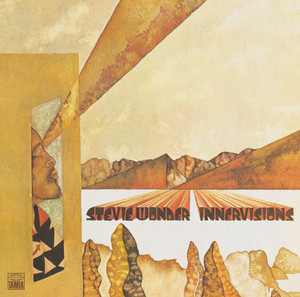
Other than the mid-1960s Beatles, no other pop star pulled off the remarkable feat that is Innervisions. Stevie Wonder managed to combine Top 40 sensibilities and the funkiest R&B of his career with an avant-garde musical breakthrough. The astounding quality of the songwriting and singing make the album instantly listenable as the best million-selling record. They can make one forget how radical Wonder’s employment of the newest technologies at the time, turned Innervisions into an experimental album albeit one that continued the approach first heard on Talking Book. Wonder’s craftsmanship appears in every facet of the record. Few albums utilized vocals as well as this one as Wonder’s voice ranges from soft whispers, jazz singer balladry to growls of emphasis. Wonder’s singing and writing can raise ballads like “All Is Fair in Love” to great wedding dance music. He experimentally deployed the few other musicians who appear on the record, such as the precise electric guitar on “Visions” and the Hammond organ on “Golden Lady.” The bass on “He’s Misstra Know-It-All.” could be isolated all on its own. Those explorations of love step aside for Wonder’s most direct political commentary in “Living for the City” and “He’s Misstra Know-It-All.” Showing the influence of Curtis Mayfield, Marvin Gaye and Sly Stone, Wonder contributed more than worthy songs to this canon. In best for last department, the bevy of synths and keyboards, plus drums, made for the greatest one-man-band performances of all time. The funk Wonder unloads from his keyboards is equally matched by his unique drumming style, which perfectly compliments the rhythms. Like Paul McCartney, it seems impossible to combine songwriting, sentimentality and instrumental prowess into one person. Wonder adds a sizable dollop of groove to that equation to produce this unsurpassed record.
This album is great if you view it from the standards of Foreigner. Crunchy power chords seem able to fill arenas. A competent rhythm section and strong vocalist make it clear why this debut became a huge success, and I recognized nearly all of the eight songs on the record. This is hard rock 1970s corporate style. But you can’t hear the Jack Daniels bottles rolling through the aisles. This album cannot cross into guilty pleasure, because there is little fun here, nor soul. Bad Company intones everything with such seriousness you would think they were addressing pressing social and personal matters. Instead they offer cliche filled lyrics that in this day and age could come off as A.I. The limits with lyrics would not matter if the band offered an ounce of fun or humor. After all AC/DC has no Nobel level insights, but they recognize it, and lean into their limitations. Bad Company seems to really believe that they are “Bad Company” in the title track like some ominous bluesman. They come closer to Bon Jovi “Dead or Alive” John Lee Hooker. When Bad Company sticks to its hard rock sound they can produce an enjoyable head bob-fist pump song. Mick Ralphs knows how to write a good (not great) riff, and Paul Rodgers has the vocal ability to almost make you forget the banal lyrics. Unfortunately, as stated earlier, the band’s approach weakens the better songs. When they try to conjure up Stax-like soul tracks, including a horn section, they just cannot pull it off. This is a boilerplate version of soul with nothing individual to distinguish them. To me Bad Company portends even worse versions of this genre to come rather than stretching it into interesting directions like the Rolling Stones or Led Zeppelin. In fact their straightforward, overly serious style makes a derivative band like Aerosmith seem inventive.
It seemed likely that She’s So Unusual would be a fun piece of 1980s pop-rock that I would give a three star rating, and move onto the next album. The album consistently exceeded my expectations, and regardless of low/high standards, it is an excellent record. I figured the music would sound dated, with cringy use of synthesizers. I cannot say the album sounds contemporary, but neither did it seem stuck in the era. More often the synths supported the beat to give many of the songs a driving sound. There were a few solos that would be best left out, but nothing egregiously bad. Only a disappointing cover of Prince’s “When You Were Mine” seemed of the era, and even that song finished with an interesting synth-power chord guitar duo. I have a version of several artists from this era as “not rocking.” I like them all, but I am not expecting stomping guitar sounds. The live shows of Talking Heads, Blondie and The B-52s disproved this notion. Same with several tracks on this album as Lauper and her backing musicians rock hard on the opener, “Money Changes Everything”, “She-Bop” and the deep cut, “I’ll Kiss You.” The latter was one of the few songs I didn’t know, and I found all of them quite strong. Those deep cuts, plus Lauper’s two outstanding ballads (“Time After Time” and “All Through the Night”) pushed this album up the ladder. “Time” deserves its status as a standard, and I found “Night” touching except for the more upbeat chorus, which had a little too much arm-waving quality to it. This album probably benefited in coming after recent listens to Sepultura and especially, Bad Company. Those records featured mediocre versions of overly male genres that offered little in the way of heart and joy. Lauper certainly has those two qualities, and much more to make this album a worthy best seller.
The Rolling Stones are one of the few true passions and loves in my cultural world. When the grim reaper comes for Mick and Keith I will truly feel the loss. This passion helps set up the following statement. Let It Bleed is only my third ranked Rolling Stones album. It obviously stands quite high in my personal canon. Why not the best Stones album as many, including I think Mick, have called it? One handicap is Get Yer Ya-Ya’s Out, which came out right after this record. That live album featured versions of three songs from Let It Bleed (“Love In Vain”, “Live with Me” and “Midnight Rambler”) that push each to their edge. The heartbreak of “Love in Vain”, the over the top rumbling of “Live with Me” and the threatening aspects of “Midnight Rambler” jump out. Of course, they are terrific in their studio, but they go to eleven in their Madison Square Garden performances. The first side of the album has some flaws. Both “Country Honk” and “Let It Bleed” come close to caricature. They have some interesting musical interludes, but all well below the other songs on the album. “Love In Vain” surpasses them as they capture much of the song’s anguish, however the Stones do not seem to have fully ingested the blues and turned it into their own sound at this point.
I’ve had an uptick over the last few years in my interest in Earth, Wind and Fire. I have been mostly pleased with my listens, especially a great live set from 1973 on YouTube. That’s the Way of the World sends me back to my original feelings about them. They have the occasionally amazingly catchy, at times funky, song, but too many tracks that do not fit my style. “Shining Star” obviously fits the first part of that description. I also enjoyed several songs where EWF let the percussion fly, such as “Africano” and “Yearnin and Learnin.” They had much to hold my interest musically. The ballads fell flat. The worst was “All About Love”, which had the singer talking as he lectured about love. I am sure millions love their chorus of alto and falsetto voices that appear on many tracks. I have never found this style appealing. I yearned to hear the bass and baritone vocals the Temptations would employ with Melvyn Franklin and Otis Williams, gosh even David Ruffin’s tenor would add some balance. Lyrically and musically too many of the songs offer platitudes and bland sounds. I rarely found myself engaged, rather I became somewhat annoyed with their songs.
How can someone who grew up in the 1980s have never consciously listened to a Cure album? I am sure they were played in the background at some party somewhere, however my memory says I have ignored them on vinyl, tape, CD and streaming. The album was a slow build. From The Cure’s major hits I expected shorter, 1980s style pop-rock with Robert Smith’s trademark melancholy. The latter was there (more on Smith later), but the songs stretched out far beyond radio friendly length. The longer, and darker the songs got the more The Cure captured me. The moody guitar work stood out, limiting anything dated in their synth and drum sounds. They sounded like Pink Floyd mixed with The Smiths. An hour and change as usual went on too long, but the six to nine minutes gave The Cure ample time to get my ears attuned to their style. With Smith’s voice, I would hope that further listening would have the same effect as deep dives into Radiohead. As Radiohead’s music kept me intrigued, I grew accustomed to Thom Yorke’s vocals, and ultimately found him to be a heartbreaking singer in the same vein as Michael Stipe. Or…Robert Smith could go in the Morrissey direction, who I still find has annoying affectations. Another Cure record on this list would be a proper opportunity to see where I will lean, but for now a solid thumbs up to Disintegration.
This album can’t make it to five stars; there is just not enough variety musically and emotionally. It does deserve its reputation as a genre shifting all-time great debut album. Van Halen built on the big riffs of Led Zeppelin, the showmanship of Mick Jagger, and even the Beach Boys vocal style. Like many artists, they altered these influences to such a degree that Van Halen became something new. Eddie Van Halen brought new techniques and sounds on the guitar that had the same impact as Jimi Hendrix. Does that mean I love Eddie? Not really, since his style on this record had zero nuance. One just goes wow as he blows one giant bubble after another. Ultimately it leads to the path of many stunt guitarists who can amaze with their speed and manipulation of effects, but lack the restraint and tone to provide pain, storytelling or even sweaty sexuality. However, on this record the bubbling blowing is groundbreaking and works well with the songs. Similarly, the signs of David Lee Roth’s male Rockette show can be seen, but at this point his massive personality gets harnessed enough to provide amusement. The lyrics and attitudes of the songs reek with simplistic libido, but in a fun way. While there is sexism, there is little chauvinism as no anger is directed at women. Roth even seems to have some sympathy for women’s plight as he mentions Jamie wanting more than “one night stands.” Lyrical analysis is beside the point with Van Halen as the delivery is all that matters. Like Black Sabbath’s first few records, this album starts out with five or six absolute bangers. It comes up a little short with some of the material on the second half of the record as “Little Dreamer” and “Ice Cream Man” fail to inspire. Those songs cannot take away from the innovative classics and stomping, less known ones like “I’m the One” and “Atomic Punk”, which nearly match the better known tunes. We know what’s coming with their influence on Hair Metal, Van Hagar and Roth’s “Just a Gigolo.” None of that matters as this album ranks close to Led Zeppelin’s and The Doors first records, and even the more respected and lauded punks of Van Halen’s era.
Before this project began, I listened to Dark Side of the Moon on headphones for the first time. Perhaps absorbing it “the right way” made the album’s sonic wonders and creativity stand out more in the past. The session gave me a greater appreciation for Floyd’s musicality. Like its fellow 1973 Innervisions, Dark Side of the Moon’s inventiveness,while being a massive success, is stunning. For an album filled with ominous keyboards, dispirited vocals and pained existential void lyrics to be one of the biggest selling records seems unfathomable. Each member of the group contributes to the startling soundscape, with Nick Mason’s drums and other percussion particularly standing out on these recent listens. Mason delivers the proverbial master class in how to not overplay, but still stand out. While only “Money” has hit single top qualities, other songs provide memorable moments that account for its success. The breathy vocals on “Us and Them”, the clocks on “Time” and the wordless gospel singing throughout “Great Gig in the Sky” all lodged into my brain. Pink Floyd’s slow churn and grim view of the world, with its industrial meets space sound is not typical rock and roll. I need something with more of a human touch to place it in my personal pantheon, but I can fully understand anyone who lauds it as one of the great records of any era.
A little Pogues goes a long way for me, and this time even a little was too long. I own Pogues’ records and have seen them twice live (once with Joe Strummer instead of Shane MacGowan), so there is some love for the band. Their Irish reels meet punk sensibilities meet heartbreaking drinking odes have connected to a decent extent with me in the past. However, if The Pogues are great music when drinking, this listening felt more like a hangover. I literally came close to dizziness cycling through the first three songs, which all seemed to feature the ring-a-round Pogues sound until I was falling down. I was glad “Fairytale of New York” came on to steady myself. It was great that the Pogues had a hit that bought them houses, but I have never been a big fan of this song. Scrooge I forever will be. Other Pogues’ records presented their unique mix in a more exciting manner. I also did not find the ballads on If I Should Fall By the Grace of God as tender as other Pogues’ cuts. They could not reach their own depths, let alone someone like Tom Waits. Lacking the revelry and despair that the music requires, I have to give this album a low rating.
Will there be ten Rolling Stones’ albums on this list? My rough rankings put this debut as the Stones’ tenth best record. It is a solid start for the group, with hints of their greatness, but nothing especially startling. With bands as great as The Rolling Stones, I suppose starting at the beginning is needed for 1,001 Records before you die, however fairness says someone else deserves a chance. The album contains two Stones originals that fit squarely in British Invasion pop. I love “Tell Me”, but a very un-Stonesy track for Mick and Keith’s album debut. “Little by Little” disappeared from all but the most hardcore Stones’ fans minds. The covers run the gamut of nearly every post-WWII blues style, plus early rock and soul. The R&B covers of “Walking the Dog” and “Can I Get a Witness?” are serviceable at best. “Mona” and “Carol” follow the originals quite closely. The band handles the blues numbers better. Musically, hard to find signs of their famed riffs and menacing guitar work. Jagger showed a great ability at louche mid-tempo singing with “Honest, I Do” and “I’m a King Bee.” The latter displayed Jagger’s affinity for Slim Harpo tunes, which came up later in his career. The record outshines nearly all early British Invasion albums, but really why is it here?
Live albums seem like cheating. I guess the point of the list is essential records, however issued. In terms of the "art of records,” it seems like only studio should count, but that is a debate for another time. I actually prefer their studio albums as the cleaner sound allows me to fully enjoy their ferocious assault. Live things get a bit muddled. Plus, unlike most bands, there is no way that Motorhead could play their material any faster, louder and pounding than the studio versions. You do get most of their best material from the first records. The band is incredibly tight and as stripped down to the bones as any outfit in rock. They play with Ramones like-intensity, but with the chops of a prog rock band. These guys have layers even if they reduce rock to its most basic qualities. The absolute mayhem in the best sense of the word that the music presents cannot be overstated. A glorious, controlled racket.
One of the few bands that I listened to and purchased before their Replacements-Big Star-V.U. like rise in popularity as non-stars who influenced bigger bands. My coolness quotient will take a hit when I say their impact is greater than my enjoyment. They distill a number of styles into a fairly original blend, although I often prefer their influences. I hear The Cure’s guitars on “Debaser.” Whenever Black Francis launches into a near scream, it recalls Pere Ubu. The bouncy songs like “Here Comes Your Man” mirror The Velvet Underground’s Motown meets NYC grime. Unfortunately, not a single song is highly pleasurable, nor memorable. They exist in my mind from particular moments when I heard them, not because I was ever totally into the group. On the less conventional songs, Black Francis’ voice is shrill rather than the scary abrasiveness of similar singers. The guitar sounds lack strength in a similar manner. When The Pixies play more crafted songs, I started comparing them to The Breeders, and I could see why Kim Deal’s next band had the bigger hits. The Breeders’ riffs, singing and lyrics pack more punch and fun than anything here. Standards and expectations impact reviews. Doolittle is a fine record, but does not sit high in my canon.
I am sure if I should be more disappointed with FKA Twiggs or myself for this subpar rating. After listening to this album multiple times since its 2014 release, I still find myself searching for some level of satisfaction. Despite moments of interesting electronic innovation, the album failed to make a great impression. Fault of the reviewer? I constantly find a little variety in current female singer-songwriters (for lack of a better term; maybe musical artists would broaden all prior labels). The songs come at two speeds: slow and slower. The vocals’ breathy high pitched register rarely changes, and the heavy production process often robs them of real emotion. It seems like an act: here is how I should sound when I am wounded. Maybe if I perused a book of lyrics something would jump out at me, but thematically I heard only relationship songs, tending to be ones that went sour. The album contained most of these qualities through the first half-a-dozen songs. Finally, “Numbers” offered interesting electronic drum patterns and some darker elements. Similar qualities helped “Closer” hold my interest. This could be a “you have to be in the mood” record, but it lacked the emotional quality to even earn that ranking.
The theme song carries this score a long way as it was by far the most memorable aspect of the record. The opening riff could have been used as a motif throughout the album, and I would have enjoyed the record more. I would take a theme song repeat, because too many compositions were mundane. A few of the slower tracks had some somber appeal as I assume they came in the more contemplative moments of the film. No other track delivered the jolt of the theme song, which is odd considering it is an action film. Understand its iconic status, but seems entirely due to one tune.
A solid sampler of Muddy Waters catalog allowed his band and he to shine, although some aspects of what made him great go missing. As a singer, Waters has an authoritative voice that never needs to go to screams, whoops and talking to deliver his message. Only Otis Redding comes to mind as a singer whose natural voice carries the power of Waters. His vocals make classics like “Hoochie Coochie Man” go well beyond blues’ cliches, or even novelty songs. The only drawback arises when Waters’ utters submissive lines like in “Baby, Please Don’t Go.” There seems little chance that he would “be your dog” to any woman.” Waters definitely could put a “Tiger in Your Tank” long before any type of groveling. Pianist Otis Spann and Drummer Francis Clay’s accents add a great deal to the songs. Their playing drives the music whereas terrific musicians like guitarist Pat Hare and harmonica player James Cotton seem undermiked. Waters’ slide playing emerged on a few tracks, but he also did not get to thrive. The recording leaves out some of the dynamics that made Waters' recordings more dramatic. I missed the famed Chess Studio effects that added drama to his performances. The live setting does boost “I Got My Mojo Working.” Spann’s sprightly piano intro, the call and response from numerous back-up singers and the accelerating rhythm turn “Mojo” into a gospel flavored song. It seems fitting that the group decided to reprise the song as Waters sensed the spirit hitting the audience. It would have been wiser to end the album on that note rather than the improvised “Goodbye Newport Blues.” Better Waters’ albums exist, but At Newport 1960 offers a great introduction to listeners.
Most of this review could be filled with what makes Jimi Hendrix rock’s most amazing guitar player, despite this album falling short compared to the other two records released in his lifetime. Are You Experienced? and Electric Ladyland belong to the highest pantheon, so if Axis: Bold As Love does not quite measure up, it is no crime. The songs lack the charge of the best of Hendrix on both of those classics, and the spacier tracks cannot possibly top Side Three of Electric Ladyland, which I consider the greatest stretch of guitar on record. However, one still listens with mouth open to many songs on the album. “Spanish Castle Magic” and “If 6 Was 9” feature slamming power chords, while many songs, such as “Up From the Skies” contain a loose jazzier style of playing. The tender and restrained guitar work of “The Wind Cries Mary” surfaced several times, most famously on “Little Wing”, and the exquisite “Castles Made of Sand.” The title track follows the same path before exploding into some of Hendrix’s best soaring guitar work. Hendrix is unique in that his songs do not fit neatly into hard rock, blues, funk, garage or heavy metal. He foreshadows many of those styles, but he possesses a control and inventiveness that escaped other guitar players. His sonic presentation, some credit has to go to engineer Eddie Kramer, sets him apart. Most importantly, while flashy, Hendrix had an undefinable tone that injected emotion into even the most spacey and power chord tracks. The album filler of “Wait Until Tomorrow”, “Little Miss Lover” and Noel Redding’s “She’s So Fine” are perfectly acceptable 1960s psychedelic pop, but similar songs on Are You Experienced? and Electric Ladyland present better versions of these deep cuts.
I went back and forth with this record. The first few songs made me think that the 1980s me had closed ears as usual with synth based music. The opening track,”One More Chance”, delivered danceable electronic sounds and my soft spot for Dusty Springfield turned “What Have I Done to Deserve This?” into a winner. As I proceeded, the album seemed dated. Rather than use the electronics to conjure up interesting new sounds as electronic music did in the 1990s, the group used synths to duplicate actual instruments. I found the drums monotonous. They used synths to sound like percussion and strings in an uninteresting fashion. However, a third listen was more of a winner. “Rent” was an effective uptempo ballad and “Hit Music” stood out with its more driving beat. Maybe a fourth listen would yield another opinion.
Emperor Tomato Ketchup gets high marks for WHEN it deftly blends its Krautrock-French pop into an enticing update of those two styles. However, several songs could not quite get the Motorik groove down to my liking or the breathy vocals of Lætitia Sadier took up to much space. The title track fell prey to these issues as did “Les Yper-Sound.” Ballads such as “Monster Sacre” and “Slow Fast Hazel” definitely depend on mood. Sometimes, I can feel the rain dripping down the window as a forlorn Jean Seberg stares out contemplating her existence. Other times I find them dreary with effects like wah-wah sounds that grate. The opener “Metronomic Underground” ranks with Neu’s “Hallogallo” as my top tunes with the Motorik sound. “Percolator” fully evoke the title and is the most fun song on the abum. I did not remember how “Motoroller Scalatron” and “The Noise of Carpet” feature great guitars that get fully supported with terrific drums. To hit great status, an album should not have this many tracks that draw a thumbs up or down depending on the day I listen.
I was hazy on the provenance of The Stranglers. Knew the name, but mixed together with The Dictators and maybe another mid-1970s punk type band. This album got better and better. Nearly gave it three full listens, because it grooves in a unique way. The bass playing is fabulous, both accenting and leading the beat. It does not flash like John Entwistle, just propels songs forward. The keyboards were also original. Not sure what was used, but the sound differed from garage rock’s Vox and Hammond organs. Nor did I hear Fender Rhodes or synth qualities. At times it reminded me of Magazine’s post-punk/pre-1980s creations. Whatever was used, the style fit the songs not quite garage, pub or punk as the entire group had a level of musicianship that seemed a step higher than those more primitive genres. While the vocals were not memorable, they did not descend the schtick that many punk lead singers utilized. The quality and new to me aspect led me to search Discogs for vinyl copies. I might part with $48 plus shipping for this one.
For a curmudgeon, Van Morrison has a dozen or so songs that levitate me. I will be swinging arms, playing along, even a hand thrust, and then he takes it to another level. Zoom cheekbones go up, and a pure smile suddenly arises on my face as for a few seconds my unconscious reflexes score a rare victory. Moondance features several of these moments with its combination of R&B punch, deft acoustic playing and Morrison’s one-of-a-kind vocals. The excellently crafted songs deliver pleasing tales of Van Morrison’s honeymoon love with his surroundings be they woman, music, nature or mystical. On his own Van Morrison shifted from the inscrutable Ulysses songs on Astral Weeks to more straightforward short stories of Portrait of the Artist as a Young Man. (negative critic points for overused Morrison-James Joyce comparison. If I had used Faulkner or Beckett, it would have been forced. Maybe I could have inserted David Foster Wallace’s Infinite Jest vs. his non-fiction magazine pieces.) The magic moments start right with the opening moments of “And It Stoned Me” as the acoustic guitar and Van’s lyrics quickly set the mood. “Caravan” follows a classic soul strong structure with its quiet moments moving to Van’s expressive “I long just to hold you tight…”, and then to the chorus. With “Into the Mystic” another cliche as others I am sure have observed that the song and its lyrics serve as shorthand definition for Van Morrison’s career lyrical themes and music. Supported by bubbling bass, the song is bookended with two goosebump lyrics, “We were born before the wind…” and later Van quoting Otis Redding/Jerry Butler with “It’s too late to stop now.” The entire album features terrific arrangements, which as far as I can tell come from Morrison. His use of horns may even top the great soul studios of the era. Additionally, he masterfully weaved acoustic guitar to provide a different texture to his tunes. I almost gave the album less than five stars as some of the other tracks lack these moments as they have the honeymoon, but not the sense of devotion and wonder of the better songs. I realized that nothing is a skip over song, and the unforgettable songs push this record to the top. And I never even wrote about the title track.
Reviewing this album poses a bit of a dilemma as the streaming version only included the remastered and expanded editions while I own the original much leaner vinyl. As usual more is less with Live at Leeds. The expanded edition includes a substantial amount of numbers from Tommy for the first two-thirds of the record. It also includes earlier Who material, such as “Happy Jack” and “Tattoo” that do not rank among my favorites, although any chance to hear “A Quick One While He Is Away” is a worthy addition. That song and “See Me, Feel Me”/”We’re Not Gonna Take It” theme from Tommy appear in The Rolling Stones Rock and Roll Circus and Woodstock respectively. Those versions are superior to the ones on the reissue. The Who sounds best when they bordered on chaos, whereas these renditions sound like a group that had played them for a year. In the Woodstock documentary when Roger Daltrey threw in an extra “heat” during “See Me, Feel Me” it seemed like a spontaneous ad lib of passion. It was disappointing to hear it again at Leeds, now reduced to a performance piece. The other songs from Tommy lack The Who’s energy. They thrive on lightning strikes and fists to the face, which the famed rock opera lacks. The original Live at Leeds eschews nearly anything to do with Tommy save a few choruses in the extended “My Generation” on Side Two. That version captured everything great about the group, and the song as it nearly blows up on stage. The first side featuring three covers and “Substitute” blazes as the songs all feature the youthful anger that The Who’s music attempted to obliterate. Obviously anniversary editions have to offer fans something new, but I found no undiscovered gems in the extra hour of material.
This is a fine record with multiple solid songs and nothing cringy or terribly dated. One of those revisionists rediscoveries like Skip Spence and David Crosby’s solo albums that people have heavily praised due to the person as much as the actual record. Dennis Wilson benefits from his reputation as the best looking, only surfer of The Beach Boys, since it was assumed he offered little musically to the group. The kid brother who turns out to be pretty good in the driveway basketball games. Wilson avoided most of the dreadful qualities of yacht rock while showing flashes of brother Brian’s instrumental arrangements on “River Song” and the opening sounds of “Rainbows.” Wilson adds a touch of Paul McCartney earliest solo records. The title track has some of the low-fi funk heard on Macca’s debut album. The artist he most reminded me of is Jeff Tweedy. On the slower songs, his singing nearly matches Tweedy’s limited, but effective, voice. The arrangements also had the stripped down Americana vibe of Wilco, especially on “Farewell My Friend” and “Time.” It’s a sound record, but there must be three dozen guys who sold 298 copies of their record who were just as worthy of rediscovery.
The album starts off with a bunch of bangers that highlight how exciting Fatboy Slim seemed for at the time of this 1998 release. Maybe he was not groundbreaking for those initiated with electronic music and triphop, but his drum heavy, amphetamined and amplified beats made for some slamming tracks. The first two songs, “Right Here, Right Now” and “Rockafella Skank” both blaze as do later tracks like “Soul Surfing.” God knows what the BPM are on these songs, they certainly would wear out those on the dance floor. The problem comes when Fatboy Slim adds anything else to the music. The raps/chants that accompany the beats are annoying, and juvenile. This is not music for the sophisticated as it veers towards frat bro shouting complete with fist pumps rather than the open embrace of clubs. The exception, of course, is “Praise You”, whose organ riff and soft vocals in the chorus come close to the gospel vibe that Fatboy Slim seemed to be striving to achieve. I cannot say this album aged poorly as it always sounded fun, but puerile, to me.
A familiar comment, near lament, why this one? The album neither begins, nor starts anything. Seems part of a trend. Offers anything radical, even in a bad way. I had never heard of the band prior to this listing, so at least no preconceived notions. The album opens in a more off center fashion with some skronking sax on “Zuton Fever.” “Pressure Point” also included some similar sax work in the background, but it like the next song “You Will, You Won’t” seem like trying for an arena rock size hit. “Havana Gang Brawl” and “Nightmare Part Two” have some interesting guitar and percussion work. Not sure if this is an accurate comparison, the harmony vocals started to veer into Vampire Weekend territory. This comment fits most the music as it sounds decent and enticing in fits and starts. It ultimately did not register with me on any deeper level in any fashion.
Abba has escaped my scrutiny for 50 years. Despite their monster success in my youth, frequent appearances for decades in several forms and massive 21st century revival, I have given them little thought. Their presence parallels the Star Wars phenomenon that I have similarly overlooked although in a more openly dismissive fashion. Abba never truly entered my radar. I cannot say, “shame on me.” While the catchiness of several songs cannot be missed, I struggled to find other aspects of their music that stood out. There is formulaic blandness to their music that infrequently caught my attention in positive and negative ways. This type of pop contains its own Wall of Sound. Unlike the Phil Spector version, which crammed everything into a mono mix orchestra of heartbreaking drama, Abba’s music sounds like a puree of vegetables with only a niblet of corn occasionally providing something tasty. Pounding drums in “Tiger”, the disco ball sounds of “Dancing Queen” and some attitude present on “Money, Money, Money” from the keyboards, lyrics and strong solo singing. However, this song grabbed me on the same cartoon-like level of Boney M’s “Rasputin.” With the emphasis on vocals, it is imperative that they seize the ears in some fashion. I find Abba’s singing pitch-perfect in a most uninteresting manner. Perhaps the production shaved off most of the humanity, but the offerings failed me even as fun bubblegum. Unlike several recent records, I totally support Abba’s inclusion on the list, but not anyone who argues for their artistic greatness.
The band had it all. Two charismatic and commanding lead singers in Grace Slick and Marty Balin. (Sorry, Paul Kantner, not quite in their league.) A dynamic instrumental star in Jorma Kaukonen who played the delicate acoustic parts with unbelievable feel. Added power chords for driving rock and rock, and could unleash distorted solos that complimented some of the more tough minded lyrics in their catalog. Like most great bands, the rhythm section provided more than solid underpinning. Bassist Jack Cassady and drummer Spencer Dryden along with Jorma made the band a powerhouse far beyond its gentle psychedelic image. And the production managed just the right amount of reverb and refinement, even the recorder Grace Slick played sounds brilliant. If someone wants to call “How Do You Feel?” and “Coming Back to Me” standard folk-rock derivative of The Mamas and the Papas, I won’t argue with them. I do find both can touch me, particularly “How Do You Feel?” as Balin had an ability to find tenderness and sadness without drifting into schmaltz. “Today” brings out all of these qualities as Slick and he combine for one my favorite ballads. The Airplane’s high-quality playing begins with the first song, “She Has Funny Cars.” Dryden’s tom-tom work and Jorma’s short snarling solos lift an ordinary song. Cassady’s bass here and on “Plastic Fantastic Lover” provide a further boost, and a touch of menace. And there’s a reason why the bass intro to “White Rabbit” instantly became a touchstone of the era. Slick shares with Chrissy Hynde and Patti Smith an ability to lock into lyrics in commanding fashion. None of them have soaring range, and thankfully they are not belters, the three just know how to deliver a song. To my ears Slick has the most naturally gifted voice as she rises an octave or two to soar just above the music. Her trilling of the words in “Somebody to Love” adds a thrilling buzz to the lyrics. Like Dylan, Lennon and Jagger, Slick lets the song’s protagonist know that she/he is getting used. The band was not the Summer of Love. Balin’s yearning and Slick’s uncompromising portraits pointed out the disappointment that lurked beneath the feel-good, anything goes atmosphere. The Airplane’s potent mix makes Surrealistic Pillow a classic.
I have never quite gotten there with Bjork. Fully admire her as an artist. An individualist who has created a unique body of work that borders on avant garde. Musically I have never found her music appealing. I understand Bjork does not make music for enjoyment as she explores some form of her, and our psyches. I just cannot connect with her wavelength. Framing this lack of connection as an “I” problem rather than blaming her. Medulla places the voice front and center. Rarely did she imitate familiar vocal arrangements. I did not hear straight gospel, nor Gregorian nor boys’ choirs. I struggle to put my finger on exactly what Bjork develops. The songs mostly move at a glacial pace. Unlike ambient music, which can lull the listener into a pleasing trance, the songs here express pain and disjointedness to my ears. Bjork seized my attention despite the minimalism present, however I did not find myself carried away in any capacity. I could see it happening someday.
This album comes close to many things. Almost country-punk, a hint of neo-psychedelic and beneath the rougher edges melodic songs. Having multiple angles keeps II from getting repetitive and stale, but also makes the record lack cohesion. The group offers interesting versions of these styles, but nothing compelling. The near hardcore of “Split Myself in Two” runs into rapid-fire, but less punk, “Magic Toy Missing.” By the third track, “Lost” the pace slows a bit and the twang comes out in the guitars. This shift sets up one of the album’s famous songs, “Plateau”. Along with “Lake of Fire”, “Plateau” has acoustic guitars that brood over the track creating an updated folk tale of mystery. It makes sense that Kurt Cobain gravitated to these songs at the same time he was discovering Leadbelly. The group shifted gears with the bright sounds of “Aurora Borealis,” which provides a welcome break before they move back to similar sounds as “Plateau” as the album moves towards the end. The vocal skills, production and/or artistic approach give too many songs an uncommitted quality. Not quite demos, but a sense that the band is not throwing themselves 100% behind the material. I suppose this is a deliberate attempt along the lines of some Neil Young records, but he manages to still sound on the edge of some type of catharsis. The Meat Puppets sound similar to Kurt Vile’s slacker style. It allows songs to breathe, but not captivate.
In the last review I praised and faulted The Meat Puppets for being jack of several genres, but master of none. The same possibility exists for Joan Armatrading, where elements of Ricki Lee Jones’ and Joni Mitchell’s jazz-folk, modern R&B, synth driven pop and straight rock all appear. What makes this album great is Armatrading’s ability to synthesize these styles into an indescribable whole. Armatrading’s singing is the strongest element lifting the record. She varies her voice from the gentle pledges of “Somebody Who Loves You”, to the authoritative “Down to Zero” and the snazzy soul of “Love and Affection.” “Tall in the Saddle”, has her verging on the likes of Billie Holiday and Nina Simone for the depth she brings to this closing track. Her understanding of how to deliver the lyrics carries the stories and messages in multiple directions: love, bewilderment, downtrodden. Stellar work appears from the musicians assembled here and Glyn Johns’ production work. The acoustic guitar appears as a great rhythm instrument as well as accenting most pieces. Deep diving into 1970s singer-songwriting records has given me an appreciation for the subtle drum work that usually appeared. Fairport Convention’s Dave Mattacks and surprisingly, Kenney Jones of The Faces, propel her compositions without overwhelming them. Personality gets displayed in their fills, but never overwhelming the songs. I’ll credit Johns as well as Armatrading for the overall sound. My only significant complaint falls into this same category as at times overproduction in the form of 1970s studio perfection appears. The soprano sax, keyboards and even Armatrading’s vocals are well mannered, which limits the raw emotion that emerges in the record. Certainly a personal pet peeve of mine that does not take away much from this outstanding album.
The opening album for our 1,001 challenge came from The Flaming Lips. I did not reread my thoughts on that record, but I imagine they would be similar to the ones for The Soft Bulletin. Wayne Coyne’s songs sound like they come from the perspective of a kid in a Tim Burton movie. Mystified, sad, magical tales filled with some interesting images. Depending on the song, and my mood, they connect to the characters Coyne describes. The best ones like “Race for the Prize” and “Waiting for Superman” burst open with rays of keyboards and a surging sound. “A Spoonful Weighs a Ton” creates a last man on earth or first person on Mars feeling. Not sure why, but lost wonderment makes for an effective piece of music. Too many songs fail to reach out in this manner. The altering of Coyne’s voice at best becomes part of the atmosphere. On other occasions the altered sounds start to grate whereas a strong tack like “Superman” features a more straightforward approach. I sense that the songwriting is not strong enough to carry an entire record. It might be the rare record where I would suggest outside musicians who could have brought a different take to the songs. My rating will not be generous if a third Lips album appears on the list.
Nothing much stood out from this recording to warrant a positive review. Have to give it a Goldilocks review. Not low-fi enough to provide a sitting in the basement with them feeling. Spare, slow songs did not reach True Detective starkness. The singing on those tracks could not reach the level of Mark Lanegan, Nick Cave, or even the baritone voice of that guy from Morphine. Unlike Morphine, Giant Sand did not bring a new sound to this unadulterated style. While the honking sax of Morphine wears thin, it makes you perk up the ears for a bit. The music here failed to engage me in a meaningful way. Without something intriguing in the music or vocals, Giant Sand issued a record that sits squarely in the background.
Wisely the Arctic Monkeys play to their strengths (or at least what I see as their strengths) on this record. When they cut it loose, they offer energetic rock and roll that matches their basketball arena level popularity. The album opens with the near frenetic “The View from the Afternoon”, and keeps pounding with “I Bet You Look Good on the Dance Floor”, “Fake Tales from San Francisco” and “Dancing Shoes.” All feature strong riffs, the band stomping in unison and forceful drumming that drives the songs forward. The rapid pace leaves little time for pretentiousness, and the band is both tight and unpolished. The production brings these elements together to make for a pleasing workout. What holds this record back from the excitement I feel with The Ramones, AC/DC or Motorhead? The songs just miss some hard to define quality of those groups. Not quite as punchy as The Ramones, nor ferocious as Motorhead nor the amazing hooks of the Young brothers. The songs teeter on bashing rather than playing. While I would much rather hear a group cutting loose than getting overproduced, the group comes up short in adding the needed elements to make this as memorable as the best rock and roll. There is something about British singers post-1980 that never quite sits well with me. The singing here is not as annoying as some of the 1980s groups, but it shares some of their qualities. It definitely has an attitude, but comes close to a sneer, whine or juvenile. With more listens, this trait would probably fade. Overall, it was nice to see a hyped group deliver the goods in a lively and totally fun manner.
While this album does not rank in my best of the best, it has risen in status for me over the years. Among 1,001 records it certainly deserves the highest marks. I occasionally pick up on the thread of this narrative, but it seems more thematic than a clear rock opera story like Tommy. That is a benefit as the storylines in these rock musicals fail to engage me. In fact, when I pay attention to the “tragedy” in the title track, it diminishes the song, although “Making love with his ego, Ziggy sucked up into his mind” is one of several terrific lines in it. Side One contains none of the startling rock and roll of the second half. It is a daring choice that probably played a role in limiting my original enjoyment of the record. Now, the life and death struggle of “Five Years” sets up other dramatic moments to come. “Soul Love” has a terrific fade in as the drum pattern makes this crooner tune worthwhile. “Moonage Daydream” encompasses everything that is great about Bowie and this record. Touches of weirdness, the blasting power chords matching the raygun in the lyrics and Bowie’s one-of-a-kind ability to take the listener into his characters’ world, which only “Heroes” can match. “Moonage” is so good it overcomes the flute interlude that could contaminate the tune. Bowie is a sharper and more varied songwriter than other glam artists. The two Stardust songs are the ones that sound most like the genre to me. Nothing too wrong with that, especially when he unloads with the revved up engines of “Hang On to Yourself” and “Suffragette City.” Those tracks and many other moments in the album find Mick Ronson creating a distinctive style. It has the riff mastery of Jimmy Page and Keith Richards, along with unfiltered trumpet-like blasts of sounds. One of the joys in revisiting Bowie over the last decade or so, is realizing how much he rocks. Ronson obviously plays a major part in that sound. Ignore any preconceptions with this record, and the personal story-lines related to Bowie’s career. Not a flawless record, but one with an enormous number of memorable qualities.
In the N.F.L., they often talk about coaching trees like the many top head coaches who sprang from Bill Parcells or Mike Shanahan’s staffs. In music, The Byrds gave birth to a huge number of notable, usually high-quality, acts. The first two-three versions of the Byrds themselves, Crosby, Stills and Nash, Dillard and Clark, The Flying Burrito Brothers, Hillman-Souther Band and the legendary solo career of Gram Parsons. It becomes almost Biblical as those groups begat others, who begat… Somewhat hidden in my Byrds knowledge was Gene Clark. Aware of his vocal presence, I did not realize that he was involved in writing nearly all of the best originals on The Byrds early records. The name recognition of Roger McGuinn, David Crosby and even Chris Hillman, shoved Gene Clark into the background. His utter lack of chart success post-Byrds with the aforementioned Dillard-Clark Band, even more obscure bands and solo did not help matters. Quite a few albums on the 1,001 list have landed here due to revisionist review revivals, No Other is one of the most deserving of this group. Too bad for Clark that he could not find a way to write radio friendly material to cash in on the country-rock scene that he helped pioneer. The lack of instantly memorable songs and a few overproduced qualities are the only small complaints that I have about the record. The members of “The Byrds tree” capture country music’s essence with their ability to touch heart and soul in many songs. Clark’s vocals walk right up the point of high octave drama, but he manages to keep it in check to offer just a quaver to develop poignant moments. The arrangements and musicianship lend power to Clark’s songwriting. The strings and backing vocals, even synths of “No Other”, avoid drenching the songs in a countrypolitan manner. Instead they help build towards the more powerful moments on “Silver Raven” and “Life’s Greatest Fool.” Other tracks like “Silver Phial” and “The True One” keep it simple, and while less sweeping in their sound, they still deliver lumps in the throat and a tear to the eye. Who is the Gene Clark of 2026? Will they have to be dead for three decades to receive their just rewards?
In an amusing sequence, this album proceeded AC/DC’s Back in Black. You wish AC/DC could have grabbed Nick Drake, and said, “you need a pint or two, me boy.” Drake probably would have fallen through the floor boards. He is the most fragile of artists with both his voice and the instruments around him barely rising above conversational level. “This amplifier goes only to one.” Despite the lack of volume, Drake and his cohorts still manage to produce their share of dynamic music. Tracks like “Three Hours” have a folk darkness that sounds far scarier than anything on most metal albums. The undercurrent of bass with the delicate guitar figures sets up a sense of foreboding in the song. “River Man” has much of the same qualities as well. On most of the other tracks, Drake walks the fine line of his gentle sadness without falling into maudlin self-pity. Right from the start he hits the heart with “Time Has Told Me”, which dials down Fairport Convention’s instrumental prowess without sacrificing any of their poignancy. “ ‘Cello Song” manages this same feat as the guitar and cello combine for a unique blend before closing out the tune with bass, congas and string. The level of musicality in all the songs makes Drake’s work memorable, and few singers have ever delivered their line in such spot on manner, particularly for a debut album. A master of understatement, Drake offers enough lightness in a few notes to give a glimmer of hope to the dark clouds that circled much of his music.
This album grew on me a bit on its third listen, but still failed to capture my fancy. I grasp why The Pixies were always lauded within the music community, and have now garnered a larger audience as a comeback band. However, I have not found them too likeable. These songs have at best part of what makes The Pixies influential. The literal hardcore screams of “Rock Music”, the melodic qualities of “All Over the World” and the anthemic chants of “Stormy Weather” all showed the skills of the band. Unlike their stronger work, there were not multiple interesting elements in the songs. The screamos came off more as noise and the melodic tracks did not soar into anything too interesting. As a whole the mood was less fun than other efforts. Usually some pop song qualities appear in the choruses or guitar work to liven up the grimmer elements. I found the choruses uninspired and less of the interesting guitar work of “Surfert Rosa” and “Doolittle.” This record just has the harangue of anger rather than sugar to make the pill go down.
This album never grabbed mein three listens to it. That fact along with some musical qualities that I dislike led to the low ranking. Martyn expanded his sparer English folk sound a great deal by this record. Kudos for embracing a new approach as jazz, dub and electronic all appear in some fashion. However, One World like many other 1970s albums includes effects on the instruments that create a blob of a sound rather than anything interesting to me. As a singer-songwriter type, Martyn cannot be expected to take these new devices into experimental territory, but he also does not use them as effectively as Joan Armatrading or Joni Mitchell. His singer alternates between a low growl on several of the opening tracks to a less tuneful Paul Simon later on the album. I cannot identify a low point, nor a high one as the songs blurred together in an undistinctive manner.
With many foreign albums, I am clueless about the lyrics’ meanings. I can simple enjoy the voices as another instrument. My smattering of Spanish knowledge leaves me frustrated as I can make out bits of the lyrics, but cannot fully comprehend them. With the emphasis on Ruben Blades’ vocals, I am reviewing this record with one hand behind my back. Siembra was one of the first records I purchased when I first began exploring salsa. I can’t say I have listened to salsa enough to qualify as an expert, but I have developed likes and dislikes. There is enough in my head to discern a few qualities that make this collaboration a strong record. Blades’ vocals never demand attention in the percussive or trumpet-like yowls of some singers. He complements the music rather than seeking to shine above it. Knowing Blades’ political activism I can sense some wisdom being imparted in lesson-like fashion. In a song like “Pedro Navaja” he sensually walks alongside the music. It sounds both friendly and seductive. The music matches his measured mannerism as it keeps pace with him without ever looking to blast away. The opening bars of the album on “Plastico” had me worried. It’s 1978, let’s have a disco song. While some disco traits remain throughout the song, “Plastico” finds an original groove rather than mining a certain soundtrack for possible nuggets of crossover success. That is what makes this album appealing. These guys had created a new musical genre and become major stars in an overlooked market. Seeking bigger success with more accessible music and English lyrics would have made sense, but Colon and Blades stick to their guns. The material offered the chance for a bigger audience. One of Blades’ best performances is on the mid-tempo ballad “Marie Lionza” sounds like prime material for a dance hit if English lyrics were used. The title track would have made an electrifying cut to use in a film as a pulsing bass adds both groove and darkness to the songs while strings give it a soundtrack touch. Willie Colon showed similar restraint in this more mature version of salsa. Still eminently danceable, Colon (and I assume it is his band) never mug for the camera as the brass and percussion sections accent the music rather than dominate. This album would not be the first selection to give to someone new to salsa, but it deserves the high marks given here.
The Clash were always the best punk band, and apart from the genre. The apartness made them the best. This debut established those qualities. The Clash had punk’s anger on a micro and macro level. The boredoms and frustrations that led youth to embrace, and make, the music. The downtrodden socio-economic and political circumstances of pre-Thatcher Great Britain also get addressed. The sheer speed of the rockabilly crazed meets The Who level volume plays a prominent role in most songs. Yet The Clash did not seek to offend and appall. I do not feel gobs of spit emitting from this record like The Sex Pistols or Dead Boys. It thankfully lacks the cartoonish yelps, lyrics and appearance of the Pistols. Talk show hosts will point their fingers at Johnny Rotten and Sid Vicious, and kids will dress up like them for Halloween, not Paul, Mick and Joe. What The Clash sacrifices in ecstatic release, it makes up for in brilliant consistency. Fourteen songs, with nary a bummer in the group. The group burns hot with the “true punk” trio of “White Riot”, “London’s Burning” and “Remote Control.” Signs of the more measured, varied and subtle songwriting of London Calling were already apparent. “Janie Jones”, “Hate and War” and my personal favorite, “Garageland”, ease back on the gas pedal to include the band’s trademark “Ah, ah, ah” backing vocals to add to the tunefulness. I also noticed how many songs start with the chorus, or at least the title of the song. The method contributed to the news bulletin effect of the songs. It also reminded me of how startling and effective the chorus first approach was on The Beatles “Help.” On London Calling, The Clash managed to pull off the delicate balance of variety without taking away from the power of their amped up style. To expect that ability on a debut would be asking a great deal. Putting out one of the ultimate records in a genre is more than enough for a first record.
I ranked this one just under Back in Black. I know the “real” AC/DC fans prefer Bon Scott to Brian Johnson, and I do too. Bon is more mischievous and maniacal than Johnson’s one note leather-lung belting. The band does sound a bit more lowdown here than the mega production of Back in Black. But… After the terrific pair of songs to open the album, I couldn’t find a song that fully enthralled me. “Walk Over You” and “Talk Too Much” were both marred by choruses that sounded like bad 1980s metal as the group chanted in anthemic style. “Night Prowler” showed the band’s limitations as they cannot come up with the lyrics, a riff nor a dramatic arrangement to pull off this ode to “Midnight Rambler.” “Shot Down in Flames” and “If You Want Blood” come close to top notch songs. Both take a bit to get going, but include enough whiplash thrash to offer some head-banging fun. These two, and “The Girl’s Got Rhythm" lend support to the pro-Bon Scott camp as they have the lean fire that the band never recaptured after his death. Only a few other bands can deliver the pure jolt of AC/DC. When they find that innate sense of the pocket, they take you on quite a ride. When they lack that jolt, they cannot tap into other ways to pull songs from mediocrity. Cut by cut this is an uneven record, not a classic.
Quite an interesting ride for Beck as an artist and this album. I remember hearing loser for the first time as I was painting someone’s bedroom in Los Angeles during the summer of 1992. The folkie meets sampler meets slacker captured my attention as did this quite accomplished album. While no longer strikingly original, nor my preferred musical style, Odelay has a great deal to offer. Beck’s pastiche incorporates hints of country, classic rock, slinky R&B to build on his earlier hip-hop acoustic guitar sound. The big hit, “Where It’s At” is one of the few songs where Beck drifts into G. Love land of imitating style, but it has enough love and humor to survive. “New Pollution” puts “Taxman” to good use. I cannot nail down the Bob Dylan song in “Ramshackle” but Beck got me to pay attention to a mediocre song. . “Jack-Ass” is a sweet song with a dumb name. It and “Lord Only Knows” effectively utilize slide and pedal steel guitar. Several songs have stomping beats that Beck interrupts with some megaphone vocals and strange noise interludes. He is a bit too willing to use a cut-and-paste approach as if Beck was not quite sure you could pull off the songs without some weird musical flourishes. I can imagine being a bit embarrassed if some 40-something tossed this album on at a party, but I also might end up singing alone quite a bit.
Favorite Stevie Wonder album: Talking Book or Innervisions? That’s a call I cannot make. The debate reminds me of Let It Bleed or Sticky Fingers? (although in that case Exile is my top pick). Innervisions like Sticky Fingers, has more grit and funk to it, while song for song Let It Bleed andTalking Book might be the superior records. In other words, we’re dealing with top of the class material here. Having praised this album, I will point out that Wonder’s records do not quite make it onto my all-time great list. It is no crime to be number 52 or so, in a 3,000 record collection. The sentimental ballads prevent my total approval. That criticism is a bit harsh when “You Are the Sunshine of My Life” happens to be a classic in the American songbook. Similarly, “You and I” provides a thoughtful, rest your head on my shoulder, slow dance classic. The writing and singing are too strong to fall under sappy, but they have a level of sentimentality that my cold heart lacks. God bless the Hohner Clavinet and the Moog bass. Wonder’s incredible use of these instruments, a few other new gadgets and his singular drumming remain stunning. He remarkably weaves funkiness and brilliant melodies into experimental music. The clavinet brings a harpsichord meets electric acoustic guitar to provide dirt, grit and sinister sounds. Wonder keeps it to a constant simmer on “Maybe Baby” and “Big Brother.” He showed similar control with the mellower “Tuesday Heartbreak” and “Blame It on the Sun.” The latter is part of the amazing second side, which stands out because I do enjoy the slower material. The stand out of the lesser known songs is “I Believe When I Fall in Love.” The verses are average. Perhaps even filler to just get to the chorus, which spreads instant joy through my body. (See my heart ain’t entirely cold.) Wonder uses the classic technique of holding back the first few times through the chorus. Once you know the song, the restraint becomes musical foreplay. When he gets to the ad-libbed part at the end, he has the listener ready to explode. A major part of the power in “I Believe When I Fall in Love” comes from the drums. The same, of course, can be said about the opening drums of “Superstition”, surely one of the most exciting pieces of music ever recorded. Wonder’s drums fill the spaces between the clavinet groove, pushing it into a whole new version of funk. The amazing balance of these elements musically, and in terms of production, provides a peerless lesson. I expect to write about two or more Wonder albums for the remaining 900 or so records. I will hold back a few superlatives for those future reviews.
Is there a Grammy award for editing? If not, the new category should be named after Public Enemy, and their remarkable Bomb Squad Production team. The seamless intercutting of musical samples, Terminator X’s turntable work, Flava Flav’s interjections, excerpts from famous speeches and Chuck D’s declamatory statements while maintaining a level of musicality stood out in this listening session. A saw mill meets the CNN bottom screen scroller tumbles into a basement dance. Public Enemy can bewilder at this A.D.D. pace. The strongest parts of the album started halfway through with “Louder Than a Bomb.” It kept rolling with the James Brown-Bar Kays sample mix of “Caught, Can I Get a Witness”, then the wicked use of Slayer for “She Watch Channel Zero.” The remarkable run continued with “Night of the Living Baseheads.” The material explodes orally and aurally in a manner that few artists have ever managed. The cacophony never gets overwhelming to me as each strand of the music leaps out in distinctive fashion. The first part of the record did not quite reach the level. A few too many asides from Flava Flav and Professor Griffing weakened the musical narrative. A little too self-referential as well, even though I usually enjoy Flava’s commentary. This album barrels along like few others. (Maybe The Stooges first two ones). The group never stops their relentless assault, which makes me stand in admiring attention.
Often when I listen to the records on this list I wonder about actually purchasing the albums that are not in my collection. I would like to buy them all, but do I see shelling out the $15 or more dollars needed to buy it? I would leave Green Onions in the bin, even though I give it a respectable rating. The title track makes the disc worth buying. However, buying it would ruin the thrill of occasionally coming across the song. Like “The Time Has Come Today”, “Rescue Me” and Looking Glass’ “Brandy”, “Green Onions” bring joy when I stumble upon it. Used in a movie, floating in the background at a store or part of a playlist. The rest of the songs are fine, but do not warrant damaging my relationship with “Green Onions.” For instance, after two acceptable tunes, “Rinky Dink” and “I Got a Woman”, I started to groove to the fourth song. Echoing “Green Onions”, I looked at the track list to discover, “Mo’ Onions.” Later the group excels with some slower, organ trio style grooves on “Lonely Avenue” and “Coming Home Baby.” Nice tracks to list while writing this summary, but not enough to have me running to the counter.
In Rainbows only lacks something as memorable as “Paranoid Android” to reach the highest rankings. It continues the band’s amazing streak of enthralling records. Radiohead’s unparalleled mix of real musicianship and electronic experimentation has made them the best band of the last thirty years. Thom Yorke’s vocals likely determine if the last statement holds up for many listeners. Yorke’s voice clicked with me long ago. I would not argue if someone said he grates on them in Morrissey like fashion, but for me Yorke’s high vocal range combines terror and sadness. He makes a hard-driving song like “Bodysnatchers” a tumultuous wonder and brings a great ballad singer’s emotions to slow material, such as “All I Need.” His nearly wordless falsetto opening to “Reckoner” is the best example of how Yorke and the group create complex and emotionally satisfying songs. The playing shines in many ways. The drumming can be quiet and busy at the same time, with guitars that accentuate the stories. They demonstrate this mastery on “Weird Fishes/Arpeggi” and “Faust Arp.” Some sort of Nick Drake, Elliot Smith and Krautrock combination. They harken to the best of Pink Floyd, although I prefer Radiohead. Both groups make/made music that remains accessible and steps well beyond anything resembling the pop song formula.
A sizable quantity of high quality musicianship,songwriting and innovative playing continues to make Blood, Sugar, Sex, Magik a record worth listening to after 35 years. The band toned down many of the elements that made me instinctively withdraw from them when they first appeared on the scene. They impressively filtered a number of influences into several memorable songs. “Breaking the Girl” reminds me of Love’s best work. It has the same swirl of sound that creates a vibe of confusion and wide-eyed wonder. It does not sound the same, but live Love, the song reveals someone coming to a realization, which often is not pleasant. That atmosphere surrounds “Under the Bridge”, which while bleak at times, has the narrator homing to move away from his lowest point in life as he embraces Los Angeles, and hopefully a new existence. Those tracks stand out as the best example of the Peppers moving away from their metal-funk approach. Several others attempt new avenues featuring John Frusicante’s more melodic guitar work, and a much less busy approach from Flea and Chad Smith. The band still gives over more than half the record to their usual style. I found “The Power of Equality” and “Mellowship Slinky in B Major” to not be particularly interesting. “If You Have to Ask” finds Anthony Kiedis going for a Digital Underground rap on a few verses, which should have been cut. The best known songs deserve their popularity as “Suck My Kiss” and “Give It Away” inspire a strong degree of slam dancing. Something about The Red Hot Chili Peppers always made me cringe. Like The Beastie Boys they WERE music for beer chugging “cool” frat guys. Believe me, I was there at their birth. The Beasties evolved into a group that used a sampling pastiche to create two brilliant records. This album has the Chili Peppers overcoming some of my warranted hesitations. Adele: 21 THREE-AND-A-HALF STARS
I listen to a large amount of new music. Unfortunately for The Killers, most of it comes from Bandcamp. Downing the latest psych band from Chile or techno from Latvia, must have caused me to miss The Killers. The same goes for other billion stream acts like The Weeknd and Ed Sheeran. I know the names, but apparently not their music. Three billion streams for “Mr. Brightside”, with one billion of those in like24 hours? New to me. The same goes for “Some Told Me”, the other billion streamer on this record. It says much about me, and perhaps the broader audience for music. The album started bland, and stayed that way. It is the most unmemorable album on the list at this point. Slippery When Wet was a worse record, but at least stood out for some of its awful tendencies, and actually had one or two songs better than anything here. The songs churned along in an undistinguishable fashion. No hook, chorus nor instrumental passage made me stop and listen. Only its inoffensiveness prevented an even lower rating. At least give me a guilty pleasure, along the lines of admitting that McDonald’s fries can be good sometimes.