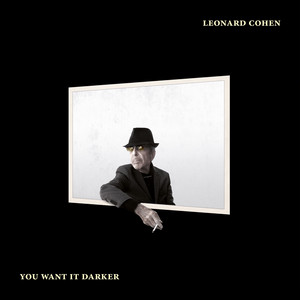
I came to this one almost entirely cold, and with a long-standing problem: the received idea of Leonard Cohen had put me off him for decades. Miserable bloke, black polo neck, student gloom, Neil from The Young Ones sighing into a bowl of lentils. That sort of thing. Well, that cliché lasted about thirty seconds. You Want It Darker is not soggy bedsit miserabilism. It is one of the most dignified late-life recordings I have ever heard: synagogue, blues, cabaret, soul, prayer, doubt, desire, judgement and bass. Proper bass, too. The opening title track does not shuffle in asking to be admired as an important old-man statement. It has propulsion. It moves. The bass leads like a dark engine, while Cohen’s voice sits underneath the earth, measured and immense. The whole album feels like bargaining: with time, God, death, darkness, love, the body, and the end. But it is not bargaining in the sense of denial. Cohen knows where he is. He knows the summons has arrived. The power comes from the fact that he still insists on naming the terms. That is what makes it such a powerful spiritual record. There is belief here, but not tidy belief. It is faith as argument, covenant as dispute, man going toe to toe with God. The album is full of religious language, but it is not pious in the meek sense. It is pious in the dangerous sense: I am here, now explain yourself. The album brims with musical confidence. The melodies are simple and ungilded. They do not strain to prove anything. Cohen has no interest in showing off, and the arrangements understand that completely. They frame him rather than embalming him. Organ, piano, bass, choir, violin, mandolin, strings, backing voices: everything is sparse, but nothing is thin. The record has mass. It also has extraordinary restraint. Cohen knows what not to give. He does not belt, plead, or perform frailty. He withholds, and that withholding becomes authority. There is still desire here, still humour, still sensuality, still old rogue self-knowledge, but all of it is controlled. He sounds physically reduced, but artistically immense. The album keeps returning to the idea of settlement. A treaty. A ceasefire. Not triumph, not romance restored, not transcendence. Terms. That is where the emotional force sits. Cohen is angry and tired, but he is not collapsed. He is still composing the argument, still filing the grievance, still trying to make the darkness answer properly. And in the middle of all this reckoning, love remains the great organising force. Not sentimental garnish, but structure. Love transforms the way you see the world. It works over distance like gravity. Without it, reality itself starts to lose weight. By the later stages, the album has become more than a deathbed statement. It becomes old man’s advice to the living. All the grand systems are compromised: religion, politics, romance, doctrine, the body, the self. So keep watch. Move mindfully. Correct your course. Steer. It is not comfort. It is better than comfort: usable severity. The ending returns to the desire for a treaty, first with strings that give the music gravity and mass, then with Cohen himself coming back one last time. That matters. The voice is not simply absorbed into tasteful elegy. He returns as the claimant. The peace was not signed. The dispute remains open. This is the difference between this and a lot of other late-life albums. I like some late Johnny Cash, but by comparison this feels like something more authored from the inside out. Cash’s late records can be moving, but they often feel like a great performer placed inside a powerful curatorial frame. Cohen feels like an auteur. The theology, bass register, humour, sensuality, anger, dignity, restraint and final moral weather are all emanating from the same source. It is not moving because he is dying. It is moving because, while dying, he is still in command. An unexpected five. Not necessarily a “play every week” five, but a complete artistic statement five. An “I’m not done yet” album made by someone very near the end, still bargaining with eternity, still arranging the furniture, still making sure the last words are good ones.
Rating Distribution
Rating Timeline
Taste Profile
Breakdown
By Genre
Top Styles
By Decade
By Origin
Albums
You Love More Than Most
| Album | You | Global | Diff |
|---|---|---|---|
|
Opus Dei
Laibach
|
5 | 2.39 | +2.61 |
|
Metal Box
Public Image Ltd.
|
5 | 2.42 | +2.58 |
|
Suicide
Suicide
|
5 | 2.46 | +2.54 |
|
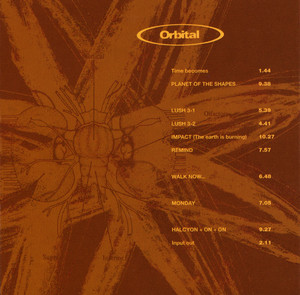
Orbital 2
Orbital
|
5 | 2.7 | +2.3 |
|
Jack Takes the Floor
Ramblin' Jack Elliott
|
5 | 2.7 | +2.3 |
|
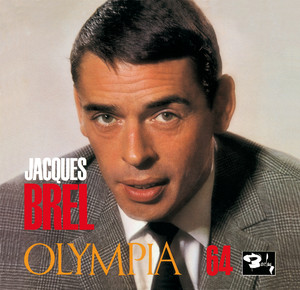
Olympia 64
Jacques Brel
|
5 | 2.77 | +2.23 |
|
The White Room
The KLF
|
5 | 2.78 | +2.22 |
|
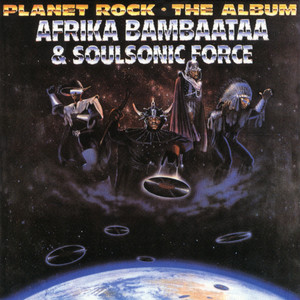
Planet Rock: The Album
Afrika Bambaataa
|
5 | 2.79 | +2.21 |
|
Third/Sister Lovers
Big Star
|
5 | 2.8 | +2.2 |
|
Apple Venus Volume 1
XTC
|
5 | 2.83 | +2.17 |
You Love Less Than Most
| Album | You | Global | Diff |
|---|---|---|---|
|
The Wall
Pink Floyd
|
1 | 4.13 | -3.13 |
|
Moving Pictures
Rush
|
1 | 3.56 | -2.56 |
|
Back In Black
AC/DC
|
2 | 3.83 | -1.83 |
|
Mellon Collie and the Infinite Sadness
The Smashing Pumpkins
|
2 | 3.68 | -1.68 |
|
Highway to Hell
AC/DC
|
2 | 3.63 | -1.63 |
|
Exile On Main Street
The Rolling Stones
|
2 | 3.59 | -1.59 |
|
Hotel California
Eagles
|
2 | 3.58 | -1.58 |
|
The Number Of The Beast
Iron Maiden
|
2 | 3.57 | -1.57 |
|
Iron Maiden
Iron Maiden
|
2 | 3.4 | -1.4 |
|
Music for the Masses
Depeche Mode
|
2 | 3.37 | -1.37 |
Artists
Favorites
| Artist | Albums | Average |
|---|---|---|
| Bob Dylan | 4 | 5 |
| R.E.M. | 3 | 5 |
| David Bowie | 3 | 4.67 |
| Joy Division | 2 | 5 |
| Joni Mitchell | 2 | 5 |
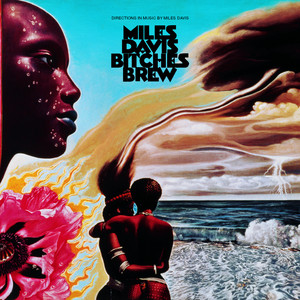
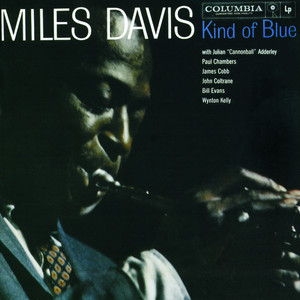
| Miles Davis | 2 | 5 |
| Prince | 2 | 5 |
| New Order | 2 | 5 |
| Beastie Boys | 2 | 5 |
| Aretha Franklin | 2 | 5 |
| Willie Nelson | 2 | 5 |
| Beatles | 2 | 5 |
| PJ Harvey | 2 | 5 |
| XTC | 2 | 5 |
| Nick Drake | 2 | 5 |
| Talking Heads | 2 | 5 |
| Nirvana | 2 | 5 |
| M.I.A. | 2 | 5 |
| Pixies | 2 | 5 |
| Massive Attack | 2 | 5 |
| Blur | 2 | 5 |
| Simon & Garfunkel | 3 | 4.33 |
Least Favorites
| Artist | Albums | Average |
|---|---|---|
| Rush | 2 | 1.5 |
Controversial
| Artist | Ratings |
|---|---|
| Pink Floyd | 4, 1 |
| The Rolling Stones | 2, 5, 5 |
5-Star Albums (151)
View Album Wall












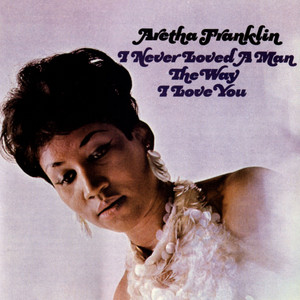


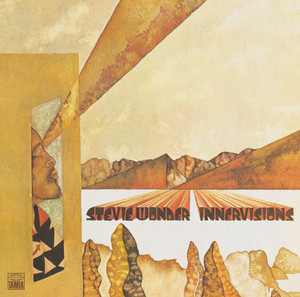
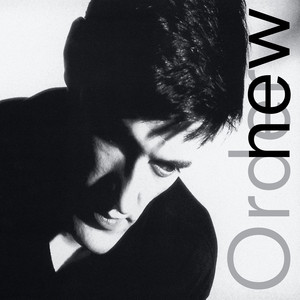


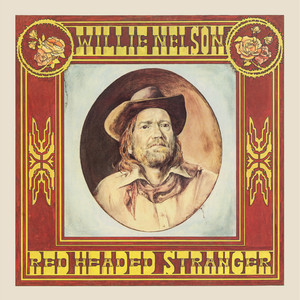





























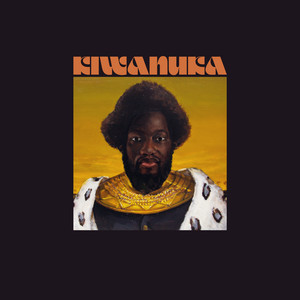


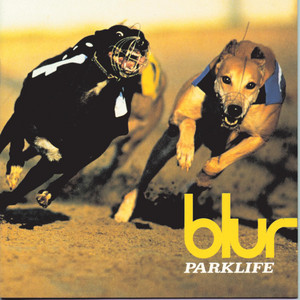


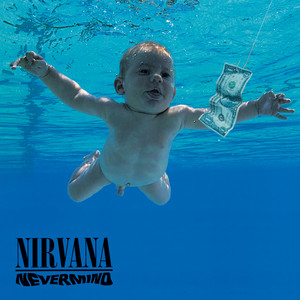


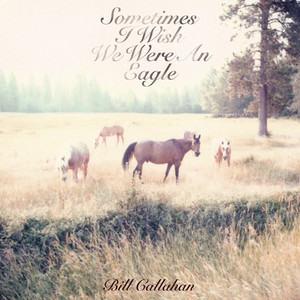









Popular Reviews
There’s a temptation with Bringing It All Back Home to talk about it like a monument. The great breakthrough. Dylan goes electric. Pop becomes art. All true. But what really strikes me listening now is how alive it feels. Not heavy. Not portentous. Alive. This album doesn’t lumber around announcing its significance. It skips. It laughs. It swaggers. It blurts ideas out at impossible speed and somehow keeps landing on its feet. The electric side still feels like a liberation. Not because of volume, but because electricity brings movement, melody and air. Suddenly Dylan can sing rather than declaim. The words bounce off the band instead of arriving as tablets of stone. Songs like Subterranean Homesick Blues, Outlaw Blues and Bob Dylan’s 115th Dream feel less like “important statements” than America itself turning into noise - adverts, cops, mythology, jokes, scams, speed, bullshit and possibility all talking at once. And then the acoustic side somehow goes even further. Mr Tambourine Man, Gates of Eden and It’s Alright, Ma (I’m Only Bleeding) aren’t just folk songs expanded by surrealism. They feel like thought itself changing shape inside pop music. Dylan stops explaining the world and starts flooding songs with fragments, recognitions, images and pressure. Every other line produces the same reaction: “Well… yes. Can’t argue with that.” But what stops the album collapsing under the weight of its own intelligence is joy. Even at its most serious, it never feels trapped by seriousness. There’s too much humour, too much movement, too much sheer pleasure in language and melody. Dylan sounds exhilarated by what songs can suddenly do. And then there are moments of extraordinary tenderness. She Belongs to Me and Love Minus Zero/No Limit are so melodically graceful they almost disguise their sophistication. Dylan’s reputation as a “poet” sometimes obscures what a startlingly good songwriter he became once the British Invasion pushed him toward melody and flow. By the time It’s All Over Now, Baby Blue closes the record, it feels less like an ending than a world quietly changing shape in front of you. The strained upward melody finally drops into that exhausted acceptance - “d’you know what? I’m done” - and pop music is never really the same again. An astounding achievement. Not because it makes pop heavier, but because it proves pop can contain more life
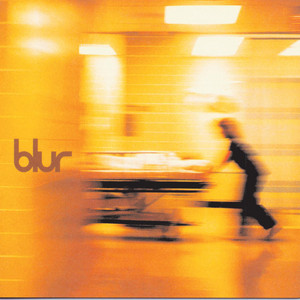
By 1997, Blur had already discovered that The Great Escape wasn’t. Parklife had made them Britain’s defining band, but The Great Escape showed them the cost. It was bright, clever, successful and increasingly airless: an album full of people trapped inside the lives they had supposedly chosen. The title now sounds less like a promise than a joke. Nobody escapes. Not the country-house exile. Not the office drone. Not the charmless man first glimpsed as graffiti in the toilets at Grantham station. Not Damon Albarn, who had spent years writing brilliant little novels about other people and was beginning to realise he might be trapped inside one himself. That is why the cover of Blur matters so much. A blurred figure on a stretcher, being rushed into A&E. Not a corpse. A casualty. The patient is Blur itself, being carried away from the Britpop wars after technically surviving them. Then comes Beetlebum. It is the crucial track because it does not merely announce a change of style. It enacts the thing the whole album is about. The song drifts in like late Beatles viewed through narcotic fog, owing something obvious to Happiness Is A Warm Gun, but the important moment is not the reference. It is that sudden opening when Damon sings “and when she lets me slip away”. For a few seconds, the burden lifts. The room brightens. Escape seems not only possible but beautiful. The rest of the album spends an hour testing that promise and discovering its limits. That is what makes the record so much more than “Blur discover American indie”. Pavement, Neil Young, Nirvana and lo-fi guitar culture all matter, but they are not the subject. They are tools. America itself is only another proposed exit. So are drugs. So is fame. So is love. So is reinvention. So is being in a band. The album keeps asking the same question from different angles: what if every escape route leads back to the person trying to escape? Song 2 understands this instinctively. It is not the album’s thesis. It is a controlled explosion, a joke about American alt-rock that accidentally became one of the most effective rock singles of the decade. In two minutes and two seconds, Blur blow the doors off and immediately risk creating a new trap for themselves. They escaped Country House only to create another monster. That, too, is part of the point. Even rebellion can be marketed. Even a joke can become your signature. After that, the album proper begins. Country Sad Ballad Man is the first sign that Blur have stopped merely arranging and started discovering. There is boxy air around the song. The band sound relieved, as though Graham Coxon’s wish for music that would “scare people” did not mean horror or aggression so much as uncertainty. The old Blur records are brilliantly designed. This one allows things to happen in the room. Damon’s writing changes accordingly. He had always been a great observer, but here the distance begins to collapse. Graham later said that Damon’s songs were revealing more to him than to Damon, and that feels central to this album. On Parklife, Damon is still the novelist. By Blur, the characters are becoming translucent. The teenager who dies in Death of a Party is not just a social type. It is Damon himself: the death of the belief that the next party, next drug, next lover, next country or next version of yourself will finally deliver the escape you were promised. That is why Graham is so important to the record. He is not merely the guitarist who brought in Pavement records. He is the counter-argument. While Damon keeps searching for exits, Graham keeps shrinking the frame. You’re So Great is almost embarrassingly simple, which is why it matters. It is not a manifesto. It is a small human solution: affection, coffee, television, ordinary life. The same instinct would later become explicit in Coffee & TV. Graham’s answer is not transcendence. It is sufficiency. Maybe simple things have to be enough. Damon is not there yet. Death of a Party is the “I hear you, Graham” song, but not yet the “I agree” song. It hears the argument that the party is over, that the teenage fantasy has died, that the search for elsewhere has failed. It does not yet know what to put in its place. Chinese Bombs, gloriously meaningless and furiously brief, is Graham’s “mid pop life crisis” in miniature: a refusal to let significance smother noise. Sometimes liberation is just eighty-four seconds of racket. Then the second half of the album tightens the noose. I’m Just A Killer For Your Love is not really romantic melodrama. It is letting go, self-deprecation, nullification. Hair cut off. Coat removed. Load dropped. Nothing lasts. Look Inside America is not Magic America revisited. That earlier song was still Damon the novelist, writing a character who projects salvation onto elsewhere. Here the distance is gone. America is real now: hotel rooms, Pepsi, bruises, exhaustion, Woody Allen on rewind. The promised land becomes another place where the same face looks back from the mirror. By Strange News From Another Star, the album has reached the point at which even another country is not far enough. Damon sings “I don’t believe in me” and asks “Will you love me though it’s always the same?” That may be the deepest wound on the record. Fame has failed as self-validation. America has failed as reinvention. Love cannot be safely made responsible for saving you. Even another star would not be far enough away if the problem travels with you. And then comes Essex Dogs. A paranoid, tired vision of 1997 over a strung-out jam. Orange sodium light, terminal pubs, panic attacks, tiny lawns, strange thoughts in the car. The spoken delivery is crucial. Damon no longer sounds like a singer inhabiting a song. He sounds like somebody watching himself through glass. The alienation is not just social. It is bodily. He is reporting experience rather than fully living it. The effect reminds me of Mudhoney’s Check-Out Time: not a sung confession, but an exhausted account from the edge of things. By this point the cover image has become unavoidable. The patient on the stretcher was not an abstract design choice. It was the album’s diagnosis. Blur survived Britpop, but survival left them injured. They won enough to discover that winning was not the same as freedom. The hidden track is the final masterstroke. After Essex Dogs, there is no grand resolution. No anthem. No healing speech. Just loops playing out like a haunted machine. The effect is like the Plastic Ono Band leaning guitars against amps in Toronto and walking away. Human drama ends. The system keeps running. Leave the loops running and go home. That is where Blur finally arrives. It begins with the narcotic promise of slipping away and ends with the acceptance that slipping away is temporary. Fame, America, drugs, love, success, reinvention: none of them can keep the door open. The self keeps turning up wherever you go. For a band trying to escape itself, that is a brutal discovery. For Blur, it became liberation.
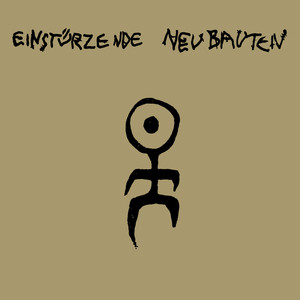
There’s a temptation with records like this to treat them as endurance tests, or as important artefacts to be respected from a safe academic distance. But what struck me revisiting it now is how physical it remains. Not “heavy” in the rock sense - heavy in the sense of weight, impact, resonance and pressure. You can hear rooms reacting to force. You can hear objects behaving according to their material properties. Forty years later, when almost anything can be simulated cleanly and infinitely inside a laptop, that still carries unusual power. What also becomes clearer with time is that this isn’t simply Year Zero iconoclasm or anti-music provocation. There’s already a lineage underneath it - Kraftwerk’s systems, Can’s repetition, German post-war modernity trying to invent itself outside Anglo-American rock language. The difference is that the sleek mediation has been stripped away. If Kraftwerk often presents the machine as elegant design, this presents infrastructure as lived condition - strained, metallic, unstable and psychologically exhausting. That’s why it increasingly made sense to me not as “noise” but as environment. Once you stop expecting conventional songs to emerge from the wreckage, the album starts functioning more like weather, architecture or civic atmosphere. Repetition becomes structural rather than hypnotic. Rhythm feels less like groove than labour. Even the clatter has internal logic once the ear adjusts to the idea that the machinery itself is part of the composition. What surprised me most this time was how many later cultural forms quietly sit downstream from it. Not just industrial music, but percussion theatre, found-object rhythm, machine aesthetics, infrastructural staging, even things as outwardly audience-friendly as Stomp. The idea that impact, metal, repetition and physical process could themselves become performance language no longer feels radical because the language escaped into culture decades ago. And yet the record still retains something genuinely unsettling. Not because it is chaotic, but because it sounds coherent in a way civilisation sometimes does under stress - systems continuing to operate while the human beings inside them absorb the strain. That may be why the closest modern comparison that came to mind during listening wasn’t another album at all, but the Down Deep in Silo: machinery not as background but as habitat. The remarkable thing is that the album still communicates all this without softening itself into accessibility. It remains abrasive, difficult and at times actively hostile to comfort. But the hostility no longer feels performative to me. It feels necessary to the world the record is trying to describe.
This is an album built on decisions. Each track isolates a single idea - dynamic contrast, withheld resolution, pure pop clarity, internal tension - and executes it without distraction. Nothing sprawls. Nothing drifts. Even the strangest moments feel contained within a clear frame. The core mechanism is simple but used with precision: loud and quiet, tension and release, or in many cases the deliberate refusal of release. What distinguishes the album is not the presence of these devices, but the discipline with which they are applied. Songs arrive, demonstrate their function, and exit before the idea weakens. There is a constant sense of iteration. One track offers a clean pop structure, the next denies resolution, the next compresses panic into a minute, the next withholds entirely. The album does not settle on a single answer, but explores multiple working models of what a song can be, all within a tightly controlled space. Production plays a decisive role. Where earlier recordings captured the band as an event, this presents them as a system. The rhythm section carries weight, the vocals are placed to serve the song, and arrangements are reduced to what is necessary. The result is clarity without loss of character. Despite the experimentation, the album remains highly legible. Hooks are present, but often disguised. Melodic intelligence runs throughout, even when delivered through abrasion or restraint. This balance between accessibility and subversion is central to its durability. Sequencing reinforces the design. Moments of openness are followed by denial, intensity is broken by brevity or humour, and apparent resolution is undercut by subsequent tracks. The album maintains forward motion while continually resetting expectation. The closing stretch does not resolve the preceding tensions so much as stabilise them. By the end, the band’s method feels complete - not explained, but demonstrated. The record concludes without flourish, leaving the system intact rather than summarised. The achievement lies in how much is done within strict limits. Short songs, minimal arrangements, and a narrow set of tools are used to produce a wide range of effects. The album feels both economical and expansive, a set of constraints pushed to their limit. This is not a document of a band searching for its identity. It is the sound of a band defining its operating principles in real time, and discovering that those principles hold.
4-Star Albums (109)







































1-Star Albums (2)


All Ratings
Enjoyed this. Wish I’d been more aware of it at the time. A fascinating collection of songs.
I like the 'no cymbals' rule. Engaging, thoughtful, listenable in spite of being Peter Gabriel. The singles were the best thing about the album, though, which slightly disappointed. Low 4 star.
An absolute masterpiece. Nilsson’s voice is in top form.
Unfussy roots Americana. Prefer CSNY.
Well, I know this one. JD don't fascinate me as much as they do some people, but I do love their iciness and the way the instruments sound out-of-tune and yet aren't. Good dynamics and drama. An accidental masterpiece.
A masterpiece, Joni in transition. Touching, marvellous and at times laugh-out-loud funny. Thanks to Prince for turning me on to this album in the first place.
On the one hand, a document of its time - that time a band that sounded like Slade had been influenced by the Pistols suddenly burst onto programmes like The Word and demanded your attention. It's also a major offender in the Loudness Wars, as Oasis's output was recorded so compressed that it pinned your ears against the wall. But the songs. Oh, the songs. Cigarettes and Alcohol in particular. Cryptic lyrics, rock 'n' roll excess and noize, noize, noize.
Not my thing at all at first, but grew considerably in stature on subsequent listens.
An absolute gem, this. Why have I never heard of it until today?
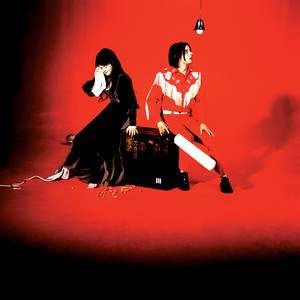
"Ya don't fuck abaht wi' Jack White" Jason Williamson, Sleaford Mods The White Stripes hit their high-water mark with this gorgeous 21st century refinement of garage rock. From the stadium-filling riffmonster that is "Seven Nation Army" to the whimsy of "It's True That We Love One Another", the album doesn't hit a bum note. An absolute classic.
A game changer. Admittedly one that spawned OMD, but let's gloss over that. I was fascinated by Kraftwerk as a child, and the notion that songs didn't have to be about humans, or, indeed, emotion. Love this album so much.
Perfect.
Great ensemble album, with the interplay between the band contributing to an incredible final product.
Absolutely stunning songwriting underpinned by Kenney Jones' perfect drumming. A great band for a great songwriter.
If this has been by any other band than the Stones, it would have passed without notice.
The best album of the 1980s and the last great album Prince recorded. I once broke a toe dancing barefoot to Housequake. It's that good.
A strangely tentative album with a degree of recycled material. Think I prefer Bookends.
Dazzled by the brilliance, put off by the cringe
I wouldn’t buy it, but if I walked into a bar with a band plying like that, I’d not only set the drinks up, but I’d have to be gently prised out of the bar at closing time whilst noisily shouting for yet another encore.
This is great fun - bright, daft, tuneful, but with something sly going on underneath. Little weird noises, odd turns, bits that seem to grin while they’re quietly rearranging the room. It comes from that moment where Brazilian music could be playful and dangerous at once - weird enough to smuggle the mischief through for a while before the junta caught up.
He sounds like the real thing straight away - not polished, not tidy, not trying to present folk music to you like it’s some worthy cultural item. More like he’s just wandered in with it already in his coat. What got me was how many sides of it are already there. Some of it feels ancient and half out in the wilderness, some of it feels grubby and practically feral, and then every so often it suddenly sounds oddly modern - like the road to a certain very famous young man from Minnesota is sitting there in plain view. That’s what makes it so good, really. It doesn’t feel “revivalist” in the later clean-shirt sense at all. It feels lived in. Scruffy, dry, funny in places, a bit haunted in others, and never trying too hard. You can hear why so many people would have nicked lessons from it, because it’s got that rare quality of sounding completely natural while still feeling a bit like a dispatch from another world.
This is one of those albums that reminds you how much can be achieved by simply getting the fundamentals right. Proper songs, properly sequenced, and a clear sense of what the record is trying to be from the first note to the last. It sits in that late 60s or early 70s tradition of the album as a continuous experience rather than a collection of tracks. There is an obvious lineage back to Marvin Gaye in the way it flows and holds its emotional temperature, but it never feels like an exercise in homage. It just understands the form and works within it. What stands out is the control. The album is clever, but never in a way that draws attention to itself. Influences are used as signals rather than statements. A hint of Watchtower in a guitar figure, French film music in the backing vocals, a touch of Blur’s 13 or Think Tank weariness in the tone. These elements appear briefly, do their job, and are absorbed back into the whole. The French film music strand is particularly effective. It allows the album to deliver emotion indirectly, through atmosphere and melody rather than declaration. Moments feel observed rather than performed, which keeps everything grounded even when the material could easily tip into grandness. There is also a strong thread of introspective gospel throughout. Not the outward, communal kind, but something more inward and reflective. It adds weight without volume and gives the album a sense of quiet moral seriousness without ever becoming heavy handed. Even when the record opens itself up, as on Hero, it feels like play within a defined system rather than a loss of focus. The palette broadens, but the identity holds. By the closing stretch, the cohesion is undeniable. Nothing feels like filler and nothing breaks the spell. What makes it land is the balance. It is clever, tender and heartfelt at the same time, which is harder to achieve than it sounds. Too much of any one of those and the whole thing would tilt. Here, they are held in proportion. It is not a concept album and it is not trying to be one. It is simply a collection of magnificent songs that belong together, and that is a rarer achievement than it used to be. A modern classic.
There’s a version of this album that shouldn’t work at all. Tango rebuilt inside a loop-based, downtempo framework sounds like the sort of idea that collapses into pastiche or polite background mush. It doesn’t. It holds. The key is restraint. Everything is tightly controlled. Rhythms are locked, arrangements are measured, and nothing is allowed to overperform. Even when the music heats up, it never tips into urgency. It just runs a little hotter at the same speed. That’s a difficult balance to strike and it’s maintained throughout. What stands out is how it behaves in a room. It doesn’t demand attention, but it isn’t ignorable either. Given a bit of time, it starts to feel less like a record and more like part of the environment. Little details drift through. Background noise, distant horns, the sense of a world just beyond the speakers. None of it is foregrounded, but it softens the edges of what could otherwise feel too clean or too sealed. There’s something quietly innovative about the approach. Not in a “look at this clever fusion” sense, but in how the system has been solved. Tango is treated as material rather than performance, something that can be looped, contained and recontextualised without losing its weight. It’s closer to ambient in function than anything else. Ambient tango is about as accurate a description as you’re going to get. It also sits in an interesting place historically. Released late in 2001, it feels like a late arrival from a 1990s mindset. Cosmopolitan, design-led, comfortable with blending traditions without worrying too much about where they came from. It doesn’t react to the shift happening around it. It just exists, fully formed, as a piece of work built on slightly earlier assumptions. The tone is completely straight. There’s no wink, no sense of novelty. That’s probably why it avoids becoming silly. The mischief, if there is any, is structural. The juxtaposition of elements, the decision to submit something expressive and human to a system that keeps it contained. It shouldn’t quite work, but it does. It’s also more precise than it first appears. There’s a kind of European functionalism to it. Everything is in proportion, nothing excessive, nothing undercooked. It feels assembled rather than performed. Closer in spirit to something like Yello without the overt playfulness. The method without the mischief on the surface. The limitation is that it rarely forces a reaction. The emotional range is narrow and it doesn’t escalate into anything overwhelming. You’re unlikely to come away changed by it. But that’s partly the point. It’s not trying to do that job. What it does do is create a stable, inhabitable space. Music that can be paid attention to or not, without collapsing either way. It’s a tool as much as anything else, something you can reach for when you want the room to settle without going flat. As an example of how to build something that is clever without being demanding, it’s very well judged.
This is where the Hi Records system properly announces itself, but it still feels human. Not yet the sealed perfection of the later records - there’s a bit of air in it, a bit of give - and that turns out to be part of the appeal. The title track is the obvious centre of gravity. Not much left to say about it except that the restraint sets the tone for everything that follows. Green never needs to push. The band never needs to decorate. It just sits at exactly the right emotional temperature and stays there. What becomes clear quite quickly is that the album isn’t interested in peaks. It’s about maintaining a condition. Groove over development, tone over display. The chords are rich but never announced - extended, softened, absorbed into the texture. You feel them rather than notice them. The rhythm guitar is a big part of that. Not strumming, more stitching - little muted fragments living in the gaps, keeping everything moving without ever drawing attention to itself. Take it out and the whole thing would quietly collapse. Green’s voice operates on the same principle. Minimal attack, gliding into phrases, often into falsetto without any sense of a join. It’s the opposite of belting. Presence without force. When he does get “muscular”, it’s by his own standards - a slight increase in weight or grain rather than any obvious push. “So You’re Leaving” is a good example of how the arrangement splits the emotional load. The horns carry the urgency, flirting with overstatement but stopping short. Green stays composed, which makes the underlying tension feel more real. It’s someone holding themselves together rather than falling apart. “I’ve Never Found a Girl” is almost absurdly understated at the start. He arrives mid-thought, barely disturbing the groove. It feels less like a performance and more like you’ve tuned into something already happening. “How Can You Mend a Broken Heart” shifts register entirely. Less a song, more a sermon. The arrangement thins, time stretches, and the question just sits there. Heartbreak as testimony rather than drama. The organ work here is exceptional - swell pedal constantly shaping the dynamics, Leslie speed changes judged rather than showy. Nothing is static, but nothing calls attention to itself. “Old Time Lovin’” leans harder into the gospel side. More communal feel, more rhythmic insistence, but still under control. The band suggests lift without ever fully committing to it. Across the record there’s a pattern with the endings. You expect the fade, and it doesn’t come. Or it comes late, only once the repetition has done its job. The groove is allowed to sit, to become a state rather than a section. The fade feels like permission rather than structure. “Judy” works as a restatement of the method. Same components, fully aligned. No attempt to conclude anything, just a quiet confirmation that the system holds. “Ain’t No Fun to Me” closes things out in a slightly deeper register. Same approach, but with more weight under it. It could have gone swampier, grittier, but it stays within the Hi discipline. Restraint carrying heat and heft rather than absence. What the album gets right is proportion. Nothing overreaches, nothing is missing, and nothing is there for show. It doesn’t try to impress you. It just keeps being correct. And that turns out to be harder to achieve than anything more obviously ambitious.
There’s a particular kind of record that doesn’t try to ingratiate itself. This is one of them. First pass, it can feel a bit narrow - everything sitting in a similar register, no obvious low-end cushion, vocals that don’t soften or blend in the expected way. You can see how someone might reach for “samey” and think the job’s done. But it isn’t repeating because it’s run out of ideas. It’s holding a system in place. The guitars split the work rather than stacking it, the drums carry more weight than you initially clock, and the two voices don’t really harmonise so much as coexist in a kind of managed tension. It’s not a band missing a bass player, it’s a band that has redistributed the function. The title track is a good example of the con. It doesn’t sound bass-less because the job has been spread around. “One More Hour” is where the twin-voice thing really shows itself - not blending, not resolving, just two lines occupying the same space with different intent. That’s the engine. “Turn It On” is the fork in the road. The insistence either locks you in or sends you packing. It doesn’t develop so much as hold, and if you’re not listening for what’s happening inside that, it can feel like it’s going nowhere. If you are, it’s doing quite a lot. “The Drama You’ve Been Craving” proves they can shape things when they want to. “Heart Factory” is where the architecture becomes visible - same system, but the gain is down and you can hear the wiring. The chorus feels like a Blue Peter “here’s one we did earlier” reveal rather than a bolt-on payoff. “Little Babies” is scurrilous fun, a bit of a sanctioned breach of protocol. “Not What You Want” is a straight declaration - no negotiation, just the line set down and left there. “Buy Her Candy” shifts again, more observational, slightly off-centre, implying more than it states. It’s one of the more adept reworkings of the power trio I can think of. Nothing is missing, it’s just been reassigned. Once you hear that, the rest follows. It doesn’t charm you. It convinces you it works. And it does.
This is one of those records where everything is clearly in place and nothing quite lands. It announces itself as significant from the off - layered, deliberate, very sure that it has something to say. I kept waiting for the point where that confidence translated into something I could actually get hold of. It never really happened. The lyrics are the main issue. There’s a lot of elevated language, but it feels chosen rather than found. Phrases stack up, suggest meaning, then dissolve before they resolve into anything concrete. Reading them doesn’t help. If anything it makes the problem clearer - this is language doing an impression of depth rather than delivering it. There’s also a persistent mismatch between words and rhythm. Lines don’t sit naturally on the groove. You can hear them being manoeuvred into place, which gives the whole thing a faintly constructed feel. Instead of locking in, everything just continues. Musically, it’s competent throughout. The arrangements are tidy, the playing is solid, and there are occasional flashes - some of the horn work hints at something more modular and interesting. But those moments don’t develop. They register as texture rather than structure. Eight tracks in, something finally caught my ear. Even then it felt like a fairly safe song wearing a vaguely Kid A-adjacent electronic coat. Underneath, it’s still straightforward, and the sense of risk never really materialises. There’s a constant feeling of forward motion - a kind of vague marching somewhere - but no real destination. The album keeps implying that something is about to matter, and never quite cashes it in. That’s what turns it from merely unengaging into actively frustrating. I can see why it was well received at the time. It looks like an important record. It sounds like one. But on a full listen, it doesn’t give me enough to justify that status. For all the intent, it never establishes a clear centre of gravity. Fifty minutes later, I’m left with the sense of having heard something carefully made, broadly admired, and ultimately disposable.
The opening run is stronger than I expected. “Hells Bells” establishes a sense of space and intent that simply isn’t there on Highway to Hell. It feels placed rather than thrown together. The bell is theatrical, but it earns its keep - it creates a room. “Shoot to Thrill” continues that. There’s a sense of purpose to the riffing, a feeling that the band is operating as a unit rather than a gang. This is where Mutt Lange really shows - the edges are tightened, the slack removed. It’s not deeper, but it is more controlled. “What Do You Do for Money Honey” is the first reversion to type. The chant returns, the tone drops, and we’re back in familiar territory. It’s well executed, but it’s also the point where the album reminds you exactly what it is. “Given the Dog a Bone” and “Let Me Put My Love Into You” sit squarely in the “Big Balls” lineage. Blunt innuendo, repetition as delivery mechanism, humour as bonding signal. There’s a degree of self-awareness, but it’s not doing any work beyond maintaining the system. This is where the Spinal Tap comparison stops being glib. The title track, “Back in Black”, is less interesting than its reputation suggests. It’s a statement rather than an exploration - a logo stamped repeatedly. It does its job, but the job is limited. “You Shook Me All Night Long” is monoculture in its purest form. It’s designed to function anywhere, for anyone, with no adjustment required. That portability is the achievement and the limitation. It leaves no residue. “Have a Drink on Me” and “Shake a Leg” continue in the same vein - efficient, confident, entirely surface-led. By this point the system is fully visible and no longer especially engaging. “Rock and Roll Ain’t Noise Pollution” closes the album by stating the thesis outright. It’s defensive, declarative, and pre-emptive. There is no ambiguity left to deny - it has already been eliminated. The album is clearly superior to Highway to Hell in terms of control and execution. It is a blunt instrument refined to the highest standard. But the refinement serves a single purpose - the removal of ambiguity. That is the achievement. It is also the limitation
Came to this expecting the cliché: cocaine bloat, loss of discipline, a band disappearing up itself. That’s not what it is. It’s looser than the early records, yes, but the looseness reads as process rather than collapse. You can hear them thinking. The opening piece sprawls, but not aimlessly. It’s sectional in a very “we’re following this idea and seeing where it goes” way. That tone carries through the album: decisions are audible, sometimes provisional, often kept. It isn’t polished into inevitability. It feels closer to a room than a monument. The production is a factor. There’s a persistent low-mid density, a kind of baked-in murk. At times it is atmospheric, at others it tips into congestion. On certain tracks it genuinely feels like the top end has been shaved off, everything sits in the same band and merges. The interesting thing is that this occasionally works functionally. When the band collapses into a single mass, the vocal and lyric become the only clearly legible element. Whether that is intention or acceptance does not really matter. It behaves like a choice. Then you get a track that snaps everything back into focus. Proper groove, proper separation, bass and drums doing something elastic and alive rather than just underpinning the guitar. It has that “what if we push this bit harder?” energy, very similar to mid-60s McCartney’s habit of turning a supporting part into the engine of the track. It proves the band have not lost control. They are choosing when to exercise it. There is a recurring sense of play throughout, but not in a showy or ironic way. More like a Midlands habit of trying things without over-framing them. Odd detours, a folkish lilt here and there, an instrumental that just exists because someone liked the sound of it. Nothing is over-justified. The album tolerates things being a bit off if they have life. The “coke song” is striking for how unromantic it is. It does not glamorise or veil particularly. It just states. Change the lyric and the track still works perfectly well as a Sabbath piece, which tells you where the real weight sits. The acoustic interlude is well judged. It opens the space up without tipping into sentimentality. Crucially, it does not announce itself as “the beautiful bit”. It just appears, does its job, and moves on. That restraint keeps it from drifting into parody. The closing track is effectively a corrective. After all the wandering and texture, it reasserts the core identity in very blunt terms. Big riff, clear stance, no ambiguity. Lyrically it is a straightforward rejection of imposed belief, not argued, just stated. It feels less like ideology and more like someone deciding they are not going along with something that had been presented as normal. That thread, the sense of rejecting something ambient and inherited, runs underneath more than it initially appears. It does not come across as theatrical rebellion. It is flatter, more matter-of-fact than that. Overall, this is not their tightest or most consistent record, but it is one of their most revealing. You hear the band without much filtering: the instincts, the overreaches, the good calls, the questionable ones. It is uneven, but it is inhabited. That counts for a lot.
This is best approached as a continuous system rather than a set of songs. It behaves like a room with conditions that are established early and then maintained with quiet discipline. The sequencing is closer to a DJ set than a traditional album: it warms up, fills, peaks, disperses, and decompresses without ever breaking the underlying logic. The palette is immediately legible and very 1990: house piano, light organ, vocal fragments, and a bouncy, funk-derived bass that does most of the real work. The interesting thing is how little they feel the need to elaborate on that. There is no attempt to demonstrate range, no “depth track” to clear the floor, no structural detours designed to prove seriousness. The achievement is that they hold a consistent social temperature for the full run. Most of the material operates on loop logic. Phrases repeat, mutate slightly, and accumulate detail rather than progressing in a linear, narrative sense. You stop tracking sections and instead inhabit a continuous present. The arrangement is often compressed in the sense that there are few clear signposts: elements enter and leave, but nothing announces itself as a formal shift. This is functional. It removes the listener’s ability to step outside the groove and encourages participation over analysis. “Groove Is in the Heart” sits oddly within this. It is an exceptional single, but it behaves differently from everything around it. Where the rest of the album sustains a situation, this track creates an event. It is denser, more foregrounded, more obviously structured. It briefly imposes hierarchy on a record that otherwise avoids it. In lesser hands that would fracture the flow; here it reads more like a spotlight moment within an ongoing set. The decision not to follow it by escalation is key. They immediately return to play, which restores the album’s underlying logic. Elsewhere, the record moves through variations on the same core idea: groove as environment. “Deep Ending” leans into early deep-house language, softening edges and extending time without becoming introspective in a later, more codified sense. “Build the Bridge” is particularly instructive. Its extended opening groove and pared-back arrangement feel more like a cold opener than a closing statement, which is precisely why it works at the end. The album does not resolve; it hands the room back to you. There is a persistent analogue quality to the feel, despite the reliance on samplers and early digital instruments. This comes less from equipment than from behaviour. The basslines carry human phrasing, the timing is not rigidly quantised, and the layering allows air between elements. The result is a system that feels lived-in rather than constructed, even when the construction is obvious. It has dated, but in a useful way. The sound world is specific and unmistakable, but the functional design still holds. This is not a record that rewards close textual analysis or repeated dissection. It rewards tolerance of repetition, attention to flow, and a willingness to let it operate at the level it was designed for. Put simply: it works if you let it work. It is not a great album in the traditional sense of statement or depth. It is a very good example of something more modest and, in its way, more difficult: forty-five minutes of continuous, usable groove that neither collapses nor demands attention.
Blue Lines feels oddly displaced in 1991. Put it beside much of the surrounding product and it sounds three or four years ahead of schedule. Not because it is futuristic in the obvious sense, but because it seems to have bypassed the period’s main argument. While a lot of early-90s music was still negotiating its escape from the 1980s, this sounds as if it has quietly moved on and built a new working model. The record’s achievement is structural. It draws from dub, soul, hip-hop, sound-system culture and post-punk collectivism, but it never feels like a collage. It feels like shelves full of records have become a method. The samples, voices and grooves are not displayed as clever references; they are absorbed into a system. What is most striking is the lack of ego. Nobody tries to dominate the room. Voices enter, occupy a space, then step back. Bass carries authority without bluster. Space does as much work as sound. The album understands that restraint is not absence - it is organisation. That is why it feels so different from more obvious 1991 crossover records. Those often bolt dance, samples or noise onto a band-shaped object. Blue Lines does something more radical: it removes the assumption that the band is the natural centre. The track becomes a room, a field, a negotiated space. There is a lineage here that goes back through dub and sound systems, but also through the rambling collective logic of post-punk and Bristol squat culture. The Pop Group, early Thompson Twins, Soul II Soul (Not Bristol; granted), Wild Bunch - not because they all sound alike, but because they share a belief that music can be a social system rather than a vehicle for one front person. The sequencing is superb. The album moves without seeming to push. It can ramble and not ramble at the same time. The title track into Be Thankful for What You’ve Got is a masterclass in loose structure that is actually tightly governed. Five Man Army makes the sound-system roots explicit, then Unfinished Sympathy gives the whole system propulsion without rupturing it. Even the monster track does not stand outside the album like a novelty hit. It blooms from within it. By the end, Hymn of the Big Wheel feels like the collective writing QED after showing its working for forty minutes. Dub, soul and austere electronics line up, and the album simply demonstrates that the system holds. Its influence is hard to overstate because it is not merely a style record. It changes what later records can be: voice inside environment, beats that breathe, albums as inhabited spaces, collective authorship without chaos. Without Blue Lines, a great deal of 90s and post-90s music becomes harder to imagine. A masterpiece, but not a showy one. More like a lodestone: looking back to 1977 and earlier, pointing forward to much of what came next.
It took me a while to properly sit with this, and I’m glad it happened now rather than earlier. On first principles it shouldn’t quite work for me – too many voices, rough production, fragments of other records stitched together – but once it clicks, it reveals itself as a very coherent system. The key is to stop hearing it as a collection of tracks and start hearing it as a room. There’s a fixed loop running, usually quite minimal, slightly degraded, sometimes almost obstinate in its refusal to develop. That loop isn’t there to impress. It’s there to hold space. Into that space, voices arrive, make an impression, and leave. There’s no attempt to smooth the joins. In fact, the abruptness becomes part of the appeal. You end up listening for entrances and exits rather than conventional song structure. What makes it work is the strength of those voices. They’re distinct enough that you recognise them quickly, even before you fully understand what they’re saying. Some are controlled, almost breathless in their precision. Others are relaxed and warm, sitting easily in the groove. And then there are the moments where everything threatens to come apart, when a voice leans too hard on the beat or seems to ignore it altogether. Those are often the best bits. The system holds, but only just, and that tension keeps it alive. The production is crucial. The samples are not treated reverently. They’re chopped, pitched, degraded, and looped until they lose any comfortable emotional context they might once have had. You can hear the soul records in there, but they’ve been forced into a different role. Rather than providing warmth, they become slightly unstable building materials. That avoids the mawkishness that can creep in when borrowed feeling is left intact. Even the more reflective moments are held in check by the rigidity of the loop and the roughness of the sound. There’s also a surprising amount of humour. Not in a gag-led way, but in the character of the performances. Lines land because of timing and delivery rather than punchline construction. There’s a sense of people enjoying themselves within the constraints, occasionally nudging the whole thing off balance for the sake of it. That stops the record from becoming overly serious or portentous, even when the subject matter is heavy. When it does slow down and allow more space for reflection, it does so without changing the underlying method. The same loops, the same constraints, but with more direct emotional content. What comes through strongly is a tension between regret and pride, particularly around the idea of the hustle. It’s not moralised or resolved. It’s simply presented as a set of conditions that shape identity. The detail is specific enough to feel lived-in, which anchors the emotion and keeps it from drifting into abstraction. There’s a clear lineage back to earlier socially grounded records, but the approach here is less about explaining and more about inhabiting. Rather than guiding the listener through a narrative, it drops you into a working environment and lets you pick up the language as you go. Certain phrases function more as signals than statements. You understand what they do long before you can fully parse what they mean. Over time, that becomes part of the record’s internal logic. What’s impressive is how complete it feels while still sounding like a method in development. You can hear the limitations – of equipment, time, resources – but those limitations are not disguised. They’re absorbed into the aesthetic. The rough edges aren’t just tolerated, they’re doing active work. Clean it up and you’d lose the sense of immediacy and the slightly off-kilter atmosphere that makes it distinctive. In the end, it’s not a tidy album. It doesn’t build neatly or resolve cleanly. But it establishes a set of rules and then demonstrates how much can be done within them. It feels like a world you enter rather than a statement you evaluate, and that’s why it rewards repeat listening. Each pass makes the structure clearer and the details more legible, without ever flattening its strangeness.
This isn’t an album of songs. It’s a functioning environment. What Blur do here is build a model of a place - not just geographically, but psychologically and socially. People move through it, systems shape them, routines carry them along, and every so often something breaks, or opens, or reveals what’s actually underneath. The early stretch establishes the rules. Behaviour is patterned, desire is procedural, identity is something performed within constraints. The city is alive, but not in a romantic sense. It observes, absorbs, and moves on. You are part of it, whether you fully belong or not. As it progresses, the focus tightens. The external gives way to the internal. You start to feel the cost of that system - the fatigue, the misfires, the sense that communication isn’t quite landing, that effort doesn’t resolve cleanly. The loops are still running, but they’re no longer comfortable. Then the album does something most records wouldn’t dare. It opens up completely. The scale shifts. The language of infrastructure - the Shipping Forecast, the rhythms of broadcast and routine - becomes emotional. Not metaphorically, but directly. It taps something below conscious thought. It’s no longer observation. It’s contact. And just as you’re left there, in something vast and involuntary, it brings you back. Not with a grand statement, not with resolution, but with a small, almost absurd piece of continuity. Life goes on. The system resets. The kettle goes on. That’s the achievement. It holds humour, sadness, observation and scale in the same space without collapsing into any one of them. It never overstates its case, never demands to be understood, and never loses control of its own logic. You don’t listen to it for answers. You step into it, recognise the patterns, and leave with a slightly clearer sense of how things actually feel to live through. That’s why it lasts.
A curious one, this. A bedroom record that somehow learned how to behave in public without ever really changing its clothes. What strikes me most is how controlled it is. Everything sits within a very narrow emotional and sonic range - loops, acoustic guitar, soft electronics, and a vocal that never really raises its voice. No spikes, no shocks, no great reveal. It just holds a feeling and lets it run. That could have been fatal. On paper, this is exactly the sort of thing that disappears without trace - too quiet, too unassuming, no obvious scene to carry it. Instead, it does the opposite. It embeds. You don’t have a moment where you fall in love with it, you just notice you haven’t stopped playing it. The method is the thing. This is singer-songwriter material processed through a repeatable system - closer to synth-pop working practice than folk performance. Patterns first, feeling laid over the top. It gives the songs a kind of portability. They don’t depend on performance energy, so they travel. Headphones, car, kitchen, doesn’t matter. Same job, every time. Lyrically it stays in one lane - relationships under strain, distance, trying to hold things together. There is very little sense of a wider world. No characters, no humour, no shift in perspective. Just one voice, circling the same set of feelings until they settle. That is either its strength or its limitation, depending on what you want. “Sail Away” is probably the purest expression of the whole approach. Simple piano figure, minimal movement, voice doing all the work. Nothing to hide behind, nothing to add. It either lands or it doesn’t. For me, that is the point where the album makes the most sense. The Soft Cell cover is revealing in a different way. By stripping out the theatricality and running it through this system, you can hear the working method clearly. The Van Morrison phrasing and lyrical nods pull it even further away from its original context. As a die-hard Cellmate, that takes a moment to adjust. It is less a reinterpretation than a re-domestication. The emotional contract is very clear - this will not upset the room. It will not challenge you. It will sit alongside your life and behave itself. That is why it sold, and kept selling. It anticipates portable listening before the ecosystem properly arrived. Not a big statement, more a useful object. I can admire it without quite loving it. It is touching in places, but so resolved that I find myself slightly outside it, watching it work rather than being pulled in. And yet it is hard to argue with. It does exactly what it sets out to do, with very few moving parts, and almost no waste
This is an album built on decisions. Each track isolates a single idea - dynamic contrast, withheld resolution, pure pop clarity, internal tension - and executes it without distraction. Nothing sprawls. Nothing drifts. Even the strangest moments feel contained within a clear frame. The core mechanism is simple but used with precision: loud and quiet, tension and release, or in many cases the deliberate refusal of release. What distinguishes the album is not the presence of these devices, but the discipline with which they are applied. Songs arrive, demonstrate their function, and exit before the idea weakens. There is a constant sense of iteration. One track offers a clean pop structure, the next denies resolution, the next compresses panic into a minute, the next withholds entirely. The album does not settle on a single answer, but explores multiple working models of what a song can be, all within a tightly controlled space. Production plays a decisive role. Where earlier recordings captured the band as an event, this presents them as a system. The rhythm section carries weight, the vocals are placed to serve the song, and arrangements are reduced to what is necessary. The result is clarity without loss of character. Despite the experimentation, the album remains highly legible. Hooks are present, but often disguised. Melodic intelligence runs throughout, even when delivered through abrasion or restraint. This balance between accessibility and subversion is central to its durability. Sequencing reinforces the design. Moments of openness are followed by denial, intensity is broken by brevity or humour, and apparent resolution is undercut by subsequent tracks. The album maintains forward motion while continually resetting expectation. The closing stretch does not resolve the preceding tensions so much as stabilise them. By the end, the band’s method feels complete - not explained, but demonstrated. The record concludes without flourish, leaving the system intact rather than summarised. The achievement lies in how much is done within strict limits. Short songs, minimal arrangements, and a narrow set of tools are used to produce a wide range of effects. The album feels both economical and expansive, a set of constraints pushed to their limit. This is not a document of a band searching for its identity. It is the sound of a band defining its operating principles in real time, and discovering that those principles hold.
There’s a particular trick this record pulls that still feels rare: it speaks fluent mid-80s pop, then refuses to deliver any of the expected outcomes. Everything about the surface says “big record.” Brass, propulsion, clarity of phrasing, a sense of scale. The grammar is shared with the era’s more aspirational end of pop, drawing on blue-eyed soul for movement and emotional directness. But the function is inverted. Where that language usually resolves tension, here it sustains it. The listener keeps expecting lift, payoff, reassurance. Instead, the songs hold their nerve and leave things open, sometimes uncomfortably so. The opening establishes this immediately. A long, deliberate intro that builds environment before voice. It doesn’t rush to declare itself as “song.” It places you inside a system already in motion, then introduces a narrator who sounds less like a guide and more like someone already affected by the conditions. That sense of prior contamination runs through the whole album. From there, the record alternates between propulsion and immersion. Tracks move, but rarely cleanly. Rhythms feel driven rather than grooving, as if under pressure. The low end behaves more like terrain than foundation, creating resistance rather than flow. It’s not murk for its own sake. It’s a deliberate density that denies easy listening positions. You’re in it, not above it. Lyrically, the record avoids the two common traps of “political” music: slogan and satire. Instead, it operates through inhabitation. Voices feel lived-in rather than declared. There is an actorly instinct at work, but it’s not performative in the usual sense. Characters are not presented for inspection. They are occupied. That matters because it removes distance. You are not asked to agree or disagree. You are asked to experience a mindset from within. At the same time, the album never fully disappears into naturalism. There is a constant counterforce, a subtle distancing effect. The arrangements are often too large, the brass too present, the phrasing occasionally too pointed for pure immersion. You are made aware, intermittently, that you are inside a constructed system. That oscillation between immersion and awareness is central. It allows the record to feel human and analytical at once. Anne Dudley’s contribution is critical here. The brass arrangements do not decorate or uplift. They accumulate. Lines overlap, chords lean, phrases arrive before previous ones have cleared. The result is pressure. Not chaos, but a controlled closing-in. It’s a long way from the elegance of her work elsewhere in the decade. Here, the same tools are used to remove oxygen rather than provide lift. The middle section of the album expands outward without offering relief. National and international themes are introduced, but not as abstract commentary. They feel like extensions of the same internal unease. The record suggests continuity between personal experience and larger systems, without flattening one into the other. It avoids the easy move of locating blame entirely elsewhere. There is always an implication that the narrator, and by extension the listener, is inside the same arrangement. One of the album’s strengths is its handling of time. It does not read like hindsight. It feels like real-time recognition. The language is general enough to travel, but specific enough to bite. That’s why certain tracks continue to feel contemporary. They describe patterns of behaviour and consequence rather than fixed events. The locations can shift, the mechanics can evolve, but the underlying situation remains recognisable. The final stretch avoids resolution altogether. There is no grand statement, no collapse, no redemption. Instead, the record moves into smaller, more intimate spaces, then ends with a sense of preparation for something unspecified but serious. That ambiguity is deliberate. By refusing to name the act, the song leaves the listener inside the state of readiness. It is a deeply uneasy way to close, but entirely consistent with what has come before. Across the album, the sequencing functions as an argument. World-building leads to immersion, then to diagnosis, internalisation, consequence, and aftermath. At no point does the record step outside itself to explain. It trusts the listener to make the connections, or at least to feel them. What holds it all together is discipline. There is a lot here that could have tipped into excess: the scale of production, the conceptual ambition, the density of arrangement. It never quite does. The songs remain legible. Hooks remain intact. The pop engine continues to run, even as it carries increasingly difficult material. That balance is the achievement. Not simply that the album has something to say, but that it says it using a language designed to smooth things over, and refuses to smooth anything over.
There’s a temptation to treat this as a cultural event first and a record second, but it holds up better when you reverse that. The mechanics are surprisingly disciplined. A narrow melodic vocabulary runs right through it - stepwise movement, familiar phrase lengths, recurring interval tensions - and instead of expanding that palette, the band keeps it fixed and varies everything around it. It’s a constraint system more than a showcase. The songs are built on very simple harmonic beds, often deliberately under-specified. Power chords remove the third, leaving the vocal to imply colour. That’s where the friction lives. Cobain repeatedly places brighter tones - major thirds, occasional major seventh inflections - against a darker or neutral backing. It doesn’t resolve in a blues sense, it just sits there, slightly wrong. That becomes one of the album’s most reliable signatures: hooks that feel good in the mouth but never quite settle emotionally. Arrangement does the work that harmony might otherwise do. Dynamics are structural, not decorative. Quiet/loud isn’t an outburst, it’s a switching system. Sections are defined by density, saturation and timing rather than chord movement. “Stay Away” is a good example of harmony being almost entirely static while the form is carved out by stops, starts and pressure changes. The band has to be tight for that to read, and they are. The unison vocal/guitar move is another piece of engineering that masquerades as instinct. It turns a simple line into something physically larger without adding harmonic information. Slight imperfections between the two sources create a natural smear, which reads like an effect. It’s doing the job of processing through alignment rather than circuitry. That idea extends to the vocals more broadly. Double-tracking isn’t just thickening, it’s a scaling mechanism. When it drops back to a single voice, the focus narrows instantly and the listener is pulled into the detail of phrasing and words. There’s a quiet redistribution of roles within the trio. The guitar is often blocky and declarative, the vocal sits within its established range, and the bass carries more of the internal movement than it’s usually credited with. “Lounge Act” makes that explicit, with countermelodic lines that imply harmonic direction underneath fairly blunt guitar shapes. It’s one of the ways the record avoids true monotony even while the topline language stays consistent. What keeps it from feeling like an exercise is the variety of conditions applied to that same core system. The opening stretch cycles through maximal impact, commentary, suspended atmosphere and compressed aggression without changing the underlying grammar. Later tracks show the method more plainly. “On a Plain” feels almost like the template exposed - clear form, recognisable phrasing, no need for extreme dynamics to make it land. “Something in the Way” strips the system to its limit case, where harmony, development and even performance energy are reduced to almost nothing, leaving tone and space to carry the weight. The hidden track complicates the sense of closure. After a genuinely resolved ending, it reintroduces instability in a way that feels less like an extra and more like a refusal to let the record settle into a single reading. It’s not essential to the core argument of the album, but it does underline that the band’s range extends beyond the controlled environment they’ve built. What emerges is less a collection of distinct songs than a single, well-defined approach examined from multiple angles. The melodic consistency that might initially register as limitation becomes the binding agent. It allows the listener to track changes in texture, dynamics and interaction more clearly, because the underlying language stays constant. The result is a record that feels authored and cohesive without needing stylistic variety to prove it.
This isn’t a unified statement but rather a sequence of states. It makes more sense to view it as a person navigating something in real time rather than expecting a tidy argument. The early run is most compelling because it stays within the loop. You gain analysis without an exit, clarity without change and a sense of thoughts arriving mid-line rather than being presented as conclusions. The voice effectively conveys this, sounding like thinking under pressure rather than performance. However, it falters slightly when it attempts to stabilise itself too quickly. There are moments where lived experience transitions into instruction, which are less convincing. This is partly because they claim a level of authority that the rest of the record quietly undermines. With hindsight, they read less like conclusions and more like attempts to impose order. Initially, the classroom framing feels a bit on-the-nose but improves as the album progresses. It shifts from sounding like “here’s the lesson” to “here’s how I’m trying to organise this”. In this sense, it becomes part of the subject rather than a device imposed on it. Midway through, the record shifts between modes quite sharply. This can feel lumpy if you expect a smooth flow but it more accurately reflects how people actually move through things: insight, relapse, resolve and calm. It’s not a straight line and not always consistent. The strongest material is where it acknowledges this inconsistency. Songs that remain within the pattern or return to it carry more weight than those that try to close it down. They feel observed rather than asserted. Later on, the tone softens. There’s less argument and less need to define, and more acceptance of what is. This doesn’t resolve the situation but rather changes the internal relationship to it. The calm feels real because it doesn’t overclaim. The title track serves as the perfect conclusion, stepping away from systems and statements to return to a human scale. It doesn’t seek to win an argument but presents a position that can be lived with. This authenticity resonates and makes it a satisfying end. Overall, the album isn’t a seamless whole. Instead, it’s better seen as a document of movement capturing different versions of the same person at various stages. Some of these versions contradict each other, which is part of its value rather than a flaw. The result is a record that thrives when it resists resolution. It holds together not through formal integration but through a consistent voice and a willingness to leave things partially unsettled.
Savane is one of those albums that makes the category “world music” feel not just inadequate, but actively stupid. It tells you nothing. It is like filing every meal under “food” and imagining you have described dinner. The opening track is almost an onslaught: wiry strings, voices, percussion, heat, dust, everything arriving at once. It feels less like an album starting than being dropped into a street already in full motion. At first the density is disorientating. Then the ear adjusts, and what seemed tangled begins to reveal routes, patterns, conversations and functions. What follows is not a polite desert-blues record, and certainly not Sunday-morning background listening. It is rousing, communal, physical music. The repetition is not decorative or lazy. It is load-bearing. A pattern is established, then lived in. The detail comes through small variations: a percussion accent, a vocal turn, a bowed scrape, a guitar line catching light at the edge of the groove. The structure holds so that the human life inside it can move. That may be the album’s deepest strength. It uses trance at its best: not as drift, but as social technology. The groove organises energy. The body enters before the intellect has finished counting. Some of the rhythms are almost inscrutable, stopping and starting like a badly made loop somehow made perfect by humans. The result is music with seams, breath and joints. The apparent fault becomes the groove. There are obvious blues connections, but the album does not feel like an African version of American blues. If anything, it reverses the map. The American echoes - Mississippi, porch music, harmonica cries, hill-country repetition - feel like signals travelling back along older wires. At other moments the modal drones, open strings, call-and-response patterns and work-song structures bring unexpected Gaelic and Appalachian echoes. Not because these traditions are the same, but because the same human mechanisms keep recurring: drone, mode, labour, memory, rhythm, story, return. That is what makes the record so powerful. It is completely specific and yet widely recognisable. Mali is not Scotland, Mississippi, Appalachia, Paris or Huddersfield. But people everywhere have had to carry things, mourn people, coordinate work, pass time, cook food, court one another, travel, gather, remember and endure weather. The differences are landscape - physical, emotional, political, historical. The animal inside the landscape is recognisable. The singing is extraordinary throughout. It does not present itself as “great singing” in the Western prestige sense. It carries authority, story and communal force. The voices keep the line alive. Sometimes they function like shanty singing, sometimes like waulking songs, sometimes like testimony, sometimes like a public gathering already underway before the listener arrives. The instrumental detail is just as vivid. The guitar work is astonishing, but never merely virtuosic. Even when the soloing becomes dazzling, it stays tied to the pulse. The bowed njarka sound brings a scratchy, keening edge, almost a human cry through wire. The harmonica, when it appears, becomes less a blues signpost than another breath instrument inside the same emotional grammar. By the end, the album feels like travelling on a road lined with synchronised musicians. Each track changes the function - street bustle, road music, procession, work song, communal testimony, trance, story inside structure - but the journey remains continuous. The final stretch even has a quasi-minimalist human-machinery feel that Penguin Cafe Orchestra might recognise, though under utterly different weather. As an epitaph, it is immense. Not a monument to the individual, not a grand farewell pose, but a living system left running. Heat, road, voices, dust, work, rhythm, memory. The music does not ask to be admired from a respectful distance. It asks you to enter the pattern and hear how much life is already inside it.
There’s a temptation with records like this to treat them as endurance tests, or as important artefacts to be respected from a safe academic distance. But what struck me revisiting it now is how physical it remains. Not “heavy” in the rock sense - heavy in the sense of weight, impact, resonance and pressure. You can hear rooms reacting to force. You can hear objects behaving according to their material properties. Forty years later, when almost anything can be simulated cleanly and infinitely inside a laptop, that still carries unusual power. What also becomes clearer with time is that this isn’t simply Year Zero iconoclasm or anti-music provocation. There’s already a lineage underneath it - Kraftwerk’s systems, Can’s repetition, German post-war modernity trying to invent itself outside Anglo-American rock language. The difference is that the sleek mediation has been stripped away. If Kraftwerk often presents the machine as elegant design, this presents infrastructure as lived condition - strained, metallic, unstable and psychologically exhausting. That’s why it increasingly made sense to me not as “noise” but as environment. Once you stop expecting conventional songs to emerge from the wreckage, the album starts functioning more like weather, architecture or civic atmosphere. Repetition becomes structural rather than hypnotic. Rhythm feels less like groove than labour. Even the clatter has internal logic once the ear adjusts to the idea that the machinery itself is part of the composition. What surprised me most this time was how many later cultural forms quietly sit downstream from it. Not just industrial music, but percussion theatre, found-object rhythm, machine aesthetics, infrastructural staging, even things as outwardly audience-friendly as Stomp. The idea that impact, metal, repetition and physical process could themselves become performance language no longer feels radical because the language escaped into culture decades ago. And yet the record still retains something genuinely unsettling. Not because it is chaotic, but because it sounds coherent in a way civilisation sometimes does under stress - systems continuing to operate while the human beings inside them absorb the strain. That may be why the closest modern comparison that came to mind during listening wasn’t another album at all, but the Down Deep in Silo: machinery not as background but as habitat. The remarkable thing is that the album still communicates all this without softening itself into accessibility. It remains abrasive, difficult and at times actively hostile to comfort. But the hostility no longer feels performative to me. It feels necessary to the world the record is trying to describe.
Blood on the Tracks is one of those records that suffers slightly from its own reputation. “The divorce album.” “The confessional masterpiece.” “Dylan gets personal.” You approach it expecting either granite-carved importance or two sides of nasal recrimination. What you actually get is something much more elusive, humane and structurally astonishing. The first surprise, listening closely, is how alive the album feels. Not polished-alive or “great performance” alive, but psychologically alive. The songs don’t settle into a single emotional position because the narrator himself cannot settle. One minute he’s angry, then nostalgic, then tender, then exhausted, then spinning a western yarn because perhaps that’s easier than staring directly into the wound for another three minutes. The album moves like memory moves - contradictory, repetitive, selective, full of false certainties that dissolve by the next song. That’s why the sequencing is so extraordinary. Dylan seems instinctively aware of how long both he and the listener can remain in one emotional register before needing release. When the introspection becomes too intense, he shifts into movement, myth, blues form, story, humour, archetype. Then quietly returns to intimacy again. The album breathes. It never becomes emotionally airless. The architecture is much richer than the “raw confession” label suggests. Dylan is constantly transforming experience into song form rather than simply reporting it. “Tangled Up in Blue” feels less like autobiography than a Steinbeck novel compressed into linked sonnets - roaming characters, shifting perspectives, roads, jobs, weather, remembered encounters. The chronology fractures because emotional truth matters more than factual sequence. “Simple Twist of Fate” achieves devastation through tiny harmonic movements and weary acceptance rather than theatrical heartbreak. “You’re a Big Girl Now” sounds almost frighteningly exposed precisely because the composure initially holds so gently before beginning to crack. And then Dylan repeatedly escapes direct confession altogether. “Lily, Rosemary and the Jack of Hearts” arrives like a pressure valve opening - enough of this emotional autopsy for five minutes, let me spin you a yarn. But even there, the themes remain: betrayal, escape, shifting identities, consequence. The masks and western archetypes simply redistribute the emotional material into story and action. Dylan understands an old truth of ballad-writing: feelings often become more powerful once translated into movement and narrative rather than directly explained. Musically, the album is deceptively subtle. Repeated cadences and rhythmic shapes link songs together almost subliminally. Harmonica breaks function less as solos than emotional decompression chambers - moments where language can no longer carry the weight alone. The arrangements are sparse enough that every chord movement matters. Again and again, Dylan avoids the obvious grand gesture. A major chord quietly turns minor. A phrase hangs unresolved. A guitar figure gently keeps the emotional weather moving. Perhaps the album’s greatest achievement is that it ultimately arrives not at bitterness, but at perspective. “Shelter from the Storm” stands over the experience rather than merely inhabiting it. By the time “Buckets of Rain” closes the record, the masks have largely fallen away. No hood-eyed prophet. No venomous wit machine. Just Bobby Zimmerman sounding tired, affectionate, human and capable of tenderness again. The gorgeous loose fingerpicking and half-smiling warmth of the performance feel like emotional circulation returning after prolonged internal weather. A lot of supposedly great breakup albums climax in devastation. Blood on the Tracks ends with breathing. And that may be why it endures. Not because it is “the definitive statement on heartbreak”, but because it understands something quieter and more adult: after rage, after grief, after narrative reconstruction, life continues. Not healed, perhaps. Not triumphant. But capable once again of warmth, humour, movement and rain.
What struck me most listening properly to this album in 2026 was how difficult it is to hear innocently now. The record arrives carrying a mountain of retrospective mythology: the beehive, the tabloids, the public collapse, the “Blaaaake” caricature that swallowed the person whole in her final years. I found myself initially resisting the album almost on ethical grounds. There are moments where the retro-soul production feels a little too declarative, a little too eager to present itself as “important” music assembled from carefully archived signifiers. Mark Ronson occasionally produces like a man lovingly alphabetising his Motown records in public. And yet the songs themselves keep pushing against that reading. The deeper I got into the album, the harder it became to dismiss it as clever retro deployment. Amy Winehouse’s real strength is not the revivalism but the behavioural specificity. These songs are full of shame, compromise, pettiness, repetition, self-awareness and emotional bargaining. Not glamorous destruction - the far harsher experience of recognising your own bad patterns in real time and carrying on anyway because you don’t yet know how to stop. A lot of the emotional grammar clearly comes from the girl-group melodrama of The Shangri-Las. But where those records often survived on atmosphere, performance and absurd seriousness despite fairly functional lyrics, Winehouse writes the emotional detail those old songs only implied. She updates teenage catastrophe into adult behavioural realism. The songs are full of social texture - shame, bargaining, compromise, possessiveness, emotional repetition, self-awareness arriving too late. They feel less like declarations and more like somebody documenting patterns they can already recognise but not yet escape. What also became impossible to ignore was her age. Winehouse was roughly 22 or 23 making this album. That changes everything. It stops sounding like a fixed tragic monument and starts sounding like an extraordinarily perceptive young person still in formation. The culture later froze her into a completed symbol - doomed soul icon, cautionary tale, tragic genius - but the album itself contains constant evidence of somebody still becoming. Funny. Catty. Observant. Immature in places. Sharp beyond her years in others. Listening while consciously asking “how old is the person singing this?” rehumanises the whole record. The strongest songs survive the production completely. “Love Is a Losing Game” in particular feels less like retro reconstruction and more like a modern song that simply happens to love older forms. The best material here would endure almost any arrangement because the writing underneath is so psychologically precise. “Wake Up Alone” and “He Can Only Hold Her” move beyond melodrama into something colder and more diagnostic: songs about emotional systems continuing after insight has already arrived. What surprised me most, though, was the album’s refusal to fully canonise itself. It repeatedly undermines its own grandeur with ordinary behaviour. Cleaning the house instead of drinking. Weed complaints. Pettiness. Domesticity. The final track, “Addicted,” is practically a palate cleanser after the emotional weight of the title sequence. Instead of ending with a marble-statue summation of doomed artistry, the album concludes with “stop smoking my weed.” That refusal to remain permanently operatic may be what ultimately saves it. I still think the production occasionally overstates its retro intentions. There are moments where the emotional circuitry of older records feels almost gaslit into place through arrangement and rhythm. But the songwriting increasingly exceeds the curatorial framing around it. By the end, what remains is not “important album” prestige so much as the uncomfortable clarity of hearing a very young person documenting compromise, dependency and emotional drift with frightening lucidity. And perhaps that is why the story around the album now feels so ugly in retrospect. The public caricature arrived astonishingly quickly. “Disaster woman off the telly” became “tragic icon” almost overnight after her death, with very little pause for self-examination in between. Listening now, the tragedy is not that the songs sound doomed. It is that they sound unfinished.
What struck me most about this record is that it doesn’t feel like a precocious debut. It feels like a completed internal system. Most nineteen-year-old artists still show the seams - influence, overreach, uncertainty, flashes of brilliance amid attempts to prove seriousness. This arrives with an already coherent emotional and musical logic. Not “promising”, but authored. The obvious headline is the voice, but the deeper achievement is judgement. Fiona Apple already understands arrangement as psychology. The grooves drag rather than propel. The rhythm section sustains atmosphere instead of chasing impact. Songs are allowed to simmer, with tension carried in timing, phrasing and harmonic colour rather than overstatement. There’s jazz all over the record without it ever becoming “jazz-pop”. More accurately, it has jazz intelligence - blue-note pressure, delayed resolution, conversational elasticity, the understanding that restraint can create more emotional force than release. Again and again I found myself thinking about Nina Simone. Not stylistically, exactly, but in the way Apple leans on notes until they become emotionally argumentative. Certain phrases arrive almost declaratively rather than melodically, with straight-tone attacks that refuse easy warmth. A line like “then you let your love abound” lands not because she decorates it, but because she slightly bruises the note on arrival. The emotional uncertainty is embedded directly into the pitch. The sequencing is remarkably sophisticated too. This is not a collection of strong songs occupying the same CD. It behaves as an album - recurring emotional climates, controlled shifts in pressure, strategic releases of tension. Even the weaker moments are revealing. One mid-album groove piece drifts a little too close to “interesting nocturnal jam” territory and briefly obscures Apple herself behind the arrangement, which only highlights how completely the stronger tracks maintain authorial gravity. Most of the time the music bends around her consciousness rather than the other way around. What fascinated me most was the album’s relationship with control. The songs are emotionally intense, but very rarely uncontrolled. Even the confessional moments contain a hovering intelligence evaluating the scene in real time. “Criminal” in particular works because it never fully settles into either guilt or seduction. There’s an arched eyebrow throughout the performance, as though Apple is simultaneously inhabiting and quietly interrogating the role she’s been assigned. The songs repeatedly resist simplification. Shame, power, desire, performance and self-awareness coexist in unstable combinations. “Never Is a Promise” feels like the emotional centre of the record. Not because it offers catharsis, but because it understands instability without collapsing into nihilism. The title itself is devastatingly perceptive - absolutes are promises people make while standing inside temporary emotional weather. The arrangement trusts space and melodic contour rather than grandstanding, and the vocal performance is astonishingly measured. Elsewhere, tracks like “Pale September” show another side of the record entirely. Apple stops projecting over the arrangement and instead sits inside it, becoming part of the atmosphere rather than dominating it. It reminded me less of singer-songwriter confessionals and more of the suspended emotional climates of old torch songs - not melodrama, but weather. The final stretch is particularly impressive because the album refuses obvious closing-track behaviour. Instead of building toward some grand prestige-ballad summation, it initially appears to drift sideways into ambiguity before suddenly escalating in emotional pressure. The shift arrives so abruptly that it feels meteorological rather than conventionally “developed”. You realise retrospectively that the calm was compression. What lingers afterwards is not simply the quality of the songwriting, but the unnerving completeness of the artistic identity. This does not sound like someone entering an existing lane. It sounds like somebody already in possession of a private aesthetic law and expecting the listener to adapt accordingly. The truly absurd part is that she was nineteen when she made it.
Closer is one of those records that shrinks if you reduce it to mythology. “The dark one.” “The suicide album.” “Proto-goth.” None of those descriptions are wholly false, but they all miss the scale of what’s actually happening here. This doesn’t feel like an album about depression to me. It feels like an album about horror - historical horror, personal horror, modern horror - and the awful fact that ordinary life continues underneath the knowledge of what human beings are capable of. The pulse of the record matters enormously because of that. Even at its bleakest, the machinery keeps moving. Songs don’t collapse. They continue, often past the point of comfort, until they finally seem to run out of steam like exhausted engines. The postwar atmosphere hangs over the whole thing. Not in any simplistic “songs about war” sense, but in the emotional weather of the record: industrial Britain carrying on after catastrophe, civic systems still operating under nuclear dread, ordinary people trying to function in the long shadow of mechanised slaughter and moral exhaustion. This is not gothic fantasy. It’s monochrome modernity. Wet concrete, sodium light, decayed optimism, public spaces still inhabited after faith in progress has quietly eroded. That’s why the band’s increasing machine logic feels so important. The repetition throughout the album is rarely hypnotic in a psychedelic sense. It’s procedural. Bernard Sumner and Peter Hook often interlock less like guitarist and bassist than components in a primitive sequencing system, while Stephen Morris somehow manages the impossible trick of sounding both mechanical and deeply human at the same time. The songs repeatedly create the feeling of systems continuing under emotional strain. And yet the more machine-like the structures become, the more melodic freedom Hook discovers inside them. You can hear the entire emotional architecture of New Order beginning to emerge here. Once the pulse is being held by repetition and machinery, the bass no longer has to merely support the song - it can ache, climb, yearn. The future is all over this record: early Mute, Soft Cell, 4AD, post-rock, synth melancholy, electronic alienation. “The Eternal” alone probably launched a thousand careers in atmospheric sadness. Martin Hannett’s production remains miraculous because it never simply creates “mood”. Every sonic choice carries psychological meaning. The metallic reverbs, the treated delays that turn Curtis’s voice into ghostly recurrences of itself, the vast empty spaces around the drums, the sense that sounds are occurring inside architecture rather than inside a studio - all of it contributes to the album’s central tension between humanity and systems. Curtis often sounds less like a singer standing in front of a band than a consciousness being transmitted through damaged civic infrastructure. What makes the album genuinely distressing at times is the lucidity of the lyrics. Not because they predict tragedy in some romantic “doomed poet” sense, but because the warning signs sit there plainly in the songs. Curtis continually interrogates himself, unable to fully inhabit moments of hope or connection before analysis destabilises them. “I exist on the best terms I can” may be one of the bleakest lines ever written precisely because it avoids theatrical despair. It sounds like a negotiated settlement with existence rather than a cry for help. And yet for all the dread, this is not nihilistic music. The album never says “nothing matters.” Quite the opposite. It suggests that consciousness itself becomes difficult because things matter too much once properly seen. The central question running through the record seems to be: how do we continue, knowing who we are? The answer, if there is one, is simply that continuation remains compulsory. People still work, love, dance, argue, remember and endure under the weight of historical and personal knowledge. Even the title becomes slippery by the end. Closer as in nearer. Closer as in shutting down a process. Approaching understanding, collapse, intimacy, exhaustion and finality all at once. The most remarkable thing about Closer is that such enormous emotional and historical weight is carried using such modest means. The opening of “Decades” sounds almost like something assembled in a school hall from borrowed equipment - simple synths, ceremonial pacing, a kind of municipal solemnity bordering on the naïve. It feels as though the band are trying to process the entire postwar condition using whatever cultural tools happen to be available. Somehow, against all odds, it works. The result is one of the few albums that genuinely feels larger than genre. Not simply a great post-punk record, but a sustained attempt to sonically map what modern consciousness feels like after the 20th century.
The really striking thing about finally sitting down properly with Marquee Moon is that my objection to it isn’t that it’s incompetent, unintelligent or historically unimportant. In fact, the opposite problem kept recurring. The band can plainly play. The room sound is excellent - dry, close, unshowy, musicians in an actual small space rather than prog fog or FM-radio bloat. There are moments where the guitars suddenly chime and hover spectrally and you can hear entire future strands of alternative guitar music opening up. REM are all over this record in embryo. So are later guitar bands who treat texture and atmosphere as architecture rather than decoration. But I kept returning to the same objection: the compositional intelligence never seems to match the instrumental intelligence. That sounds harsher than intended. The album is full of good moments. “Friction” finally introduces enough abrasion and nervous energy to justify its insistence. “Guiding Light” relaxes into proper FM-radio melancholy and becomes genuinely comforting. The title track itself even opens promisingly - the interrupted guitar figure and displaced drum fill hint at the sort of structural intelligence that post-punk and new wave would soon make central. There are repeated flashes where the record seems on the verge of becoming leaner, stranger and more modern than it ultimately chooses to be. But again and again, the songs establish an idea, an atmosphere or a figure and then simply continue while the guitars are allowed to elaborate. I don’t object to long songs in principle - I happily listen to Beethoven’s Ninth voluntarily - but duration demands justification. What labour is this section performing? What changes? What develops? Too often here, the answer seems to be “continued tasteful inhabitation of the state.” That, I suspect, is why the album has always felt oddly reactionary to me in spite of its canonical status as a revolutionary text. Not reactionary politically, obviously, but aesthetically. Punk and post-punk increasingly rediscovered composition as editing, structure, interruption, information density and economy. Television often seem to respond to this shift with “yes, but…” - yes, but articulate guitar interplay still matters; yes, but extension still carries significance; yes, but we’d quite like to preserve some of the old privileges of rock musicianship if possible. Hence the strange sensation that the sleeve promises a harsher, more economical record than the one actually contained within it. The visual language suggests modernist reduction, but the music retains a lingering faith in expressive guitar continuation that feels much older. More than once I found myself thinking that this wasn’t so much a blueprint for post-punk as an abstraction of Neil Young - the sprawl retained, the dirt removed, the wound intellectualised. And yet I can also hear why people love it. The ambience is right. The city-at-night mood is right. Verlaine’s voice carries genuine neurotic yearning in places, and when the guitars stop sounding merely articulate and become haunted instead, the whole thing briefly lifts into something genuinely transporting. The problem is that the album rarely trusts brevity, interruption or mutation enough. It remains too languid. Too willing to continue. Which may explain why, after two hours inside its world, autoplay throwing on Sunny Afternoon felt like someone opening a window. Ray Davies establishes a character, a social world, a melody, a joke and a mood in the time Television take to decide whether the guitars have quite finished speaking yet. Still, I’m glad I finally listened to it properly. Even if my final judgement remains something like: excellent textures, strong atmosphere, historically important, occasionally beautiful - but ideologically unsound in its lingering faith that prolonged guitar discourse is inherently meaningful.
Different Class feels less like a collection of songs than a fully inhabited social world. Not merely a portrait of Britain in the mid-1990s, but an account of what it felt like to move through that Britain bodily - hungover, overdressed, underconfident, ambitious, horny, lonely, observant, exhausted and still somehow hopeful. The comparison that kept returning whilst listening was Parklife. Both albums are major authored statements from Britpop’s peak and both elevate the movement beyond trend or tabloid shorthand. But they achieve this from opposite directions. Parklife is the window - Britain observed, curated, arranged into brilliant tableaux. Different Class is the lived-in version. The room after the party. The bed. The supermarket. The all-night café. If Blur mapped the territory, Pulp documented what it cost to inhabit it. What remains astonishing is how meticulously constructed the album is whilst sounding utterly alive. Every musical and lyrical choice appears placed with immense care, yet nothing feels overworked. Chris Thomas’s production gives the record scale without sterilising it. The arrangements shimmer with disco, glam, chanson and cabaret influences, but always remain tethered to recognisably British realities: damp mornings, rented rooms, awkward sex, class shame, cigarettes and cups of coffee attempting to repair the nervous system. Jarvis Cocker’s writing throughout is extraordinary because it never settles for one emotional register at a time. Desire coexists with embarrassment. Humour with genuine sadness. Social critique with yearning. Even the most quoted lines often conceal structural brilliance beneath their conversational surface. The album repeatedly reminds the listener that songs are constructed artefacts - temporal manipulations, performed memories, narratives rearranging lived experience into meaning. Yet this constructedness deepens the emotional truth rather than diminishing it. The sequencing is masterful. Early songs pulse with appetite, excitement and social velocity. The middle section descends into increasingly complicated territory: class resentment curdling into obsession, relationships eroding through routine, rave euphoria shading into psychic dislocation, love arriving as contingency rather than destiny. By the closing stretch the album has become exhausted in the best possible way. Monday Morning turns simple continuation into heroic cabaret. Bar Italia ends not with revelation but dispersal - tired people drinking coffee while daylight quietly resumes control of the city. And perhaps that is the album’s deepest achievement. Beneath the wit and glamour lies an adult understanding of impermanence. Nights end. Love does not necessarily wait around indefinitely. Youth evaporates while you are still inside it. Entire futures pivot on fleeting encounters and missed timings. Yet the record refuses despair. Instead it locates dignity in continuation itself - in carrying on through humour, style, companionship, sex, music and observation even after illusions have faded. Nearly thirty years later, Different Class no longer sounds merely like a great Britpop album. It sounds like one of the great British records about modern adulthood.
Two Dancers is one of those records that gradually reveals itself to be far darker than its surface elegance first suggests. Initially it feels like stylish late-2000s art-indie - all atmosphere, texture and twitchy sensuality - but over the course of the album the emotional climate curdles into something much more disturbing: shame, coercion, masculine performance, emotional dependency and outright violence lurking beneath the moonlit eroticism. The “Two Dancers” suite in particular shifts the album into genuinely traumatic territory. Horror wrapped in ambient dream-pop. Once lines like “They passed me round them like a piece of meat” fully land, the entire record changes temperature. What impressed me most was the sense of place and social anthropology running through it. This is not metropolitan decadence. It sounds like intelligent, sensitive people from constrained northern environments trying to survive the “smash and grab of things going on” in local nightlife ecosystems - peacocking, intimidation, desire, shame and performance all happening simultaneously. The album understands masculinity as something acted out under observation. There’s a real sense of the socially browbeaten analysing the behaviour of the rougher, more physically confident world around them. That gives the record a psychological specificity that lifts it well above generic “arty indie”. The drumming deserves special mention. Absolutely superb throughout - fluid, physical, spacious, occasionally recalling an airier version of Budgie. The rhythm section often carries the emotional intelligence of the album more convincingly than the vocals do. In fact, one of my reservations about the record is that the songs sometimes feel almost “vocalist optional”. The atmosphere is so carefully constructed by the band that Hayden Thorpe’s performances occasionally feel more like behavioural overlays than the actual engine of the compositions. And that, ultimately, is where I slightly part company with the album. The subject matter is important and handled intelligently, but the songs often seem more interested in sustaining atmosphere than fully resolving into memorable melodic statements. They hover beautifully rather than arrive decisively. I kept feeling that the band stopped one polishing pass short of greatness - wary that too much compositional clarity might puncture the ambiguity and emotional fog they were cultivating. Compared with a dream-pop band like Cocteau Twins - who, for all their ethereal reputation, were often extremely focused structurally - Wild Beasts can occasionally feel diffuse. So my final reaction is one of strong respect rather than deep attachment. This is an authored, distinctive, psychologically rich record that absolutely deserved its Mercury nomination. You would never mistake it for anybody else. But while I admired it throughout and found parts of it genuinely haunting, I also found my attention wandering. A very good three-star album rather than a personal classic.
There’s a particular kind of album that doesn’t so much present itself as slowly establish a climate around the listener. This is one of those. By the halfway point I stopped hearing it as a conventional singer-songwriter record and started hearing it more as an ecosystem of perceptions: birds, weather, leaves, friendship, thoughts, faith, rooms, small sounds in air. Everything is connected, but not in a rigid symbolic way. More like a world where consciousness itself is porous and environmental. What struck me most was the way the songs seem to operate through partial understanding rather than polished explanation. The lyrics often feel as though they’re observing reality with slightly limited or animal cognition. Thoughts behave like birds. “Black and screaming leaves” feels less like poetic flourish than a survival-level interpretation of violent weather. Even the language itself occasionally bends into strange dream-logic syntax: “I am a child of linger-on.” The effect is uncanny because the songs are deeply intelligent while refusing the usual signs of literary cleverness. They feel discovered rather than engineered. Musically, the restraint is astonishing. The fingerpicking throughout is incredibly precise without ever sounding performative. The drumming on “Too Many Birds” is especially beautiful - loose, tidal, quietly alive. And the production deserves enormous credit. Small-room reverbs, close microphones, huge amounts of air between instruments. Nothing cinematic. Nothing inflated. The atmosphere comes from physical presence: wood, string noise, bow pressure, skin resonance, room reflections. It makes the album feel inhabited rather than produced. The imagery is extraordinary because it remains materially concrete even when dealing with large philosophical questions. Friendship becomes “two pieces of the gallows / the pillar and the beam.” Courtship becomes “a finch in wild mint vest.” The songs continually translate abstract emotional states into tactile physical structures. That’s the real artistic trick here. The weirdness never floats free of reality. It remains graspable through objects, weather and mechanism. The sequencing is masterful too. By the time “Invocation of Ratiocination” arrives as an instrumental, it genuinely feels as though words themselves have become suspect or insufficient. Then the closing movement toward “Faith/Void” lands with remarkable calmness. “It’s time to put God away” is one of the album’s key lines precisely because of its domestic practicality. Not rage against belief. Not triumphant atheism. Just the tired acknowledgement that a sustaining explanatory structure no longer quite functions. What’s remarkable is that none of this becomes bleak. The album remains warm, funny and companionable throughout. Even at its most existential, it still seems deeply interested in birds, weather, friendship and the continuing operation of small living systems. A profoundly thoughtful and quietly spoken record.
What struck me most listening to this now is that the album’s unevenness is not merely forgivable but revealing. It sounds like Motown caught halfway between two models of what a record is supposed to be. Side one pushes hard toward psychedelic soul, social commentary and groove-as-environment thinking, while large parts of side two revert to impeccably crafted romantic singles. Rather than weakening the album, that split becomes the story. You can hear a 45rpm institution adapting, slightly awkwardly but very intelligently, to a 33⅓rpm world. The title track still feels genuinely radical because it reframes psychedelia away from art-school exploration and toward social pressure and psychological escape. The lyrics sketch poverty, exhaustion and instability, while the music somehow combines tightness and sprawl at the same time. That becomes the defining sensation of the album as a whole. Whitfield’s productions are dense, busy and atmospheric, yet never remotely loose. The grooves stretch outward while remaining locked to the floor. A lot of psychedelic music of the period embraced collapse or drift. This feels engineered. The use of the voices is extraordinary throughout. On tracks like “Run Away Child, Running Wild”, the group stops functioning as a simple lead-and-harmony unit and becomes a field of overlapping signals - warning, pleading, narrating, panicking. The arrangements can feel frenetic without ever losing clarity. That tension between emotional disorder and technical control gives the album much of its force. The bass playing deserves separate mention because it increasingly behaves like a lead instrument. By this point, the rhythm section is no longer simply supporting the songs but actively defining their emotional and physical identity. Several tracks have an outright strut to them - not just groove, but body language. Even the more traditional romantic material feels heavier, more urban and more rhythmically assertive than earlier Temptations records. What keeps the album alive is that it never fully resolves its contradictions. It is neither a fully unified psychedelic-soul statement nor simply a collection of singles. Instead it documents transition itself. You can hear Motown’s old craftsmanship and new ambitions coexisting uneasily but productively inside the same record. The seams are visible, and the album is stronger for it.
I’d somehow managed to avoid this one for years, probably because “important big band jazz record” felt more like homework than pleasure. In reality, it turned out to be one of the most generous and enjoyable listens I’ve had in ages. What astonished me was the sheer amount of invention packed into forty minutes. False starts, fake endings, tumbling brass fills, sly modulations, glissed ensemble swells, sudden shifts from swagger to melancholy and back again - the whole thing feels alive and conversational. You never quite know where a track is going to turn next, but the band’s internal confidence is so absolute that you follow willingly. The Count himself is extraordinary throughout. He barely plays sometimes. Tiny little right-hand comments, repeated notes with microscopic changes in attack and timing, three-note interventions where most pianists would unload an entire paragraph. The orchestra is so large and complete that it gives him the freedom to become almost miniature. He reminds me less of a virtuoso soloist than of Bob Newhart quietly steering a room with perfectly timed interjections. The rhythm section is absurdly good. Eddie Jones in particular plays with frightening precision, while the whole band manages the impossible trick of sounding both tightly controlled and completely relaxed. That becomes almost miraculous on “Li’l Darlin’”, where the tempo drops to a glacial crawl and the orchestra still swings beautifully. Slow playing at that level must be terrifying in practice, which somehow makes the sensation of ease even more impressive. What stayed with me most was the atmosphere of the thing. This is mid-century urbanity at its most generous - sophisticated without being smug, precise without becoming clinical. It doesn’t shut the listener out or demand reverence. It invites you in. You can hear traces of film scores, revue bands, cartoon music, TV themes and later funk arranging all hidden inside these charts. A truly magnificent object.
There’s a strange tension running through this album. On the one hand it’s impeccably made country music - tight Bakersfield snap, proper songs, no wasted motion, enough accordion and rhythmic bounce to periodically threaten a full toot-toot outbreak. On the other, the emotional world it describes is bleakly unstable. These aren’t songs about grand romance so much as people trying to remain psychologically operational inside chronic insecurity. What surprised me was how Californian the whole thing felt once I settled into it. Not Hollywood California, but migrant California - highways, temporary rooms, drift, labour, emotional transience, people carrying “home” around inside themselves because the physical version has long since dissolved. Steinbeck with an overextended credit card. The Buck Owens influence is obvious in the sound, but the emotional weather feels much later and more exhausted. The album is full of movement, but very little liberation. Characters leave, drift, pack suitcases, stand at junctions, circulate through bars and streets, but rarely seem to arrive anywhere stable. Relationships aren’t treated romantically so much as infrastructurally - load-bearing emotional arrangements keeping people functional in a coercive economic landscape. That’s why the loneliness lands so hard. The songs understand that when continuity collapses, ordinary life itself starts to feel unstable. What kept fascinating me was the contrast between the emotional content and the musical presentation. “Streets of Bakersfield” is basically social exclusion and hobo precarity delivered with enough rhythmic uplift to keep the dance floor alive. A lot of American roots music seems built around this contradiction - despair transformed into socially usable momentum. British melancholy often stops and observes itself. This music keeps moving because stopping might mean total collapse. And yet, for all the insight and emotional realism, I never quite stopped feeling the limitation of the form. The album observes hardship brilliantly, but ultimately accepts the conditions as given. Endure, continue, sing, hold on to God, get through another morning. There’s very little sense that the wider machinery producing all this insecurity could itself be altered. That’s probably the point where my instincts diverge from the tradition. Still, as musical anthropology, this was deeply rewarding. Not a record I’d revisit often, but one that revealed a coherent emotional civilisation underneath a genre I’d previously kept at arm’s length.
Highway 61 Revisited is one of those records where eventually you stop asking “is this good?” and start asking “what exactly happened here?” because it feels less like an album than a cultural pressure system suddenly rupturing in public. The accepted story is straightforward enough: Dylan goes electric, rock grows up, the future arrives wearing sunglasses and carrying amphetamines. But sitting with the record properly, what struck me most wasn’t the modernity alone. It was the instability. The whole thing sounds like a civilisation halfway through changing its operating system while still trying to host the old software. “Like a Rolling Stone” still leaves me genuinely conflicted. I understand perfectly why it matters. Rock is abruptly dragged into adulthood. Songs can now be six minutes long, verbally dense, psychologically cruel and structurally untidy. The old pop rules are over. Yet there’s something genuinely vicious in it too. Dylan weaponises the privilege of song. The bile level is extraordinary. Al Kooper’s organ and those staggering piano figures save it from becoming merely hectoring. The whole thing lurches forward like a drunken public-address system announcing the death of social certainty. It sounds tiny and tinny in that very mid-60s way too - like hearing the future through a transistor radio before the culture has fully worked out how to record it. “Tombstone Blues” broadens the target from individual humiliation to institutional sickness. This is where the album starts feeling genuinely prophetic. Doctors, medicine men, authority figures, inherited social logic - all of it feels contaminated. America becomes a travelling carnival of compromised systems and exhausted explanations. Yet the music itself remains rooted in deeply physical American forms: blues, jump rhythm, bar-band propulsion. That’s the genius balancing act throughout the album. Dylan’s language destabilises reality while the band remain planted firmly in the soil. The lyrics fling linguistic crypto-bombs in every direction while the groove just keeps moving. Then comes “It Takes a Lot to Laugh, It Takes a Train to Cry”, which may secretly be the emotional centre of the whole thing. The album exhales. Suddenly we’re in a different America entirely: humid rail yards, tired movement, half-lit companionship, emotional fatigue. Dylan drops the carnival bark and briefly becomes human-scale again. “I went to tell everyone but I could not get across” may be one of the defining lines of modern cultural exhaustion. Cassandra without heroic certainty. Not “winter is coming” but “winter is coming and I genuinely don’t know what you expect me to do about it.” What increasingly fascinated me throughout this listen was Dylan’s relationship to authority. He invents the possibility of rock as prophecy while simultaneously distrusting prophets. He opens the throne room and then repeatedly refuses coronation. Yet other songs flirt dangerously close to exactly that role. “Queen Jane Approximately” especially becomes much more moving if heard not as guru seduction but as reassurance inside an existing relationship. “When the masks become unbearable, come home.” The repeated invitation stops sounding messianic and starts sounding quietly humane. Home as the place where you don’t have to perform explanation any more. “Ballad of a Thin Man” remains the album’s most unsettling song because it captures the counterculture discovering its own power in real time. Mr Jones is often misread as merely establishment stupidity. He’s more tragic than that. He’s somebody stranded between symbolic systems, dimly sensing that the old postwar moral vocabulary no longer explains the emerging world. The sword-swallower verse is particularly nasty because the humiliation has already occurred before Jones fully understands the transaction. The song’s real horror is asymmetrical literacy. Everyone else understands the codes. He doesn’t. It’s the moment the 60s stop merely being youthful cheek and become epistemic warfare. And yet the album repeatedly undercuts its own grandeur. “From a Buick 6” is practically Ray Charles Americana. Cars, movement, secular joy, bodily life, roadside rhythm - the whole glorious vulgar bloodstream of American popular music. Dylan understands instinctively that America’s symbolic life doesn’t emerge from pure intellectual tradition but from highways, diners, bars, churches, radio stations and improvised social spaces. The title track pushes this even further. Highway 61 itself becomes the dumping ground for America’s helter-skelter subconscious. Biblical stories, commerce, hustlers, violence, jokes, insurance men, drifters - all routed onto the same endless roadside strip mall. At some point during this listen I realised the album’s emotional geography resembles those bizarre liminal spaces like late-night Edinburgh Fringe bars or roadside Americana attractions. Greenwich Village, Edinburgh in August, Juárez in “Tom Thumb’s Blues”, the Church of Elvis in Portland - places where: * everybody is performing * everybody is exhausted * absurdity and sincerity coexist * symbolic identities soften after midnight * temporary communities form around knowingly shared nonsense That’s the atmosphere of “Desolation Row”. Not apocalypse as wasteland, but apocalypse as overcrowded cultural quarter still serving drinks at 2am. The breakthrough for me was imagining the song not as literary symbolism but as the last open bar at the Edinburgh Fringe: * intellectuals still arguing * drag queens too tired to remain catty * washed-up performers holding court * future geniuses beside total frauds * everybody trapped in the same late-night republic of symbolic debris Once viewed that way, the song becomes strangely tender. Dylan no longer sounds like prosecutor or prophet. He sounds like a weary correspondent calmly documenting civilisation’s subconscious district. “If Ginsberg was a journalist” became my shorthand for it. Eleven minutes simply wash over you. No climax. No revelation. Just endless symbolic coexistence under soft acoustic guitar. And GOOD LORD he’s singing a song. A genuinely melodic one. After all the tannoy surrealism elsewhere, “Desolation Row” drifts with this almost lullaby-like grace. The melody humanises the grotesquerie. The music itself reassures you that the symbolic overload remains survivable. The great achievement of the album is that Dylan never places himself outside the carnival. He’s simultaneously: * critic * huckster * prophet * clown * witness * salesman * weary traveller * roadside mystic Cassandra as carnival barker. The warnings may be real, but they’re still delivered through performance and amplified showmanship. And somehow that makes them more believable rather than less. That instability is why the album still feels alive. It doesn’t present a solved worldview. It presents modernity becoming conscious of itself through noise, movement, exhaustion, humour, distrust and late-night human companionship.
This is one of those albums where the mythology initially gets in the way of the music. Neil Young arrives carrying so much cultural residue - the voice, the flannel, the harmonica, the “shambly hippie bloke” caricature - that I’d somehow missed the obvious point for years: the man can write. More than that, he can edit. These songs have a startling confidence in their own sufficiency. Even when the band stretches out, the album never feels flabby or overcooked. It feels written, then exposed to weather. The looseness is the key to the whole thing. Crazy Horse don’t behave like an elite backing band smoothing the songs into prestige Americana. They drag against them slightly. The guitars blur together. Harmonies wobble. Timing leans. Solos feel physically negotiated in real time. Yet all this “imperfection” creates extraordinary warmth because it preserves the sensation of human beings trying to maintain emotional contact with the song rather than demonstrating mastery over it. Neil’s lead playing in particular has this remarkable “heart moving faster than the hands” quality - phrases lunging toward feeling before technique fully catches up. The solos aren’t polished objects. They’re attempts. That’s why the long tracks work for me in a way that many jam-based records don’t. This isn’t formless wandering or virtuoso exhibitionism. The songs already exist before the expansion begins. The groove, melody and emotional centre are all firmly in place. The rambling comes afterwards, enlarging the atmosphere around the song rather than replacing it. “Down By The River” and “Cowgirl In The Sand” don’t sound like compositions being demonstrated. They sound like states being inhabited for a while longer. There’s a comfort about the playing because Neil never sounds like he’s trying to dominate the instrument. He sounds like somebody insisting the feeling through it. The album also feels unexpectedly close to later alternative music in spirit. Not because it predicts grunge in some crude “flannel and distortion” sense, but because it rejects polish as a moral virtue. The slightly out guitars, moving intonation and rough harmonies create thickness and emotional motion rather than “mistakes”. You can hear later indie, shoegaze and lo-fi ideas hiding in plain sight here - the understanding that blur can be more human than precision. A lot of records from this period want to present themselves as finished objects. This one leaves the pencil marks on the wall. Even the lyrics operate with the same confidence in plainness. Neil repeatedly reaches emotional depth through ordinary conversational phrasing rather than ornate poeticism. “But you were not home” lands with more force than pages of grand singer-songwriter symbolism because it sounds like a real human thought under pressure. The album constantly chooses sufficiency over display. The emotional truth arrives and Neil simply leaves it there. I think what finally won me over is that the record trusts wobble without collapsing into shapelessness. I hate flabby jamming and I hate overthinking. This somehow avoids both. The songs are strong enough to survive looseness, and the looseness stops the songs becoming over-managed. The result feels strangely restorative in 2026 because almost nothing now is allowed to remain this visibly human.
Listen, just listen to just how settled it is. Not in the sense of complacent - more that the album never behaves as though it’s frightened you’ll wander off if something dramatic doesn’t happen every thirty seconds. The grooves simply establish themselves and remain there. By the midpoint I wasn’t really hearing “tracks” any more so much as a continuous atmosphere. It genuinely felt at times like listening to some half-fading pirate station late at night - warmth, hiss, deep bass, fragments of conversation, the signal drifting in and out of clarity. The production throughout is WOAH. Questlove’s drums are so compressed and tightly controlled they almost stop sounding human, but the extraordinary thing is that they still breathe. You can hear musicians who’ve fully absorbed loop logic and machine timing, but haven’t surrendered bodily feel. Everything leans slightly. Nothing arrives too squarely. It’s all delayed gratification - drums fractionally behind the beat, basslines surfacing rather than striking, piano figures leaning into chords like appoggiaturas. My mum used to land those little suspensions on the piano like she was playing a harp, and there’s something of that same “not quite yet… now” sensation all over this record. Pino Palladino is immense throughout, though in an oddly self-effacing way. He’s not “showing you bass playing”. He’s altering the emotional weather in tiny increments. The realisation that this is the same man underpinning Paul Young records was a proper moment for me because suddenly the continuity became obvious. Same liquid melancholy. Same relaxed but immovable groove intelligence. Different production era, same bodily understanding of timing. There’s far more psychedelia in the album than the “neo-soul” label usually suggests. In fact I think that term diminishes it. “A Film Called (Pimp)” and “Nag Champa” don’t feel like tidy songs at all - more like overheated altered states. Not cosmic hippie psychedelia; urban psychedelia. Heat, exhaustion, sensuality, moral blur, the room becoming increasingly smoky and indistinct while you’re hoping the atmosphere doesn’t suddenly turn ugly. It has much more in common spiritually with There’s a Riot Goin’ On than with the respectable coffee-table version of “neo-soul” that emerged later. And yet for all that narcotic drift, the album keeps quietly reminding you that it has political foundations. “A Song For Assata” lands with real weight because you simply do not invoke Assata Shakur casually. Suddenly the whole groove ecosystem reveals itself as historically situated rather than merely hedonistic. Listening to it now, it also feels peculiarly poised on the edge of a historical change in America. There’s still an assumption here that warmth, pluralism, black musical lineage, sensuality and political awareness can naturally coexist in the same room. Within a year or two, the national mood hardens dramatically. “The Light” is the emotional centre of the album for me. Macy Gray sounds magnificent because she still sounds contingent and human rather than overcorrected into digital smoothness. Those little vocal handovers with Common are lovely - nobody trying to dominate the room, just people listening to each other properly. And Common himself flows beautifully throughout the album. I’d come to think of him primarily as an actor these days, which now seems faintly ridiculous given how completely embedded he is in the musical fabric here. He doesn’t sit on top of the grooves; he inhabits them. Damn. Ultimately I kept returning to just how comfortable the album is in its own pacing. It lounges. Gorgeously. That confidence in lowered pulse rate is the album’s deepest strength.
There’s always a danger with records like this that they get filed under “tasteful”. That faintly poisonous category reserved for albums that are clearly accomplished but don’t appear interested in smashing furniture or announcing their importance every thirty seconds. But that completely undersells what’s happening here. This is a hugely gutsy record. k.d. lang walks directly into one of the most codified traditions in American music and inhabits it so fully that the question of whether she belongs there quietly evaporates. The obvious comparison point is Elvis Costello’s Almost Blue. Another artist with deep love and understanding of country music throwing themselves into the form. But where Almost Blue often feels tense and slightly cornered by its own ambition, Shadowland feels astonishingly comfortable in its own skin. There’s no sense of “fixing” country music, reclaiming it or modernising it. She just sits inside the emotional architecture of the songs and lives there. The effect is warmer, stranger and much more radical than any overt statement would have been. Part of that confidence comes from the production. This is Owen Bradley territory. Full countrypolitan mode. Jordanaires-style backing vocals, softly glowing arrangements, steel guitar used as emotional weather rather than ornamentation. At its best the album enters a genuinely spooky little zone where torch song, country and dream-state overlap slightly out of phase with one another. You can hear Patsy Cline all over it, not as imitation but as emotional grammar. The sadness smiles. The arrangements know when restraint is more powerful than display. And then there’s the singing. Lordy. The pitch control is absurd but it never hardens into recital. That’s the miracle of the album. She can glide into enormous notes with total authority while still sounding conversational and loose. The glissandi are magnificent throughout. She phrases like someone who understands that the movement between notes often carries more emotional information than the notes themselves. At times she mirrors the lap steel so closely that voice and instrument seem to become part of the same emotional current. The really fascinating thing is that she manages to sound both fully inside the tradition and unmistakably herself at the same time. A lot of singers can disappear into a style. Others remain defiantly individual but never quite inhabit the form. She somehow does both simultaneously. You never mistake her for Patsy Cline, Brenda Lee or anyone else, but equally there’s never a second where she sounds like she’s visiting country music from outside. The emotional fluency is complete. The joy in this album sneaks up on you. Not cheerful joy. Joy in musical mastery. Joy in inhabiting these songs fully. Joy in going toe-to-toe with country standards and emerging not merely intact but completely commanding. The “Honky Tonk Angels’ Medley” seals the deal. Less museum piece than a gathering of women who understand exactly what this music can carry. Hearing k.d. lang alongside Kitty Wells, Loretta Lynn and Brenda Lee only sharpens the sense of just how extraordinary her control really is. She soars when she lets loose. Not every production choice lands perfectly now. One or two moments drift a bit too close to glossy late-80s Adult Contemporary for my taste. One saxophone in particular can absolutely bugger off. But even then the sheer intelligence and vitality of lang’s singing cuts straight through the sheen. Most importantly, this never feels like heritage reconstruction. It feels alive. The performances breathe. The phrasing is playful. The emotional intelligence throughout is deeply adult. Composed, wounded, flirtatious, socially functional, funny. No melodramatic collapse. No prestige suffering. Just beautifully controlled feeling moving through exquisitely shaped songs. And underneath all of it is a wonderfully confident idea. k.d. lang doesn’t ask permission to inhabit this music. She simply does it so well that resistance starts to look faintly ridiculous.
There’s a temptation with Transformer to talk about transgression, decadence and influence first, because the album arrives trailing fifty years of mythology behind it. But listening to it now, what strikes me most is how extraordinarily controlled it is. For a record with such a louche reputation, there’s remarkably little excess. No hippie drift. No endless jammed self-exploration. The songs are concise, sharply lit and structurally elegant. Lou Reed sketches entire lives in a handful of lines, then moves on before sentimentality can settle in. The effect is less “counterculture sprawl” than urban nocturne - fragments of people briefly illuminated in passing headlights. And that Bowie/Ronson/Reed triumvirate wrought an enormous amount culturally. Reed provides the characters, the moral ambiguity, the dry street-level observation. Bowie understands framing - how to turn damaged people and marginal lives into modern myth without flattening them into sociology. Ronson supplies architecture: strings, guitars, arrangement, sheer physical lift. Together they produce one of the key operating systems for post-sixties British culture. Not just glam, either. Vast stretches of British pop and adjacent culture seem to emerge from the emotional permission this album grants. Morrissey’s camp melancholy. Jarvis Cocker’s anthropological nightlife observations. Suede turning alienation into perfume. Blur understanding that character itself can become structure. The idea that style might carry emotional truth rather than conceal it. And for many listeners, this became the route by which ambiguity first arrived. Not through political discourse or theory, but aesthetically. Through atmosphere. Through glamour, wit, posture and theatricality. That matters. Because Transformer quietly teaches that pose is not necessarily dishonesty. Sometimes pose is how vulnerable people survive long enough to communicate at all. The album understands that performance and sincerity are not opposites. Human beings often require artifice before they can safely reveal anything genuine. For me, the route into this world actually came through Marc Almond and Soft Cell. That was the gateway. Non-Stop Erotic Cabaret already contained many of the same emotional mechanics: urban melancholy dressed as glamour, damaged people bathed in sympathetic neon, loneliness disguised as style. By the time I reached Lou Reed properly, the emotional grammar already felt strangely familiar. Which perhaps explains why the album’s cultural legacy feels simultaneously liberating and slightly unresolved. Because while the record undeniably widened emotional and aesthetic possibilities, people absorbed its lessons unevenly. Some absorbed the empathy. Others mainly kept the eyeliner. That tension still echoes through British culture now. Entire generations became adept at signalling ambiguity, sensitivity and outsider awareness aesthetically, while sometimes remaining less comfortable with those realities once encountered directly in ordinary life. Glam made transgression inhabitable through style long before many people fully metabolised its social implications beyond the frame. Yet the remarkable thing is that Lou Reed himself never entirely loses sight of the human beings underneath all this. The songs don’t leer at their characters. They don’t sentimentalise them either. They simply allow them presence: funny, lonely, performative, exhausted, composed, ridiculous, tender. The album’s humanity survives because it refuses both moral panic and patronising uplift. And that may be why Transformer remains alive rather than merely influential. Beneath the posture, beneath the myth, beneath the eyeliner and the cigarette smoke and the cultural aftershocks, there are still actual people wandering around inside these songs. That’s the part that lasts.
There’s a temptation with this one to either pretend it’s instantly revelatory or dismiss it as worthy homework. I’m not sure either response is quite right. At points it absolutely has the air of an Open University lecture, particularly in the spoken introductions explaining the ragas and their structures. My first instinct was almost to resist it on those grounds alone. But once the music settles in, you begin to understand that it’s operating on very different assumptions from western pop or rock. This isn’t music built around chord changes, narrative momentum or “what happens next?” excitement. It’s about inhabiting mood, scale and tone for long enough that tiny variations start to matter. The listening experience becomes less about destination and more about concentration itself. Oddly enough, parts of it didn’t feel entirely alien to me living in Scotland. The relationship between drone and melody, and the sense of emotional atmosphere emerging gradually from repetition, has distant echoes in traditional music closer to home than many rock listeners might expect. Once I stopped listening for hooks and started listening for texture, sustain and movement within repetition, the album became much easier to enter. I still can’t honestly claim I emotionally disappeared into it in the way I do with records built around strong social atmosphere or authored personality. There’s a formality to it that can keep you at arm’s length. But I increasingly respected the concentration it asks of both performer and listener, and the confidence it has in taking its time. It’s less “put this on at a party” and more “enter a musical system and stay there for a while.”
What do you do when the whole world thinks they’ve sussed you? By 1991, U2 had become critically exhausted. Not physically exhausted - though Berlin and the sessions hardly helped - but symbolically exhausted. The signs had stabilised too completely. The delayed guitar. The endless vowels. Bono as stadium conscience, forever pointing toward some distant moral horizon while Anton Corbijn photographed cacti in reverent monochrome. Even people who liked the band increasingly felt they understood the mechanism. What makes Achtung Baby extraordinary is that the band themselves seem painfully aware of this. The album is not a triumphant reinvention so much as an argument held in public about whether U2 can continue to exist at all. You can hear old instincts constantly bursting through - the yearning, the uplift, the huge emotional declarations - while Eno and Lanois keep smearing, compressing and destabilising the signal. Bono fights the urge to become Bono. Edge vandalises his own cathedral guitar sound. Adam and Larry keep trying to hold together a functioning rock band while the upper layers dissolve into mediation, distortion and performance. The opening of Zoo Station announces the crisis immediately. This is not the clean, declaratory U2 of old. The sound itself feels compromised - all smear, abrasion and uncertainty. The old emotional language no longer arrives cleanly. Throughout the album, lyrics, delivery and emotional meaning cease to align in the old rock-critical sense. Devastation arrives wrapped in glossy surfaces. Groove appears, but Bono cannot comfortably inhabit it. Desire and irony coexist in the same vocal line. Even the moments closest to “classic U2” - One, Wild Horses, Ultra Violet - sound worn, hesitant, unsure whether the old gestures still function. That uncertainty becomes the album’s deepest subject. Acrobat practically states the thesis outright: “What are we gonna do now it’s all been said?” The answer, quietly, is performance. Pose. Acrobatics. Theatricality not as evasion, but as survival strategy. This is where the album unexpectedly shares ground with Transformer: the discovery that sincerity and performance are not opposites. Bono’s masks - The Fly, the shades, the slogans, the mediated personas - do not destroy the feeling. They become the only way the feeling can survive under conditions of overexposure and spectacle. And that is why the record now feels prophetic. Not because it predicted technology itself, but because it understood the emotional atmosphere that was coming: unstable selves, mediated intimacy, performance bleeding into identity, truth arriving through contaminated channels. The old desert truth is gone by the end of this album. Everything is artifice now. Yet the longing somehow survives anyway. That is the strange achievement of Achtung Baby. It is not a confident album in retrospect. It sounds uncertain, compromised, exhausted and self-questioning. A band trying to work out, in real time, whether human meaning can still survive once the signal itself has become unstable.
Have a listen to The Score and note how little anxiety there is in it. So much of 1996 mainstream culture now feels like it was unconsciously hardening into systems - Britpop becoming institutionally self-aware, stardom becoming more performative, music journalism beginning to mistake scale for importance. This album somehow sidesteps most of that. Catch this: it doesn’t behave like a canonical statement even though it very obviously became one. Instead, it feels inhabited. Loose. Social. More like joining a conversation already in progress than being confronted with a thesis. The album constantly leaves space for interruption, humour, overlap and drift. That matters. A lot of supposedly “inclusive” music really means “submit to this communal gesture.” The Score is different. It invites participation without flattening personality. You’re not being led by the nose. You’re being asked to step into the current. Musically, it’s extraordinary how relaxed the record remains considering how densely constructed it actually is. The sampling is less crate-digging machismo than emotional architecture. The Fugees pull atmosphere out of records rather than simply quoting them. The Mask somehow extracts nocturnal cool from Nights in White Satin. Elsewhere you get jazz-funk, soul, reggae, classical guitar, Michael Franks smoothness, old sound-effects records and Caribbean rhythmic logic all dissolving into one another without any panic about genre boundaries or credibility bookkeeping. That Caribbean sensibility is probably the key to the whole thing. Even at its hardest, the album lopes rather than marches. The grooves stay socially functional - music for rooms, kitchens, parties, cars, flirting, heat, arguments, fans turning lazily in the corner. Wyclef in particular is crucial to that balance. He overcommits to virtually every syllable like somebody trying to keep the singalong alive at a party, but the album is warmer because of it. Lauryn supplies gravity and clarity. Pras grounds things. Wyclef keeps opening windows in the music. And perhaps that’s why the album still feels so alive. It never loses sight of people. Not demographics or movements or generational declarations - actual people. Couples half-singing along to songs that remind them of old mixtapes. Someone yelling “one time” from another room. Someone hearing Marley through the haze of a hot afternoon and a badly tuned radio. Even the serious moments retain humour and looseness. The record understands that communities sound like overlapping voices rather than perfect synchronisation. That’s what makes it such a defining album of that strangely good natured summer. It was everywhere in 1996, but never in an oppressive way. It drifted through ordinary life like weather.
Bayou Country rejects almost everything rock music would spend the next decade mistaking for seriousness. It is: * compact * functional * atmospheric * repeatable * physically grounded The songs emerge from: * roads * rivers * labour * bars * weather * movement —not fantasy, virtuosity, or symbolic grandeur. John Fogerty understands that ordinary people do not experience life as “conceptual journeys.” They experience: * exhaustion * pressure * brief joy * escape fantasies * work * momentum So the music avoids: * bloat * self-display * technical peacocking * progressive inflation * mystic abstraction Instead it trusts: * groove * repetition * compression * emotional directness * durable songwriting CCR’s great achievement is making highly constructed music feel like shared civic atmosphere rather than authored prestige. The band sound: * competent * grounded * among people —not above them. This is why the music remained woven into American life rather than trapped in “classic album” reverence. These songs became: * barbecue music * driving music * beer music * work music * memory music They function socially. The album also reveals a broader truth about American culture: the counterculture was never outside the machine. It rapidly developed its own: * economies * hierarchies * mythologies * retail ecosystems * aristocracies Yet CCR stand slightly apart from that. They sound suspicious of both authority and utopianism. The music recognises systems, pressure, fatigue, commodification and drift — but without collapsing into cynicism. Which is why the album still breathes. It treats music not as transcendence, but as accompaniment to lived reality.
There’s a temptation with Bringing It All Back Home to talk about it like a monument. The great breakthrough. Dylan goes electric. Pop becomes art. All true. But what really strikes me listening now is how alive it feels. Not heavy. Not portentous. Alive. This album doesn’t lumber around announcing its significance. It skips. It laughs. It swaggers. It blurts ideas out at impossible speed and somehow keeps landing on its feet. The electric side still feels like a liberation. Not because of volume, but because electricity brings movement, melody and air. Suddenly Dylan can sing rather than declaim. The words bounce off the band instead of arriving as tablets of stone. Songs like Subterranean Homesick Blues, Outlaw Blues and Bob Dylan’s 115th Dream feel less like “important statements” than America itself turning into noise - adverts, cops, mythology, jokes, scams, speed, bullshit and possibility all talking at once. And then the acoustic side somehow goes even further. Mr Tambourine Man, Gates of Eden and It’s Alright, Ma (I’m Only Bleeding) aren’t just folk songs expanded by surrealism. They feel like thought itself changing shape inside pop music. Dylan stops explaining the world and starts flooding songs with fragments, recognitions, images and pressure. Every other line produces the same reaction: “Well… yes. Can’t argue with that.” But what stops the album collapsing under the weight of its own intelligence is joy. Even at its most serious, it never feels trapped by seriousness. There’s too much humour, too much movement, too much sheer pleasure in language and melody. Dylan sounds exhilarated by what songs can suddenly do. And then there are moments of extraordinary tenderness. She Belongs to Me and Love Minus Zero/No Limit are so melodically graceful they almost disguise their sophistication. Dylan’s reputation as a “poet” sometimes obscures what a startlingly good songwriter he became once the British Invasion pushed him toward melody and flow. By the time It’s All Over Now, Baby Blue closes the record, it feels less like an ending than a world quietly changing shape in front of you. The strained upward melody finally drops into that exhausted acceptance - “d’you know what? I’m done” - and pop music is never really the same again. An astounding achievement. Not because it makes pop heavier, but because it proves pop can contain more life
What makes this album so important is not simply the quality of the songs, but the historical position it occupies. It feels less like a culmination than a transfer point - one era of American pop consciousness handing itself over to another in real time. By 1970, the optimism and collective momentum of the 60s had started to fragment. Rock music was becoming more professional, more studio-shaped, more inward-looking and more adult. This record captures that shift almost perfectly. You can still hear the folk revival roots, the Everly Brothers harmonies, the collegiate intelligence and acoustic intimacy that made Simon & Garfunkel initially distinctive, but they now exist inside a much larger and more sophisticated sonic world. The future soft-rock and singer-songwriter decade is already fully visible from here. What struck me most revisiting it properly was the sheer confidence of the arrangements. Not simply their scale, but their range. The album moves effortlessly between monumental studio grandeur, loose pop buoyancy, urban melancholy and near-lounge sophistication without sounding fragmented. It treats the studio not as a place to document performance, but as an architectural tool capable of constructing entirely different emotional environments from song to song. At the centre of it all is Paul Simon’s writing, which now feels remarkably modern. Not because it is confessional in the blunt singer-songwriter sense, but because it refuses easy emotional simplification. His lyrics constantly search, qualify and recalibrate themselves in real time - “no, not quite that, closer to this.” The honesty comes from the visible effort of approximation. He understands that language is an imprecise instrument and keeps trying to reduce the distortion between lived feeling and verbal expression. That quality gives the album much of its emotional weight. Even at its most polished, it never fully resolves into certainty. The songs remain socially textured, awkward, moving, overthought, funny and slightly tired in recognisably adult ways. Relationships drift. Communication falters. Burnout becomes rhythm. Performance becomes identity. Yet the melodies remain warm and instinctively generous. And for all the sophistication, the record never loses contact with the simple emotional engine underneath it. Simon & Garfunkel originally recorded as “Tom and Jerry” - two harmony-obsessed teenagers shaped by Phil and Don Everly - and by the close of the album you can feel those roots quietly reasserting themselves beneath all the architecture and intelligence. The old dream of two voices locking together still survives inside the increasingly complicated adult world surrounding it. That tension is ultimately what gives the album its lasting power. It stands at the point where youthful folk idealism gives way to something more ambiguous, urban, arranged and psychologically complex, while still retaining enough melodic warmth to stop the transition becoming cold or cynical. A genuine pivot point for the coming decade.
Absolutely. The considered notes should be the workshop, not the verdict. Something more like: One of the surprises of revisiting this is how much of the album’s reputation rests on a handful of moments. In memory, I carried around a picture of a force of nature fronting a great band. Listening now, I hear a force of nature fronting a band that often seems unsure whether it wants to be a blues outfit, a psychedelic outfit, or simply an excuse to make an interesting noise for a few minutes. The singer remains unmistakable. What has changed is my relationship with what she’s doing. When I first encountered this record, I tended to equate visible commitment with greatness. The abrasion in the voice, the sense of somebody pushing themselves beyond comfortable limits, felt inherently profound. These days I’m less convinced. Some performances that once sounded like depth now sound more like intensity. Not the same thing. The album itself is a curious mixture of discipline and chaos. There are moments where everyone seems to be participating in the same song, and moments where the singer appears to have brought a blues record while the band have brought a San Francisco happening. The tension is occasionally productive and occasionally distracting. Either way, it is never boring. What struck me most was how young the central figure now seems. The mythology surrounding the record has a tendency to make her appear fully formed, almost elemental. The songs reveal something much more human. The emotional world presented here often feels less like wisdom than a set of assumptions being lived through in real time. I found myself responding less to the legend and more to the person. The album’s strongest moments arrive when force is balanced by restraint. The long blues performances towards the end work precisely because the singer doesn’t attack every phrase as though it might be her last. Space appears. Dynamics appear. The songs stop being demonstrations of commitment and become performances. That’s where the record reveals its real sophistication. The cover may be the perfect introduction. Not because it explains the music, but because it prepares you for a gloriously cluttered experience. Contradictions, competing impulses, questionable decisions and occasional brilliance all coexist quite happily. The miracle is not that the album is messy. The miracle is that something this messy works as often as it does. It’s one of those records that becomes more interesting once the legend starts to wear off. Not less impressive. More human.
The most impressive thing about this record is that it repeatedly leaves me unable to explain how it got from one place to another. The grooves don’t develop in the way rock music develops. There are no obvious signposts, no dramatic transitions, no moments where the band collectively announces that a new section has begun. Yet twenty minutes later you’re somewhere completely different. More than once I found my attention wandering for a few seconds and returned to discover that the music had quietly transformed itself. Not through sudden change, but through accumulation. A horn figure here, an adjustment in emphasis there, a subtle shift in the rhythm section. The process is so gradual that you only notice it in retrospect. The title suggests a summit meeting between Fela Kuti and Ginger Baker. In reality, this is Fela’s world. Baker’s contribution is not to dominate but to integrate. His drumming is wonderfully responsive throughout, finding its place within a much larger machine rather than attempting to sit on top of it. I was also repeatedly drawn to the electric piano. Small repeated figures drift in and out of focus, quietly binding huge stretches of music together. Some of the album’s most important work is being done by parts that initially seem almost incidental. For a live album, it’s a remarkably disorienting experience. Most live records constantly remind you of the room. Here, the room gradually disappears. What remains is the sensation of being inside a process - a system in motion. The Tony Allen and Ginger Baker drum duet only reinforced what I’d been hearing throughout. This music has more in common with the conversational qualities of hard bop than with the grandstanding often associated with rock drumming. The groove isn’t a platform for performance. It’s the thing being explored. Above all, this is a record that trusts duration. It believes that staying with a groove long enough will reveal things that shorter forms simply cannot. And the infuriating thing is that it turns out to be right.
The older I get, the less interested I am in punk as a genre and the more interested I am in what it was trying to achieve. Listening to this again, I’m struck by how little of the record is really about rebellion in the abstract. It’s about reality. Not reality in the grand sense. Not manifestos and barricades. The reality of jobs, boredom, transport, sex, money and loneliness. The reality of staring at the future and wondering whether somebody has made a clerical error. That’s why the record still feels alive. The Clash weren’t simply trying to create a style. They were trying to write songs that sounded like the world they inhabited. Sometimes that world involved race, policing and politics. Sometimes it involved being skint on a weekend. Sometimes it involved condoms. That balance matters. What surprised me most this time was how much of the album belongs to Mick Jones. The accepted story tends to cast Strummer as the visionary centre, but What’s My Name?, Deny and Protex Blue all point towards a different future: one where pop culture, identity, desire and everyday life are just as important as ideology. You can hear why Big Audio Dynamite later made sense. Mick Jones was always interested in image, media, personality and the strange clutter of modern life. The famous songs remain famous for a reason. White Riot still carries extraordinary force, even if it suffers from what I think of as the Curse of Johnny Speight: people hearing the slogan while missing the argument. Career Opportunities remains painfully current. Every generation seems to discover its own version of being offered a future that doesn’t feel much like an opportunity. That song hit harder than expected. It isn’t just about unemployment. It’s about the insult of bad options being presented as opportunity. That feeling didn’t end with the 1970s. It ran straight through the Thatcher years and it is plainly still with us now, only with the added cruelty of the internet holding up endless images of young people apparently succeeding while many others sit in bedrooms wondering what they have done wrong. The revelation, though, was Police & Thieves. It doesn’t just broaden the album musically; it broadens it morally. Suddenly the record becomes curious rather than merely angry. The future Clash is right there in plain sight. It is the one cover, but it may be the most important choice on the album, because it shows that their Year Zero was never really a closed border. They were listening outwards. And every so often Strummer accidentally produces real poetry. The best example comes in London’s Burning: “The wind howls through the empty blocks looking for a home.” What makes it work is the complete lack of self-consciousness. He doesn’t stop to admire it. He just moves on. The image arrives, does its work, and disappears. That lack of self-consciousness is crucial. If someone more theatrically pleased with himself had written that line, you would hear the pause after it. You would hear the little “see what I did there?” smile. Strummer doesn’t give you that. The line isn’t performing poetry. It is simply trying to describe a bleak place and accidentally finds an image good enough to last. And then the album ends with Garageland, which feels like the manifesto hiding at the end rather than the beginning. It is the song that says: this is what we are, this is where we come from, and this is what we refuse to become. The whole “we’re not going on Top of the Pops” stance matters because it is not just anti-fame posturing. It is about containment. The fear is that the machine will absorb the thing before the thing has properly declared itself. That punk will become another portable act, another product, another scheduled entertainment unit with a lighting plot and a clean exit route. Garageland pushes back against that. It says the garage is not a lack of professionalism. It is the source of the authority. The roughness is not something to be polished away. It is the proof of origin. That makes it the right ending. After all the boredom, work, anger, sex, politics, reggae, accidental poetry and youthful acne, the album lands on a statement of identity. Not “we have arrived,” but “we know what we must not become.” For all the mythology, this doesn’t sound like Year Zero in the sense of destroying the past. It sounds like reality arriving in pop music with the volume turned up. Punk’s greatest ambition wasn’t anarchy. It was honesty.
When this appeared in the randomiser, I confess my heart sank slightly. Not because I dislike Richard Thompson. More because I have spent enough time around discussions of English folk music to develop a mild defensive reflex. There is a certain type of listener who can explain the significance of a ballad collected in 1893 with the zeal of an evangelical preacher, and I feared I was about to spend forty minutes wandering through a landscape populated by tragic maidens, doomed farmhands and men whose principal hobby is explaining modes. The surprise is that this album is hardly about any of that. What struck me most throughout was how modern it feels. Not modern in sound, obviously. Modern in outlook. The songs are populated by recognisable human beings rather than folk archetypes. They drink, work, dream, make mistakes, tell themselves stories, chase pleasures and occasionally confront realities they would rather avoid. The folk tradition is present, but it has already passed through pubs, dance halls and market towns. This isn’t England preserved in aspic. It’s England inhabited. The opening song, When I Get To The Border, initially seemed almost slight. A man talking about going somewhere else. Yet as it unfolded it became clear that the border in question is probably not a national frontier at all but the final crossing. The song’s quiet power lies in its refusal to dramatise death. It treats it as a journey already undertaken by those who mattered most. The destination is uncertain, but the longing is unmistakable. From there the album repeatedly returns to the question of how people live with uncertainty. The Calvary Cross wraps artistic obsession and emotional burden inside a hypnotic arrangement that feels oddly contemporary. The spectral percussion, the drone and the starkness of the performance create a mood that reminded me less of folk-rock than of the emotional directness of John Lennon’s early solo work. It isn’t interested in providing answers. It is interested in the weight people choose to carry. The title track arrives like a shaft of light through the clouds. Linda Thompson’s performance changes the song completely. Sung by Richard, it might have become an observation. Sung by Linda, it becomes a declaration of intent. She doesn’t sound like a character being studied. She sounds like someone who has worked hard all week and intends to enjoy herself. The presence of the CWS Band is inspired. It gives the song what I can only describe as a municipal romance. Not glamour. Not decadence. A town turning its lights on and deciding that life is worth participating in. That idea of participation runs through much of the record. The songs are rarely interested in exceptional people. They are interested in ordinary people attempting to negotiate ordinary existence. Workers in We Sing Hallelujah. Drinkers in Down Where The Drunkards Roll. Lovers, dreamers, opportunists and the wonderfully entrepreneurial protagonist of The Little Beggar Girl, who turns out not to be a victim at all but a professional operating a remarkably successful nationwide enterprise and taking evident pleasure in relieving snobs of their money. One of the most fascinating songs is Down Where The Drunkards Roll. It would be easy to hear it as a cautionary tale about alcohol. It is much more interesting than that. The song observes people pursuing what they believe will satisfy them. The boys in their finery. The lover seeking “the real thing”. The dreamers and self-mythologisers. Drink becomes less the subject than the mechanism through which illusion collides with reality. The refrain has a democratic quality. Whatever stories people tell about themselves, gravity eventually enters the conversation. The album’s reputation for bleakness rests largely on The End Of The Rainbow, and initially I thought that reputation was justified. Yet the more closely I listened, the less cynical the song appeared. Its target is not hope itself but false hope. The narrator isn’t telling a child that life is meaningless. He is telling them that the comforting myths adults tell children are unreliable. There is something almost startlingly contemporary about it. At times it brought Richard Dawson to mind: not because the songs are similar, but because both writers are deeply suspicious of sentimentality while remaining profoundly interested in human beings. That balance is one of the album’s greatest strengths. Thompson sees clearly. He notices weakness, delusion, disappointment and compromise. Yet there is remarkably little contempt anywhere on the record. Even the most foolish characters are treated as people rather than targets. The camera observes, but it does not prosecute. Which makes The Great Valerio such a perfect conclusion. Having stripped away illusions throughout the album, Thompson ends not with despair but with possibility. The image of people becoming “acrobats of love” is unexpectedly moving. We watch acrobats not because they deceive us but because they demonstrate what is possible. They expand our sense of the achievable. After an album full of hard truths, that feels like a quietly radical note on which to end. The final surprise came from the live bonus material. Hearing Richard and Linda tackle Buck Owens’ Together Again felt less like an appendix and more like a key. For all the album’s Englishness - its pubs, brass bands, communal rituals and market-town sensibility - its emotional DNA often feels closer to great country music than to the stereotype of folk-rock. The concerns are the same: ordinary people trying to navigate love, disappointment, work, hope and reality without losing their appetite for living. That, ultimately, is what stayed with me. This is not an album about tradition. It is an album about people. About the stories they tell themselves, the burdens they carry, the pleasures they pursue and the ways they keep going when life turns out to be less accommodating than promised. I spent most of the album waiting for it to become the record I feared it would be. It never did. Instead, it became something much rarer: a record that sees humanity clearly and likes it anyway.
The usual story about Let It Bleed is that it marks the death of the 1960s. Altamont is days away, Nixon is in the White House, and the counterculture is beginning to discover that changing the world is considerably harder than announcing your intention to do so. There’s some truth in that, but it misses what the album is actually doing. This isn’t a record mourning a dream. It’s a record accepting reality. The Stones spend much of the album shrinking the frame. Grand theories and social movements give way to people. Hosts. Lovers. Killers. Drunks. Mourners. Miscreants. The title track offers hospitality rather than revolution. Love in Vain accepts loss rather than attempting to transcend it. Midnight Rambler acknowledges darkness without trying to explain it. The closing track quietly lowers expectations from transformation to sufficiency. A lot of 1960s music asks how we might change the world. Let It Bleed increasingly asks how we might live in it. That is a very different question. It is also a much more 1970s question. The album feels like a moment of cultural adulthood. Not cynicism, not defeat, and certainly not despair. Simply the recognition that life remains stubbornly itself. People disappoint one another. Storms arrive uninvited. Dreams incur maintenance costs. The future turns out to contain many of the same problems as the past. The Stones’ response is adaptation. What makes the record so compelling is that it never becomes a lecture. The band remain mischievous, warm, humane and occasionally ridiculous. Country Honk is a prank. Live With Me is daft and oddly endearing. Even the darker moments are animated by curiosity rather than moralising. The Stones are not interested in explaining the age. They are interested in inhabiting it. The album also marks the point where the band seem to understand themselves completely. Beggars Banquet feels like a group making sense of the decade around them. Let It Bleed feels like a group discovering the role they are about to play in the next one. Monkey Man is particularly revealing in this respect. It sounds less like a relic of the 1960s than a preview of the Stones who would dominate the early 1970s. For all the talk of apocalypse and disillusionment, the album ends somewhere unexpectedly communal. Not collectivist. Communal. People gathering together, each contributing something small. The title track offers a seat at the table. The closing track gradually accumulates voices until it becomes an ensemble piece in the truest sense. The answer to the collapse of grand narratives turns out not to be heroism or revelation, but company. In the end, Let It Bleed does not declare that the dream is over. It simply notes that adulthood has arrived and expects everybody to get on with it.
Tusk has a reputation problem. Because the title track is so famous, and because it follows Rumours, it’s often discussed as an act of rebellion. The story tends to be that Fleetwood Mac reached the summit of mainstream success and immediately decided to make something perverse. Listening to the whole album, that explanation feels inadequate. The more interesting question is why a band at the peak of its powers became so interested in accommodation. Not compromise. Accommodation. By 1979, the musical landscape had altered dramatically. Punk, new wave and post-punk had challenged assumptions about arrangement, rhythm, production and performance. Yet Fleetwood Mac’s response was not to abandon their identity. Instead they attempted to enlarge it. The album’s most remarkable feature is not Buckingham’s experimentation, though there is plenty of that. It is the band’s ability to absorb those experiments without losing coherence. Throughout the record, new ideas are admitted into the system: nervous new-wave rhythms, buried vocals, unusual instrumental textures, repetitive structures, songs that seem more interested in atmosphere than conventional narrative. Yet the centre holds. Part of this comes from the extraordinary quality of the musicianship. Mick Fleetwood and John McVie, in particular, function as the album’s infrastructure. Their contribution is less flashy than Buckingham’s or Nicks’s, but without them the record would likely fragment. Again and again, songs are allowed to stretch because the rhythm section provides an unshakeable foundation beneath them. What becomes apparent over time is that Fleetwood Mac are no longer functioning as a conventional rock band. They have become an ecosystem. Christine McVie writes concise and elegant songs that seem almost effortless. Stevie Nicks contributes pieces that operate through image, atmosphere and emotional weather. Buckingham constantly probes at the boundaries of form and arrangement. The achievement lies not in any one of these approaches, but in the fact that all three can coexist. The album is also notable for the degree to which meaning is carried by arrangement rather than lyric. Many of its most memorable moments are musical rather than verbal: the arguing pianos of Sara, the tremolo ripples of Brown Eyes, the stacked vocal textures throughout, the peculiar decision-making that seems present in almost every track. Listening becomes less an exercise in interpreting songs than in observing choices. This is perhaps why the title track functions more successfully within the album than outside it. Heard as a single, Tusk can sound like a provocation. Heard after the preceding eighteen tracks, it feels less like a departure than a culmination. The album has spent over an hour demonstrating how Fleetwood Mac might accommodate new ideas; the title track simply makes that argument impossible to ignore. The closing Never Forget then performs a final act of framing. It does not retreat from the album’s experimentation. Instead it quietly reminds the listener that the traditional Fleetwood Mac virtues remain intact. The message is not “we’re sorry” or even “don’t worry”. It is simply that expansion and continuity are not opposites. The usual comparison is the White Album. There is some truth in that. Both records are fascinated by the tensile strength of a successful group. But where the White Album often asks how much divergence a band can survive, Tusk asks how much change a band can absorb. The answer turns out to be rather a lot.
There are albums that reveal themselves immediately, and albums that spend years quietly following you around waiting for the right moment. If You’re Feeling Sinister belongs firmly in the second category. I’ve always liked Belle and Sebastian, but revisiting this record reminded me how easy it is to mistake delicacy for slightness. The songs arrive lightly. The arrangements rarely raise their voices. The characters often seem uncertain, distracted or half-lost. Yet underneath sits an astonishingly rich piece of songwriting. What struck me this time was how restless the album is. Almost every song concerns someone searching for something - another person, another life, another explanation, another version of themselves. Nobody really arrives anywhere. The athlete remains an object of fascination. Lisa remains caught between stories and reality. The boy gets done wrong again. Judy dreams of horses. The woman at the centre of the title track wrestles with faith, desire and meaning. These aren’t songs about answers. They’re songs about looking. Murdoch’s great gift is his refusal to simplify people. The lyrics are playfully ambiguous without ever feeling evasive. A line can be funny, sad and revealing at the same time. A song can be a love song, a warning and a character study simultaneously. Again and again, Murdoch presents a scene and trusts the listener to do some of the work. The title track remains the album’s emotional centre. For all its reputation as a song about religion, it feels more like a song about vulnerability. The mention of Anthony walking to his death lands with shocking force because it arrives so casually. Murdoch never signals its importance. He simply places it there and carries on. The song’s conclusion is equally remarkable. Rather than offering certainty or revelation, it offers something smaller and perhaps more useful: go and talk to somebody. The chances are you’ll probably feel better. It is a profoundly humane song. What increasingly interests me about Belle and Sebastian is how British their musical instincts are. Not merely indie-British, but connected to older traditions of melodic economy. Listening again, I kept thinking about Ronnie Hazlehurst, Norrie Paramor and the world of television themes, library music and little pieces of functional melody. These songs establish themselves immediately. A few notes and the world is there. Murdoch’s characters may be uncertain, but the songwriting is not. The album is also far funnier than its reputation allows. The Boy Done Wrong Again sounds less like a lament than the verdict of an older Scottish observer who has seen this sort of thing happen before. Even the most serious songs contain moments of gentle absurdity. Murdoch understands that people are often ridiculous, especially when they are trying to become themselves. Perhaps the album’s greatest strength is its compassion. These songs are full of self-deception, projection, longing and confusion, yet there is never any sense of judgement. Murdoch observes his characters closely but refuses to mock them. He understands that most of us spend our lives improvising our way through situations we only half understand. Nearly thirty years on, what remains impressive is not the album’s cleverness, though there is plenty of that. It is the depth of feeling concealed within such modest means. Small observations accumulate into something substantial. Tiny details carry surprising emotional weight. Entire discussions emerge from a single scene, a single line, a single glance. It remains an album of restless vignettes - unshowy, humane, funny, ambiguous and quietly profound.
Yes. This deserves the full municipal inquest. Pictures at an Exhibition is an album that has to be met on its own terms, partly because normal terms appear to have been suspended. It is not enough to say that Emerson, Lake & Palmer adapt Mussorgsky for a rock trio. That makes the project sound faintly reasonable. What they actually do is take a nineteenth-century Russian piano suite, place it inside Newcastle City Hall, attach it to a pipe organ and a bank of synthesisers, and then proceed as though this were the obvious next step in Western civilisation. The first thing to say is that they can play. There is no point pretending otherwise. Whatever else this record is, it is not lazy, incompetent or cynical. Three young men walked on stage in 1971 and attempted something wildly ambitious in front of a live audience. The stamina, precision and nerve are impressive. At several points the only honest response is: well done. The second thing to say is that it is extremely funny. Not always intentionally, but not cruelly either. The comedy comes from disproportion. Everything is huge. Every gesture is treated as significant. Every available keyboard seems to be approached as a moral obligation. The synthesiser does not merely enter the arrangement; it appears to set off from Gateshead and head for Sunderland under its own power. There is a fine line between ambition and vandalism, and ELP spend much of the album sprinting along it in capes. The instrumental excess is often the most enjoyable part. Keith Emerson’s keyboard work is ridiculous, but it is ridiculous in an entertaining way. It has energy, daring and spectacle. The pipe organ moments feel less like accompaniment than civic requisition. At times the record seems less like a concert than an incident report involving regional electricity supply. The difficulty, for me, arrives when the grandeur asks to be taken emotionally rather than theatrically. Greg Lake has a fine voice, but the lyrical and vocal interventions push the album towards a kind of sixth-form transcendence. The upward glissandos, the abstract declarations, the earnest reaching towards meaning - all of it starts to feel like proto-power-ballad territory. At moments it sounds less like Mussorgsky transformed than Mussorgsky interrupted by someone who has had important thoughts. That is the central tension of the record. As spectacle, it works. As musicianship, it impresses. As emotional communication, it often leaves me oddly unmoved. I understood the ambition. I respected the achievement. I was never bored. But I was rarely touched. The record kept generating awe-adjacent effects without quite producing awe. Part of the problem is historical distance. The lovely Mrs C, who knew this music in its natural habitat, said that it sounded genuinely revolutionary at the time. I believe that completely. In 1971, these sounds must have felt startling: rock music expanded into something architectural, electronic, theatrical and enormous. The difficulty is that sounds age. The synthesisers that sounded revolutionary in 1971 now sound like a 1978 BBC-2 programme about concrete. That is not really ELP’s fault. Time has shifted the meaning of the technology. What once signified the future now evokes beige suits, explanatory diagrams, unfinished bridges and a calm voiceover about the benefits of pre-stressed materials. The white heat of technological revolution has somehow ended up in Northern Lincolnshire. And yet that datedness is part of the album’s charm. It captures a moment when rock music still believed it could annex high culture, occupy the concert hall, borrow the pipe organ and return with the spoils. There is something almost touching about that level of confidence. Then comes Nutrocker, and the whole thing relaxes. After all the architecture, symbolism, prophecy, witches, uplift and keyboard warfare, ELP suddenly remember that music can be fun. It is smartarse fun, certainly, but fun all the same. They stop bowing before the classical tradition and bop the king on the head with an inflated pig’s bladder. It is probably the most human moment on the record. So the verdict is not dismissal. This is too capable, too committed and too entertaining to dismiss. But neither is it love. I admire it more than I feel it, and I laugh at it more than I am moved by it. Three stars feels right. A remarkable performance. A fascinating artefact. A frequently hilarious act of progsurdity. But also a record that proves musicianship, ambition and majesty are not quite the same thing as emotional force.
Sarah Vaughan’s At Mister Kelly’s was a welcome palate cleanser after yesterday’s prog-rock archaeology. No conceptual framework, no attempt to redraw the map of popular music, no twenty-minute suites. Just a singer, a trio and a room. The obvious headline is the voice. It would be difficult for it not to be. Vaughan possesses that rare level of technical command where the mechanics become almost invisible. The vibrato is astonishingly well judged, the diction immaculate, and the range so secure that she can casually drop octave leaps into a phrase without drawing attention to them. What becomes clear very quickly, though, is that technique is not really the point. The deeper pleasure of the album is watching Vaughan make decisions. On Just One of Those Things, she treats the melody as a framework for improvisation. The song is so well known that part of the performance becomes a conversation with the audience’s expectations. By contrast, Be Anything, But Darling Be Mine is far more grounded in the lyric. It is a relatively straightforward performance and all the more compelling for it. Vaughan’s facility is so complete that she no longer needs to demonstrate it. She can simply inhabit the song. The emotional centre of the album arrives with Stairway to the Stars. There are moments here that are genuinely startling. A brief riff at the start of a stanza serves as a reminder that she could dismantle the melody at any moment if she chose. Then she returns to discipline. Later, a repeated phrase becomes an opportunity for embellishment, and on the second pass she produces a piece of improvisation so audacious that it momentarily redefines the song. What impressed me was not the daring itself but the judgement. She always returns to the song’s emotional centre. The freedom never becomes self-indulgence. That balance runs throughout the album. Vaughan serves the song and makes the song serve her simultaneously. She inhabits the lyric while commenting on it. She is inside the performance and somehow outside it as well, aware of the room, the audience and the very act of singing. The live setting is crucial. During Willow Weep for Me there is an audible thump, followed by audience laughter. Vaughan instantly folds the mishap into the performance, joking that she has “fouled up this song real well” before later adding, “They’ll prob’ly use that one.” They did. Thank goodness. The incident reveals the person behind the voice and confirms that this is not a recital but an event. The trio are magnificent throughout. Jimmy Jones, Richard Davis and Roy Haynes are so light on their feet that they almost disappear. They provide exactly the right environment for Vaughan’s style of singing: supportive without being restrictive, responsive without becoming busy. The result is a remarkable sense of ease. One of the most interesting moments comes during Honeysuckle Rose. Vaughan seems to borrow something of Fats Waller’s swagger. Not the specifics of his performance, but the stance. Waller has a habit of elbowing his way into a song and occupying it. Vaughan does something similar, all while remaining faithful to the tune’s essential feel. It is a reminder that great performers are not merely interpreters. They are presences. The album closes, appropriately, with Just a Gigolo. Vaughan treats it less as a standard and more as a statement. Even when she departs from the melody and improvises, the seriousness remains intact. The final, gradual slowing of the tempo is masterful. Not dramatic. Not sentimental. Simply controlled. The song comes to rest exactly when she decides it should. My edition included How High the Moon as a bonus track, and it provides a perfect coda. Vaughan jokes about not knowing the words, references Ella Fitzgerald, and then launches into a scat performance that reveals what she has been quietly setting up all evening. It is playful, mischievous and joyous. For a few minutes she seems to step into Ella’s territory, not as an act of imitation but as a demonstration that she understands the language completely. A thought occurred to me while listening. Ray Davies once observed that every band of the 1960s needed an act, except The Beatles. They were simply allowed to be themselves. Vaughan feels similar. Most singers build a persona. Vaughan seems to contain several. She can be witty, romantic, playful, serious, technically dazzling and emotionally direct, often within the same song. None of it feels like an act. It all feels like Sarah Vaughan. By the end, the most impressive thing is not the voice, remarkable though it is. It is the sense of a complete artist at work. Someone with enough mastery to stop thinking about mastery and start thinking about meaning.
There are albums that announce themselves immediately and albums that reveal themselves gradually. This one manages to do both. The opening title track arrives like a cavalry charge, all swagger, strings and emotional overstatement, and for a while it is tempting to hear the record simply as a brilliantly executed exercise in style. Scott Walker, Jacques Brel, Morricone, Gainsbourg and a thousand half-remembered European films seem to be swirling around every arrangement. Yet the longer it runs, the clearer it becomes that there is more going on than homage. The first thing that struck me was how completely shameless these songs are. Modern songwriting often feels obliged to apologise for intensity. A feeling is expressed, then immediately undercut with irony, self-awareness or a joke. Not here. Every emotional impulse is treated as if it deserves orchestral accompaniment and a helicopter shot over Lake Geneva. Women become forces of nature. Rivals become handsome mavericks. A raised glass becomes an act of statecraft. The album's title is one of the great jokes in modern pop because understatement is the one thing it never practices. What saves it from self-parody is commitment. Turner and Kane never wink. The songs are allowed to be ridiculous because they believe in themselves absolutely. Even the most outlandish lines are delivered with complete conviction. The result is exhilarating and exhausting in almost exactly equal measure. Listening through it this time, I became increasingly convinced that the album is far more structured than its reputation suggests. Beneath the strings and bravado runs a surprisingly coherent emotional arc. The early songs are dominated by obsession. People are watched, interpreted and mythologised. Projection follows close behind. The women in these songs often function less as people than as screens onto which longing, insecurity and fantasy are projected. Eventually reality intrudes. The projections begin to fail. Rivals emerge. Repetition becomes visible. Relationships reveal themselves to be less magical and more complicated than the narrators had hoped. Disappointment sets in. Then comes abandonment, embodied most clearly in Meeting Place, where the grand drama gives way to the much sadder image of somebody left standing in a place whose purpose has disappeared. The relationship has gone, but the location remains. The echo remains. By the time we arrive at The Time Has Come Again, something has changed. The emotional temperature drops. The album finally discovers acceptance. Not happiness, not reconciliation, but recognition. The narrator realises that these experiences are not unique catastrophes but recurring features of being human. The song's title is telling. Not "The Time Has Come". "The Time Has Come Again". The lesson has returned. The wound has returned. Life continues. Musically, the record is astonishingly assured. James Ford and Owen Pallett deserve enormous credit for arrangements that do far more than decorate the songs. The strings act as propulsion, commentary and atmosphere. Sometimes they push the songs forward like a pursuit sequence from a lost ITC adventure serial. Sometimes they linger afterwards, gently lowering the emotional curtain. The Morricone influences are obvious, but there are moments that evoke old television themes, forgotten European thrillers and the kind of cultural memory assembled from afternoon repeats and half-remembered broadcasts rather than direct experience. The Sheffield roots never disappear entirely. The arrangements may inhabit an imaginary Europe of spies, orchids and diplomatic intrigue, but Turner's eye for behaviour remains grounded in observation. Gestures, glances, habits and conversational moments carry the songs. The scenery is imported; the narrator remains recognisably northern. What impressed me most, though, is that the album ultimately earns its grandeur. It begins by insisting that every feeling deserves a string section. It ends by understanding that feelings are temporary, recurring and universal. That journey gives the spectacle meaning. Nearly twenty years later, it remains one of the most entertainingly overcommitted records of its era. It is melodramatic, excessive, occasionally absurd and frequently magnificent. Most importantly, it understands that style and substance are not enemies. The style is the substance. The orchestra, the swagger, the references and the emotional inflation are not distractions from the album's themes. They are the themes. The Age of the Understatement turns out to be a record about what happens when obsession gradually gives way to understanding. It just happens to tell that story with enough strings to soundtrack the fall of a small European republic.
When people talk about grunge, they often talk about heaviness, angst and cultural impact. This album has little interest in any of those things. The surprise is that the engine driving it isn’t really grunge at all. It’s garage rock. Again and again I found myself hearing The Sonics, The Kingsmen, all sorts of Nuggets obscurities, the Stooges and Buzzcocks. The structures are wonderfully primitive: find a riff, find a groove, and trust them. The Seattle contribution is mostly harmonic. Sonics structure, grunge chords. What makes the album special is the confidence of its choices. The tempos breathe. The organs sound cheap in exactly the right way. The harmonica repeatedly appears where a guitar solo might be expected. Every decision feels instinctive and immediate. Not careless decisions - swift ones. The band seem to understand exactly when further refinement would start removing the life from the music. The deeper I got into the record, the more varied it became. One moment there’s a chiming guitar part that opens a window in the middle of all the fuzz. The next there’s the swampy menace of “Into the Drink”, the full-on Sonics assault of “Who You Drivin’ Now?” or the unmistakable Buzzcocks pulse running through “Pokin’ Around”. Every time I thought I had the album pinned down, it revealed another side of itself. What surprised me most was the ending. After forty minutes of movement, humour, momentum and glorious racket, “Check-Out Time” changes the atmosphere completely. The spoken delivery, the euphemistic title and the lyric about an ordinary man listening to the wrong voice reveal a darkness that had largely been hidden until that point. It isn’t dramatic or theatrical. That’s what makes it unsettling. The album spends most of its running time behaving like a gang of garage-rock hooligans before quietly revealing that it has something more serious on its mind. The irony is that this supposedly scruffy 8-track oddity sold in enough numbers to help keep Sub Pop afloat. Listening now, that’s not difficult to understand. Beneath the muck is an excellent set of songs. Mudhoney simply had the confidence to leave the muck where it belonged.
I’d spent years hearing Eagles through the lens of Hotel California. That’s probably inevitable. The trouble is that it encourages you to listen for the beginnings of the institution rather than the reality of the band. The reality is more interesting. What surprised me most was how much of the album still belongs to the late 1960s. The counterculture hasn’t entirely packed up and gone home. There are traces of Gram Parsons throughout, particularly in Bernie Leadon’s contributions. There are moments that feel closer to The Band than to the Eagles stereotype. There is even the occasional whiff of the Grateful Dead. This is not yet a machine built for FM radio domination. It is a coalition of musicians drawing from a shared American musical ecosystem before the genre boundaries harden. That matters because the album’s strengths are often misidentified. The Eagles are commonly praised as songwriters, but what impressed me most here was their ability to realise material. Some of the songs are genuinely strong. Others are merely decent. What elevates them is the band’s judgement. They know when to add harmonies and when to hold them back. They understand dynamics. They understand endings. They understand that arrangement is composition by other means. The best example is probably “Take the Devil”. The song itself is good, but the real pleasure comes from the extended instrumental passage where the guitars nag at each other rather than solo. The conversation is more interesting than virtuosity would have been. Likewise, the ending of “Train Leaves Here This Morning” contains a beautiful block-harmony flourish that functions almost like a stage bow. It isn’t necessary. It’s there because somebody cared about how the song left the room. Again and again, I found myself thinking less about songwriting than about presentation. This is a band that understands entertainment in the best sense of the word. Not pandering. Not spectacle. Simply knowing how to hold an audience’s attention. The sequencing reflects it. The variety reflects it. Even the daftness of “Earlybird” reflects it. What initially sounds like lightweight whimsy gradually reveals itself as a playful attack on the work-and-consume treadmill, complete with mocking birdsong and a hero who just wants to lie in the sun reading books and playing music. The central tracks remain the obvious entry points. “Take It Easy” and “Peaceful Easy Feeling” have survived because they provide a form of emotional regulation. Yet both are more fragile than their reputations suggest. The former is a song about coping with overload. The latter is built on hope rather than certainty. Neither is quite the Californian confidence trick I once assumed. What ultimately won me over was not the songwriting, nor the genre, but the craftsmanship. This is not really my music. Yet I found myself admiring the care that had gone into every corner of it. The record never feels desperate to impress. It simply presents itself with confidence and competence. In the end, I found myself preferring it to Hotel California for much the same reason that I prefer Off the Wall to Thriller. Before the institution arrives, you can still hear the band.
From Elvis in Memphis is not really the sound of Elvis reclaiming a throne. That’s too simple, and too much like the official story. It is closer to a fairy tale: a man waking from a deep career sleep, remembering the shape of his own gift, and finding that the old magic still answers when called. The Beatles did not make Elvis irrelevant. Tom Parker did. Elvis was sold like a repeatable attraction: the location changes, the costume changes, the soundtrack arrives, the machine keeps running. Elvis of the Caribbean, if you like. The tragedy is not that the world moved past him, but that he had been prevented from moving with it. That makes this record stranger and more moving than a standard comeback. It is not especially interested in proving that Elvis is modern. It is interested in letting him become present again. The production understands that. These arrangements have extraordinary emotional intelligence. A funeral song is propelled by a restless bass line. A song about impending heartbreak becomes busy, nervous and chattery. Strings and French horns don’t merely decorate; they comment, answer and reveal. A sideman briefly sharing a key line changes its meaning. Again and again, the production seems to understand the emotional situation before the lyric explains it. The album’s achievement is integration. Country, gospel, soul, orchestral pop and Memphis groove are all present, but they never feel stitched together. The seams disappear. The record keeps moving, and the arrangements continue revealing new information right into the fades. It is not innovation for its own sake. It is intelligence, passion and judgement working as one system. That also complicates the old Elvis argument. The old point about Elvis as a refiner refiner of a previous tradirion rather than an inventor of a new one still stands. The album does not really argue with it. Instead it makes the charge less sufficient. Yes, these forms existed. Yes, other people opened the doors. But interpretation is not clerical work. At its best, it is a creative act. That is clearest on After Loving You. For a few minutes, the machinery falls away and the singer steps forward. Not just emotion. Belief. The voice has grain, damage and presence. You can hear the man in the room. By the time In the Ghetto arrives, the album has earned its final act. The arrangement works almost like a stage slowly being built and lit in front of you: a small pool of light, then another, then a wider wash, until the whole system is visible. It belongs in the same adult American pop world as Wichita Lineman and MacArthur Park, where arrangement and production carry as much meaning as the lyric itself. This is not Elvis as monument. It is Elvis as a working singer, awake again, surrounded by musicians and producers who know exactly what the songs need. I expected to respect it. I wasn’t expecting five stars. But here we are.
By 1997, Blur had already discovered that The Great Escape wasn’t. Parklife had made them Britain’s defining band, but The Great Escape showed them the cost. It was bright, clever, successful and increasingly airless: an album full of people trapped inside the lives they had supposedly chosen. The title now sounds less like a promise than a joke. Nobody escapes. Not the country-house exile. Not the office drone. Not the charmless man first glimpsed as graffiti in the toilets at Grantham station. Not Damon Albarn, who had spent years writing brilliant little novels about other people and was beginning to realise he might be trapped inside one himself. That is why the cover of Blur matters so much. A blurred figure on a stretcher, being rushed into A&E. Not a corpse. A casualty. The patient is Blur itself, being carried away from the Britpop wars after technically surviving them. Then comes Beetlebum. It is the crucial track because it does not merely announce a change of style. It enacts the thing the whole album is about. The song drifts in like late Beatles viewed through narcotic fog, owing something obvious to Happiness Is A Warm Gun, but the important moment is not the reference. It is that sudden opening when Damon sings “and when she lets me slip away”. For a few seconds, the burden lifts. The room brightens. Escape seems not only possible but beautiful. The rest of the album spends an hour testing that promise and discovering its limits. That is what makes the record so much more than “Blur discover American indie”. Pavement, Neil Young, Nirvana and lo-fi guitar culture all matter, but they are not the subject. They are tools. America itself is only another proposed exit. So are drugs. So is fame. So is love. So is reinvention. So is being in a band. The album keeps asking the same question from different angles: what if every escape route leads back to the person trying to escape? Song 2 understands this instinctively. It is not the album’s thesis. It is a controlled explosion, a joke about American alt-rock that accidentally became one of the most effective rock singles of the decade. In two minutes and two seconds, Blur blow the doors off and immediately risk creating a new trap for themselves. They escaped Country House only to create another monster. That, too, is part of the point. Even rebellion can be marketed. Even a joke can become your signature. After that, the album proper begins. Country Sad Ballad Man is the first sign that Blur have stopped merely arranging and started discovering. There is boxy air around the song. The band sound relieved, as though Graham Coxon’s wish for music that would “scare people” did not mean horror or aggression so much as uncertainty. The old Blur records are brilliantly designed. This one allows things to happen in the room. Damon’s writing changes accordingly. He had always been a great observer, but here the distance begins to collapse. Graham later said that Damon’s songs were revealing more to him than to Damon, and that feels central to this album. On Parklife, Damon is still the novelist. By Blur, the characters are becoming translucent. The teenager who dies in Death of a Party is not just a social type. It is Damon himself: the death of the belief that the next party, next drug, next lover, next country or next version of yourself will finally deliver the escape you were promised. That is why Graham is so important to the record. He is not merely the guitarist who brought in Pavement records. He is the counter-argument. While Damon keeps searching for exits, Graham keeps shrinking the frame. You’re So Great is almost embarrassingly simple, which is why it matters. It is not a manifesto. It is a small human solution: affection, coffee, television, ordinary life. The same instinct would later become explicit in Coffee & TV. Graham’s answer is not transcendence. It is sufficiency. Maybe simple things have to be enough. Damon is not there yet. Death of a Party is the “I hear you, Graham” song, but not yet the “I agree” song. It hears the argument that the party is over, that the teenage fantasy has died, that the search for elsewhere has failed. It does not yet know what to put in its place. Chinese Bombs, gloriously meaningless and furiously brief, is Graham’s “mid pop life crisis” in miniature: a refusal to let significance smother noise. Sometimes liberation is just eighty-four seconds of racket. Then the second half of the album tightens the noose. I’m Just A Killer For Your Love is not really romantic melodrama. It is letting go, self-deprecation, nullification. Hair cut off. Coat removed. Load dropped. Nothing lasts. Look Inside America is not Magic America revisited. That earlier song was still Damon the novelist, writing a character who projects salvation onto elsewhere. Here the distance is gone. America is real now: hotel rooms, Pepsi, bruises, exhaustion, Woody Allen on rewind. The promised land becomes another place where the same face looks back from the mirror. By Strange News From Another Star, the album has reached the point at which even another country is not far enough. Damon sings “I don’t believe in me” and asks “Will you love me though it’s always the same?” That may be the deepest wound on the record. Fame has failed as self-validation. America has failed as reinvention. Love cannot be safely made responsible for saving you. Even another star would not be far enough away if the problem travels with you. And then comes Essex Dogs. A paranoid, tired vision of 1997 over a strung-out jam. Orange sodium light, terminal pubs, panic attacks, tiny lawns, strange thoughts in the car. The spoken delivery is crucial. Damon no longer sounds like a singer inhabiting a song. He sounds like somebody watching himself through glass. The alienation is not just social. It is bodily. He is reporting experience rather than fully living it. The effect reminds me of Mudhoney’s Check-Out Time: not a sung confession, but an exhausted account from the edge of things. By this point the cover image has become unavoidable. The patient on the stretcher was not an abstract design choice. It was the album’s diagnosis. Blur survived Britpop, but survival left them injured. They won enough to discover that winning was not the same as freedom. The hidden track is the final masterstroke. After Essex Dogs, there is no grand resolution. No anthem. No healing speech. Just loops playing out like a haunted machine. The effect is like the Plastic Ono Band leaning guitars against amps in Toronto and walking away. Human drama ends. The system keeps running. Leave the loops running and go home. That is where Blur finally arrives. It begins with the narcotic promise of slipping away and ends with the acceptance that slipping away is temporary. Fame, America, drugs, love, success, reinvention: none of them can keep the door open. The self keeps turning up wherever you go. For a band trying to escape itself, that is a brutal discovery. For Blur, it became liberation.
The thing that makes this album more than a stylish left turn is that the style is not ornamental. The clothes, cafés, jazz chords, soul references and imagined France are not a costume. They are the visible surface of a much deeper proposal: that life might be made larger by curiosity, culture, politics, love and refusing to accept the supplied version of adulthood. Its great trick is integration. On paper it should be a mess: soul, hard bop, hip-hop, chanson, political writing, love songs, instrumentals, café fantasy and Booker T. grooves all pushed into the same room. But the room holds. That is the achievement. The album feels like a deliberately constructed civic space, not a pile of enthusiasms. The opening matters enormously. It does not begin by reassuring anyone that the old certainties remain available. It begins by changing the organisational chart. The keyboard player is not decoration. He is musical authority. The instrumentals are not breathers between “proper” songs. They are statements of method: listen, respond, leave space, let the ensemble speak. The politics of the record are in the arrangements as much as the lyrics. And those politics are much harder-edged than the album’s reputation suggests. This is not cappuccino socialism as lifestyle accessory. It is a record that takes seriously the possibility that society is arranged wrongly and that merely complaining about it is not enough. It attacks inherited privilege, moral censorship, small-minded conformity, media confusion and passivity. Some of it is clunky. Some of it is earnest. But the earnestness is part of the charge. It is not pretending to care. It cares. What feels startling now is how dangerous some of that seriousness would sound in the present climate. The rhetoric sits far closer to today’s controversy zone than the “nice suits and espresso” caricature allows. The album belongs to a Britain where a pop record could assume politics, jazz, newspapers, socialism, love and cultural self-invention all belonged in the same conversation. The past really is another country. The imagined France is important, but it is not really France. Not literally. It is a composite city: Parisian architecture, village cafés, Riviera light, American music, British politics and the idea that time spent thinking is not wasted time. The café is not a prop. It is a machine for developing ideas. Sit down, read, argue, follow the thought through, do not flinch from the conclusion. But the record would be much smaller if it stopped there. Its real destination is not theory. It is people. That is why the great love songs matter so much. After the politics and the world-building, the album arrives at gratitude, recognition and confidence. The most moving moment is not a manifesto. It is the realisation that the richest things in life may be the ones already present, if only you have the wit to notice them before you lose them. That is not sentimentality. It is wisdom, and it is why the record can still catch the throat. The final instrumental completes the argument beautifully. After all the speeches, the chairman stops talking and becomes a rhythm guitarist. The band settles into a warm soul groove, halfway to Booker T., and the album ends not with victory but with fellowship. No final lecture. No grand resolution. Just musicians playing together. The council adjourns. The ideas remain.
There’s a curious problem with this album. It is very obviously good. The songs are well written. The performances are excellent. Nigel Godrich’s production is meticulous without becoming sterile. David Campbell’s string arrangements do an enormous amount of narrative work. Every decision feels considered. Every sound appears to have been placed with care. And yet, after fifty-two minutes, I found myself admiring it more than loving it. Part of that may be Beck himself. For an album born from the collapse of a long relationship, it is remarkably short on accusation and surprisingly reluctant to tell a story. Instead it deals in atmosphere, perception and aftermath. Roads disappear. Diamonds fracture. Sleep becomes respite. People push against themselves. The songs circle around emotional states rather than pinning them down. Sometimes this is powerful. The opener hangs in the air like a ghost inhabiting its own life. Elsewhere the strings become increasingly austere and dissonant, carrying tensions that the vocal refuses to dramatise. One song ends like a CRT screen collapsing to a point. Another spirals into something resembling an anxiety loop. Throughout, there is a recurring sense of damaged transmission: signals exist, but connections fail. What fascinated me most, though, was Godrich. By the end I became increasingly aware of his fingerprints. Descending ostinatos. Harmonic drift. Frayed endings. Songs that refuse to resolve cleanly. A nagging sense of forward motion without arrival. Sometimes it is exactly what the material needs. At other moments I found myself hearing the producer’s habits as much as Beck’s songs. Perhaps that is why the album never fully landed for me. The emotional weather is vivid, but the human drama often remains obscured inside it. Compare it with the very greatest breakup records and you notice the difference. They populate their worlds with people. This album often populates its world with conditions. That sounds harsher than I intend it to. There is much to admire here. More than once I found myself stopping to appreciate a line, a texture, a string figure or a production choice. The album rewards attention. It rewards careful listening. It rewards thought. But admiration and attachment are not quite the same thing. In the end, I came away with enormous respect for what Beck and his collaborators achieved. I can hear why it matters to so many people. I can hear why it is often spoken of with reverence. I just never quite found the road that led me all the way in.
The first Undertones album feels like an event. A bolt from the blue. A bunch of lads from Derry accidentally discovering they could write some of the greatest pop singles of their generation. This album is different. This is the sound of a band waking up and realising they might actually have a career on their hands. The common description is that The Undertones wrote songs about girls. That’s true, but it’s also a bit like saying Dickens wrote about people. The interesting part is what they do with the subject. By the time of this second album, they’re already moving beyond simple teenage yearning and becoming fascinated by behaviour. Who gets the girl. Who gets compared to somebody else. Who works. Who doesn’t. Who belongs. Who’s left out. Why some people seem to glide through life while others can’t get out of their own way. The album is full of characters. Kevin, the infuriatingly perfect cousin. Terry, whose social problems turn out not to be optical in nature. The Whizz Kids. The boys who read Beanos in bed while somebody else is outside fixing cars. Even the songs about girls increasingly become songs about communication, misunderstanding and social observation. Feargal Sharkey spends much of the record trying to understand the people around him. Musically, the growth is startling. The popular memory tends to place The Undertones in a permanent state of three-chord urgency, but eleven months have changed them considerably. There are acoustic guitars, Hammond organs, soul rhythms, jangling guitars and songs that seem more interested in atmosphere than immediate impact. Wednesday Week points towards a future version of the band. Tearproof hints at influences that have little to do with punk. Nine Times Out Of Ten is happy to sit inside a groove and explore a mood rather than race to the next chorus. Yet none of this feels self-conscious. That’s the clever part. The Undertones never announce their sophistication. They simply absorb new ideas and carry on writing great pop songs. Even when they become more ambitious, they remain recognisably themselves. There is no sense of a band straining for importance. And perhaps that’s why the album wears so well. It understands that teenage life is simultaneously ridiculous and absolutely serious. A pair of glasses can feel like a catastrophe. A cousin’s achievements can become unbearable. A girl looking in the wrong direction can ruin an entire week. The band recognise the absurdity of these concerns without ever mocking the people experiencing them. The result is one of the most enjoyable second albums of its era. Not because it repeats the debut, and not because it rejects it. It expands the world. The songs are richer, the characters more vivid and the musical palette broader. The Undertones are still singing about ordinary lives, but they’re starting to realise just how much material ordinary lives contain.
There are albums that persuade you through emotion. There are albums that persuade you through ideas. This one persuades through sheer force of execution. I spent much of Reign in Blood arguing with it. The lyrics often feel more interested in horror than understanding, more concerned with presenting atrocities than interrogating them. Jeff Hanneman was many things, but a profound lyricist he was not. Again and again I found myself thinking, “Yes, we know. Mengele was bad.” And yet the album kept winning the argument. Partly because the musicianship is astonishing. Not in a showy, progressive-rock sense, but in the way an Olympic performance is astonishing. The speed is one thing. The precision is another. The real achievement is that it never sounds like a technical exercise. Beneath all the violence and apocalypse, Slayer groove. My head was nodding. I wasn’t expecting that. The other revelation was Tom Araya. For an album with a reputation for extremity, the diction is extraordinary. These lyrics aren’t buried in the mix. They’re delivered with the clarity of a man determined that every word will arrive on time. As somebody who has spent time singing, I found myself increasingly admiring the logistics of the performance. The quantity of language being delivered at those tempos is remarkable. What really impressed me, though, was the economy. By the halfway point, songs were beginning to feel like three songs compressed into one. Riffs appear, establish themselves, and disappear before they can become familiar. Nothing lingers. Nothing is wasted. The whole record feels like a fax machine transmitting information at maximum speed. Not simple. Compressed. And that’s where the album’s greatness lies. Slayer don’t stumble towards a thesis. They decide upon one and execute it with frightening discipline. Every decision serves the same objective. The production. The sequencing. The brevity. The complete absence of filler. There isn’t a saggy track on the album. I still don’t think the lyrics are particularly deep. I still wouldn’t choose this world over many others. But by the end I understood something important: this isn’t a great thrash metal album because it’s extreme. It’s a great thrash metal album because it’s ruthlessly, almost unbelievably, effective. I shouldn’t really like it. But sometimes craftsmanship leaves you with very little choice. It’s Slayer - Reign in Blood.
Good Old Boys is a grimly impressive record: compact, funny, ugly, beautifully made, and deeply uncomfortable. It begins with provocation, but it does not stay there. “Rednecks” initially appears to be a grotesque character piece, a Southern bigot given enough rope to hang himself in public. But the song’s real force comes from the way it widens the target. Newman is not simply saying that racism exists in the South. He is also attacking the outsourcing of disgust: the comforting idea that prejudice lives over there, in those people, in that accent, while cleaner and more respectable forms of cruelty can continue elsewhere with a better vocabulary. That is the first sign of the album’s complexity. It refuses to let the listener occupy a safe moral balcony. From there, the record keeps broadening. “Birmingham” gives the opening voice a civic setting. The man is no longer just a poisonous mouth. He has a town, a job, a sense of pride, a local identity. That does not redeem him, but it makes him more plausible. Newman understands that ugly politics rarely exist as pure ugliness. They live inside homes, cities, marriages, memories, jokes, songs and self-descriptions. That is what makes the album feel so contemporary. Its subject is not only the American South in the 1970s. Its deeper subject is the process by which grievance finds a culprit. The grievances on the album are not all imaginary. There is poverty here, bad work, neglect, political abandonment, domestic failure and wounded pride. Men feel ignored. Places feel forgotten. Institutions feel remote. But the horror lies in the conversion process: real wounds are handed the wrong explanation. A person who has been failed is invited to blame someone weaker, stranger, darker, poorer, newer, easier. That is where Good Old Boys becomes more than satire. It is not content to laugh at prejudice. It studies the conditions in which prejudice becomes useful. “Mr. President” is crucial because it gives the working man a grievance that is not merely cultural. The plea is simple: have pity on the working man. The song is not noble in any straightforward sense, but it is materially grounded. Newman knows that economic pressure and moral corruption can coexist. Suffering does not automatically ennoble people. Nor does bigotry cancel the reality of suffering. The album keeps both facts in view, which is why it remains so difficult to sit with. The Huey Long material then sharpens the political argument. “Every Man a King” and “Kingfish” show populism as an emotional transaction before it is an ideological one. The offer is not just “I will improve your life.” It is “I will give you a voice.” That is an immensely powerful promise to people who feel unheard. It can become dignity. It can also become permission. This is one of the album’s strongest insights. The strongman does not first appear to his supporters as a monster. He appears as relief. He speaks plainly. He gets things done. He frightens the right people. He turns resentment into theatre and calls it representation. Musically, the album is almost indecently well made. That is part of the discomfort. Newman gives bitter material a candy shell: warm piano, old songbook shapes, comic turns, parlour songs, little civic numbers, fragments that can sound cosy until the content registers properly. The arrangements do not always announce the horror. Sometimes they make the horror more plausible by refusing to underline it. The writing is wildly economical. Whole towns, marriages, political systems and moral failures are implied in a few plain lines. Newman does not over-explain. He trusts the listener to hear the courthouse, the kitchen, the bar, the floodwater, the campaign truck and the locked room behind the song. The domestic songs are just as grim as the political ones. “Marie” is touching and awful at the same time: a love song in which tenderness does not erase failure. “Guilty” is self-recognition without redemption. “Rollin’” turns denial into routine, showing a man using small rules and a glass in his hand to convince himself that everything is under control. The album repeatedly returns to the same moral fact: feeling something sincerely does not make the conduct good. That may be the core of the record. It refuses all the easy equations. Tenderness is not goodness. Grievance is not justice. Suffering is not innocence. Comedy is not harmlessness. Charm is not moral health. As an album, Good Old Boys is not lovable in any easy sense. It is too sour, too compromised, too aware of how people excuse themselves. But it is brilliantly constructed. Its songs are small, but the world behind them is enormous. It is a record about damaged places and damaged people, and about the stories that allow damage to defend itself. Four stars feels right: not because it is a pleasure to live with, but because it is so precisely made. A four-star record, but not a cosy four stars.
There’s a very strong case that L.A. Woman is the Doors album for people who don’t quite trust The Doors. Not because it disproves the complaints. Morrison is still daft. The imagery still inflates itself. Manzarek is still capable of making the room smell faintly of incense and electricity. The band still occasionally look over the edge of profundity and fall straight into student theatre. But this album gives you something sturdier than the myth usually promises: a band with weight, breath, road grip and an unexpectedly good sense of when to stop showing off. The great surprise is physicality. Early Doors can feel sealed, pressurised, slightly airless. A fascinating sound, but also a strange one: a rock band with no permanent bassist, built around organ bass, jazz-drama drums, exposed guitar and Morrison’s enormous central voice. It is less a band than a chamber apparatus. It creates dread, but it also creates a kind of theatrical vacuum. Everything has to orbit Morrison. On L.A. Woman, the introduction of Jerry Scheff changes the room. It is not merely “they added bass.” It is that the band suddenly has floorboards. Scheff gives them hips and traction. The sound stops hovering and starts travelling. That matters because Morrison’s own voice has changed too. He no longer sounds like the beautiful doom-object of the poster. He sounds heavier, rougher, more lived-in. Not the Lizard King. Not Val Kilmer. Doug Morrison with lungs. That version of Morrison is much more useful. His raggedness works because the album’s material gives it a job. On “The Changeling”, he sounds mobile, slippery, still mutating. On “Been Down So Long”, the damage in the voice becomes texture rather than decline. He does not have to pretend to be a prophet there. He can simply stand inside a blues shape and let the rough edges do the work. The slide guitar helps enormously: dirty, lateral, Cooder-Richards in spirit, not virtuoso display but grime with intelligence. For once, Morrison’s battered condition is not being mythologised after the fact. It is musically functional. That is the key to the album: it makes the Doors’ absurdity functional more often than not. “Love Her Madly” is a perfect example. It rolls. It has proper chassis movement. Krieger’s pop instincts keep it clear and propulsive, while Manzarek throws atmosphere across the surface to stop it becoming merely tidy. The band sound like they’ve discovered that forward motion can do some of the work usually assigned to doom. Then “Cars Hiss by My Window” goes inward without becoming precious. That track is one of the quiet revelations of the album. It is not grand existential theatre. It is 3:15 a.m. filth: traffic outside, someone sleeping somewhere, the mind awake in the wrong way. Morrison’s scat-solo is the masterstroke because it turns the blues solo into a bodily symptom. He becomes the guitar because words have temporarily stopped helping. That is a much better kind of weirdness than “behold my symbolic trousers.” The album keeps working because the band keep changing operating modes. “Hyacinth House” is almost anti-Doors in its method. It feels arranged rather than extemporised. The band seem to have agreed the cue sheet: set the room, keep the frame, leave the life in the vocal. The result is a rare Morrison vulnerability that does not need to announce itself as revelation. It is contained, domestic, tired. Then “Crawling King Snake” does the opposite. Everyone agrees the inherited blues form and the invention moves elsewhere: into timing, sleaze, pressure, patience, touch. That is not laziness. It is using the 12-bar as labour-saving architecture. The weaker or more ridiculous tracks are still revealing. “L’America” is dubious in exactly the Doors way: a wicker man built out of mangrove tendrils, bad anthropology and swamp lighting. It has atmosphere, but it is on thin ice. It gets haunted, then lurches down the pub. “The WASP” is more interesting: jam-band prophecy, a locked groove under a semi-spoken transmission. You can hear an operating system there that Mark E. Smith would later make leaner, crueller, funnier and more durable: band as machine-room, singer as unreliable broadcaster, fragments as authority. But Morrison overcooks the landing. The final bars are the difference between prophecy and a man refusing to get down from a chair in a pub. And then “Riders on the Storm” rescues everything by doing less. That is the astonishing ending. After the swagger, swamp business, blues drag, daftness and overheated American myth, the band suddenly discover absolute restraint. The sound effects are not gimmickry because they dissolve the “band in a room” premise at exactly the right moment. The album has spent most of its time proving that The Doors can still function physically. The final track lets them become weather. Morrison finally stops trying to be enormous. The whisper doubles him into a ghost without making him shout for it. Manzarek becomes rain and glass rather than carnival. Densmore plays like tyre spray. Scheff keeps the road moving. Krieger barely needs to announce himself. The whole thing is drama by subtraction. As an ending, it is almost indecently good. The Beatles had to manufacture their ending. Abbey Road is magnificent, but it is imposed coherence: the system has failed, so the remaining machinery creates one last beautiful act of order. The Doors, somehow, get an ending that feels less designed and more received. Not because they were more intelligent or more important. They weren’t. But because the sequence, the performance, the sound effects, the biography and the silence after it all collapse into one image: road, rain, voice, disappearance. For a chaotic, quick-burn band, that is extraordinary. So the album’s achievement is not that it makes Morrison’s legend true. It does something better. It makes the legend less necessary. The Morrison myth over-promises: death, leather, poetry, shamanism, Paris, abyss. L.A. Woman gives you a flawed, physical, breathing band making a dirty, atmospheric blues-rock record with flashes of theatre, comedy, restraint and genuine menace. The Doors still shouldn’t quite work. That remains part of the fascination. They are cobbled together, structurally odd, slightly ridiculous. But on this record the cobbling holds. The missing pieces are supplied by feel, by watching, by theatrical listening, by Scheff’s bass, by Morrison’s ragged body, by the band’s ability to seethe and breathe. A flawed four-star record, yes. But not a small four. It is the sound of a daft band briefly becoming undeniable, then vanishing into weather.
There are some records where the first job is not deciding whether you like them. The first job is working out what kind of listening they require. This was one of those. I do not think this is an album that benefits from being approached as “rap music” in some broad, lazy category sense, because that makes it too easy for the sceptical listener to dismiss it before it has even started. There is very little here that is trying to win over a listener who wants melody, warmth, harmonic development, instrumental soloing, or the sound of a band moving together in a room. But that is not a limitation. It is the point. This is hip-hop stripped back to its load-bearing elements: MC, DJ, beat, scratch, loop, breath, timing, voice, discipline and proof. Almost everything else is treated with suspicion. Gloss is suspect. Luxury is suspect. Commercial ease is suspect. Even conventional musical comfort feels suspect. The whole record seems to operate from the position that embellishment is where corruption gets in. That makes the production absolutely crucial. DJ Premier does not decorate the rapper. He builds hard little rooms for him to stand in. A bashed piano sample. A clipped drum break. A scratch used like punctuation. A strange little plinking sound that becomes less a hook than a signal. Small flashes of jazz-funk colour, but never enough to let the record become plush or comfortable. It is austere, but not empty. The sparseness is the argument. Again and again, the record asks: if we take almost everything away, who can still stand? That is also where the MC’s style becomes more interesting than it may first appear. He is not flashy in the obvious sense. He does not overwhelm the listener with speed, vocal gymnastics, theatrical charm or melodic invention. His delivery is clipped, severe, declarative. He often sounds less like an entertainer than a man issuing corrective notices over drums. But the lack of flash is deceptive. The technical skill is in the control: breath, stress, attack, articulation, timing, and the ability to keep thought moving rhythmically under pressure. One early track makes that explicit. It is not just about rhyme. It is about flow. The voice becomes a rhythm instrument, and the pleasure comes from hearing a mind move through a hard grid without slipping. That reminded me, oddly, of listening to great blues guitar the day before. Not because the music sounds remotely similar, but because both depend on fluency inside an idiom. A guitarist can demonstrate mastery through phrasing, placement, restraint, tone and timing. Here, the instrument is mouth, lungs, memory, vocabulary and nerve. Different form. Same basic principle: knowing the language well enough to make a phrase land exactly where it has to land. The album is also more conceptually layered than I expected. At first, it is tempting to hear the title idea as simple East Coast reassertion: New York telling the rest of hip-hop not to mistake commercial momentum elsewhere for cultural ownership. That reading is there, especially given the timing and the sound. But as the record develops, “the East” feels older and deeper than the American east coast. The record’s imaginative geography seems to run backwards through Brooklyn, through Black musical memory, through ritual rhythm, through African antiquity. Brooklyn is not presented as the original source so much as the current enforcement office. It is where the matter is being handled now. That gives the album its severity. It is not treating hip-hop as disposable entertainment. It is treating it as a discipline that has been diluted, misnamed, commercialised, misunderstood and abused. The task is to clean the form, strip away the fake glamour, and return to source. The strongest single statement of that idea is the famous minimal track built around that odd, spare, dripping/plinking sound. It is astonishingly bare. No lushness. No comfort. No crossover sweetener. No reassuring chord sequence for the unconverted. Just beat, voice, scratch, space and authority. It feels like a back-to-basics clarion call: stop faking, remove the gloss, prove it on the mic. That, to me, is the clearest answer to the question “why should anyone have to listen to hip-hop before they die?” Because a record like this demonstrates that hip-hop can build a complete musical world from pressure, repetition, voice, negative space and rhythmic authority. If someone hears only “talking over beats,” they are not hearing the form on its own terms. They are asking it to become something else before they will grant it legitimacy. The record has a daft side too, and I liked that more than expected. There is crew mythology, kung-fu language, lyrical combat, and one track that turns the rapper into a kind of conscious-rap superhero battling personified moral forces. It is ridiculous. There are organ stabs. There is a villain addressing The Prophet. It briefly becomes an audio comic book about social decay. But the commitment is total, and that saves it. The silliness is not throwaway. It is part of the world-building. The album is stern, but it is not without imagination. There is one serious flaw, though, and it is not a small one. At one point, after building a case around discipline, skill, wisdom, clarity and higher perception, the album collapses into ordinary mid-90s misogynistic rubbish. That matters more here than it might on a less self-consciously moral record. This album is not presenting itself as dumb entertainment. It is presenting itself as correction. It claims to detect corruption. So when its own judgement fails, the failure is structural. The inspector fails his own inspection. That stops it being a great album in the fullest sense. Its wisdom is incomplete. Its severity can become stiff. Its authority is damaged by one of its own blind spots. It can lecture. It can overclaim. It is easier to admire than to love. But I do admire it. By the end, the record reduces its argument almost to absurdity. The claim is not merely “I can rap over a beat.” It is closer to: give me crackle, give me static, give me almost nothing, and I can still impose flow on it. That is a proper closing boast. The MC does not require comfort. Skill creates order. So I land on a strong but not uncomplicated four. Somewhere around 3.7 to 4.1 feels right. It is brilliantly coherent, seriously flawed, and absolutely belongs in the conversation.
There are Beatles albums I might call deeper, stranger, richer, or more adventurous. But I’m not sure there is a purer Beatles album than A Hard Day’s Night. This is the Beatles as a fully functioning pop organism: film, album, singles, press, radio, television, touring, image, management, studio discipline, and songwriting all moving in the same direction. It is Beatlemania under instruction. United Artists need songs for a film. Brian Epstein handles the logistics. George Martin frames the sound. John Lennon and Paul McCartney write the lot. No covers. No George Harrison original. No Ringo feature. No padding disguised as repertoire. Just Lennon-McCartney operating at terrifying speed while the world changes shape around them. That is why the leap from With The Beatles is so astonishing. That earlier album is superb, but it still broadly fits an existing format: originals, covers, feature spots, stage repertoire, Motown, girl groups, Chuck Berry, R&B, all filtered through the Beatles’ own force. Eight months later, A Hard Day’s Night says something very different. The Beatles are no longer fitting the format. They are the format. The title track begins with a chord that does not introduce Beatlemania so much as assume you are already inside it. I Want to Hold Your Hand had already pushed pop excitement about as far as it could go without actually setting fire to the studio. A Hard Day’s Night starts beyond that point. Lennon gives it complaint and exhaustion; McCartney gives it gratitude and lift. Ringo drives it forward, with the percussion rattling away over the beat until the whole track feels like a moving train with no spare seats. Then the album simply refuses to drop its standard. I Should Have Known Better is a pinup song, but chunkier than that makes it sound. The harmonica is blocky and forceful, not just wistful Merseybeat colour. If I Fell follows it and suddenly the harmonies are so sophisticated they almost outrun the singers. The parts are not intuitive; they have to be learned. You can hear tiny cracks where the voices are stretched at opposite ends of their range, and that makes the song more moving, not less. It is the sound of a band writing something they can only just perform. I’m Happy Just to Dance with You is a beautifully tailored George song. Modest, perfectly pitched for his voice, simple on paper, but gorgeous in arrangement. When the backing vocals arrive, the whole thing lights up behind him. The Beatles’ close harmony work is one of their great underrated strengths: not just sweet, but precise, functional, and emotionally intelligent. And I Love Her is where Paul proves they no longer need Till There Was You to access elegance. Nylon guitar, claves, restraint, clipped English consonants, that slight modulation around the solo: it is sophistication written from inside the group rather than borrowed from an older songbook. Then Tell Me Why kicks the doors open again. The lyric is accusation, but the record sounds ecstatic. Ringo’s kit explodes, Lennon turns grievance into exhilaration, and the daft falsetto near the end stops the whole thing becoming sour. It is pain with a funny voice attached. Side one ends with Can’t Buy Me Love, which is remembered as a bright pop detonation but is really a strange, jazzy, bluesy thing underneath. You can hear why Ella Fitzgerald could take it on. You can hear older dance-band bones under the Beatlemania surface. Teenagers could scream at it, but jazz musicians could understand it. And that is only side one. Side two is supposedly the “remaining material” side. The contractual obligation side. Which is ridiculous, because it opens with Any Time at All, a song many groups would have built an album around. It is muscular as hell, but oddly tender. Lennon does not sing emotional availability as softness. He sings it as readiness: call me and I’ll be there. George Martin’s piano is perfectly placed, adding hard bright accents without taking over. Then that ringing final chord lands like a wink. Still got it. I’ll Cry Instead is a cheeky country number with the damage showing. It has a settled Elvis feel: clipped, countryish, curled lip, wounded pride made stylish. Under the bounce, though, there is something darker: humiliation, revenge fantasy, the abandoned little boy trying to turn hurt into power. It points toward later, uglier Lennon songs without yet losing its comic skip. Things We Said Today is one of Paul’s great early songs. Odd, trundling, shadowed, almost practical in its movement. George keeps chiming in with unresolved dominant-seventh colours, like an insistent nagging presence. Then the bridge blooms into a muscular quasi-major moment and threatens to explode before the song hushes back down. It is a showstopper hiding in plain sight. I also think When I Get Home is badly underrated. It may be the most rock track on the album. You can hear Stax and soul pressure in it, even though it is still being forced through a Beatles beat-group body. The opening “whoa-I” is basically a soul shout, and the block harmonies on “I got a whole lot of things to tell her” are remarkable. This is not filler. This is a song with shoulders. Give it a horn section and everyone would hear what is already there. Then You Can’t Do That arrives as Lennon’s dark counterclaim after McCartney’s Can’t Buy Me Love has taken the A-side glory. Paul gives you breezy blues-pop world conquest. John gives you jealousy, cowbell, stabs, discipline, possessiveness, and one of the great chordal guitar moments in early Beatles. The way the open C7 shape slides up and leaves the top E ringing feels almost like a seed of Wilko Johnson logic: rhythm guitar becoming lead by force of attack. It is nasty, bright, physical, and hugely influential. And then comes I’ll Be Back. What a closer. After all the public victory, the film business, the global explosion, the A-side glory, and the muscular second side, they do not end with triumph. They end with recurrence. “I’ll be back” works almost like one of those end-title promises: the Beatles will return. But because it is Lennon, it is not just a franchise tag. It is also an emotional loop. Is he leaving? Is he promising? Is he threatening? Is he unable to stay away? The public meaning and the private wound sit inside the same phrase. That is the album’s final act of sensitivity. A Hard Day’s Night starts with the world bursting into the room. It ends with Lennon standing in a doorway. The album is wrapped in showbiz: trains, television studios, press calls, managers, jokes, film obligations, radio charm, clean suits, “the boys”. But inside that wrapper, the modern pop group is being invented. Not through psychedelia. Not through studio collage. Not through grand statements about Art. Through guitars, voices, close harmony, pressure, speed, humour, English consonants, and Lennon-McCartney writing the lot. As a refinement of the pop group format, it is revolutionary. It perfects the existing form so completely that the older model suddenly looks provisional. It is not my argument that this is necessarily the best Beatles album in every possible sense. But as the purest album incarnation of the Beatles - the band as a functioning pop organism, Beatlemania under instruction, the world being conquered while the machine still works - it may be perfect. Easy five.
This turned out to be far more than the clever 90s Swedish pop record I half-remembered it as. I already liked their previous album a lot, partly because it sounded as though someone had forgotten to issue the band with the manual for being a band. There was lounge-pop, bossa nova, indie, easy listening, ABBA-adjacent precision, and a general feeling that the wrong drawer of parts had somehow produced something oddly elegant. Here, the manual has arrived. The band sounds tighter, sharper and more deliberate. Not heavy in the obvious sense, but with real muscle under the surface. The songs snap into place. The guitars have more purpose. The rhythm section has more shove. The arrangements still have all the cocktail sparkle and mid-century poise, but the structure underneath is much firmer. The key, I think, is that this is not simply winsome lounge-pop. There is a genuine heavy-rock and metal sensibility hiding underneath it. The Sabbath covers are the giveaway. They are not novelty covers. They are method statements. This is a band taking doom, dread, damage and revenge, then removing the expected heaviness. No thunderous bloke theatre. No grand Kerrang gestures. The material is rebuilt as immaculate, polite, easy-listening unease. Once that clicks, the whole album changes shape. On the surface, it is beautifully arranged pop: airy vocals, neat guitars, bright hooks, lounge textures, tasteful furniture, cocktail-corner polish. But the lyric sheet is rancid. These are not cute songs. They are songs about jealousy, role exhaustion, self-erasure, romantic bargaining, social performance, resentment, damage, and people trying to keep relationship-shapes intact long after the actual warmth has gone. The easy-listening frame is not decoration. It is the mechanism. The music keeps preparing rooms, smoothing faces, pouring drinks, reheating the vol-au-vents, and making everything presentable. Meanwhile, the emotional food hygiene rating is collapsing. Happiness becomes staging. Love becomes performance. Couplehood becomes décor. People who probably should not be inside relationships at all find themselves suspended in atomic-era aspic meticulousness. That is why the big hit is so much darker in context than its reputation suggests. It is basically the 90s equivalent of everyone misreading “Every Breath You Take.” The point is not “love me because love is lovely.” It is “I am not ready for the collapse yet, so please keep performing love until I can bear reality.” Relationship as temporary load-bearing fiction. The chorus is sugar. The premise is awful. The album keeps circling that idea from different angles: people stuck inside private scripts, trying to use relationships as validation, shelter, revenge, proof of normality, or social scaffolding. Nobody quite sees anyone else clearly. Everyone is bargaining with damage. Everyone thinks they are cleverer than the other losers in the room, until the room turns out to include them as well. That is what makes the Sabbath material fit so well. It is not a clever interruption. It belongs. The damaged, unreadable figure nobody cares about becomes part of the same emotional suite. The album has been about failed recognition all along - lovers, fools, monsters, people trapped in their own little worlds. Structurally, this is immaculate. It is not just a good batch of songs. It behaves like a suite of movements. Songs flow into each other, endings fray rather than resolve, and the whole record seems to open room after room in the same emotionally frozen house. This is what prog should have aimed for more often: not grand gestures, but well-executed holisticity. The whole thing feels like spite contained within Frank Lloyd Wright. Beautiful structure, clean lines, careful joinery, mid-century taste - and poison built into the walls. It is dysfunctional recipe-card music for Stepford Couples. Perfect little servings of romantic damage, plated with terrifying care. By the end, the emotional shape is clear. Relationships frost over when the participants stay inside their own private worlds. They had something once, perhaps only for a moment, and mistook that moment for a structure. After that, everyone keeps arranging the room while the actual connection quietly chokes. An absolute little horror show. Beautifully made, horribly sour, and far heavier than it sounds. Five stars. Now excuse me while I choke on a canapé.
I expected this to be a chore. That may be the first important thing to admit. A two-hour-plus country, bluegrass and old-time summit album, heavy with reputation, elders, standards, gospel, fiddle tunes and historical significance, does not necessarily sound like a relaxing morning. It sounds like homework with banjo. It was not homework. It was breathtaking. Will the Circle Be Unbroken works because it is not really a conventional band album. The Nitty Gritty Dirt Band are not always the stars of their own record, and that may be their finest achievement. They convene the room, pay their dues, defer when they should defer, step forward when they have earned the right, and mostly let the music find the people who can best carry it. That is the album’s moral centre. It is not country as costume, country as product, country as tourist scenery, or country as a few decorative twangs laid over rock. It is a young country-rock generation being told, kindly but firmly: if you are going to use this music, learn the country properly. Know the elders. Understand the manners. Do not confuse twang with inheritance. The title is the thesis. The circle is family, custom, repertoire, craft, memory, religious consolation, communal behaviour and musical permission. The question is not simply whether old songs can survive. The question is whether they can survive being handed on without being broken, embalmed, or turned into fancy dress. The answer, across this album, is yes. What makes it so moving is that the handoffs are everywhere. An older voice carries decades in the throat. A younger singer steps into an old song without pretending to have already lived forty years inside it. A virtuoso instrumentalist takes the lead, then gives the tune back to the room. The cast keeps rotating, but the song remains the centre of gravity. That is why the album feels so ego-free. Nobody seems to be trying to own the tradition. They are trying to serve it. The recording method matters too. This does not feel like an attempt to modernise old music. It feels like giving older musicians the same recording dignity younger musicians had started taking for granted. Not: “let’s improve this.” More: “what if we put proper microphones around people who already know exactly what they are doing?” That distinction is crucial. A lot of old music reaches later listeners through technological distance: scratch, thinness, archive haze, the sound of history getting between the performer and the ear. Here, the modernity is not in the arrangements. It is in the access. The record does not modernise the tradition. It modernises the listener’s ability to hear how alive the tradition already was. The live, first-take atmosphere is part of that. You can hear the room working. The chatter, the calls, the tiny bits of social steering, the sense of musicians adjusting to each other in real time. Too many takes would flatten that. The first take breathes. The studio is not a workshop here. It is a witness. And the music absolutely moves. That was the surprise. This is not just historically important; it cooks. The bluegrass locks hard. The ensemble vocals lift gospel material so strongly that even an atheist has to admit the mechanism works. The instrumentals are not pauses between the “important” vocal pieces; they are where the tradition shows its engine. At times the whole thing feels less like listening to a museum piece than wandering into a west-coast Scottish pub just as a live session is about to start. Nobody explains the rules. The room tells you. The voices are a huge part of it. Roy Acuff has age in the larynx. Maybelle Carter has a plainness that is almost austere, and that plainness feels like bedrock. Merle Travis makes difficult things sound barely worth mentioning. Doc Watson’s playing has the quality of total command expressed as ease. These are not just people performing old songs. They are bodies that have carried the music. Then there are the wider historical currents. A tune like “Soldier’s Joy” is not merely an old fiddle number. It is musical common law: portable, durable, altered by use, carried across oceans, localised and re-localised, still able to make a room move. That is when the “circle” becomes bigger than Nashville, bigger than country music, bigger than one national tradition. The circle has crossed water over and over again. By the time the title track arrives, the album has taught you how to hear it. The massed ensemble is not spectacle. It is proof. The circle is the room, the voices, the handoffs, the manners, the memory, and the willingness of everyone present to serve something larger than themselves. The choruses are so blurred with voices they become almost ghostly: not a neat harmony effect, but gathered memory. Then “Both Sides Now” appears at the end and lets the contemporary leak in. After all that inherited repertoire, the album quietly suggests that the circle is still open. A new song can enter the stream too, if it has enough human weather in it. This is why I do the 1001 exercise. Not to confirm the canon. Not to nod solemnly at important records from a safe distance. But for the moment when an album I expected to respect suddenly becomes something I want in the house. Will the Circle Be Unbroken is important, yes. But more than that, it is alive. It is gorgeous, ego-free, disciplined, generous, and much less like homework than I had any right to expect.
I expected this to be more difficult to sit through than it actually was. Its reputation suggests something far more dangerous, obscure and socially corrosive than the record itself quite turns out to be. It is grotesque, certainly. You can smell the rot and hear the flies buzzing. But much of it is also very direct, very legible, and far more pop-aware than the outrage around it suggests. The most useful way into it, for me, is through Alice Cooper. Vince Furnier helped codify a particular American musical grammar for causing outrage: make the threat theatrical, make it singable, blur the line between band, character and product, then allow parents, clergy, pundits and politicians to complete the artwork by panicking about it. This record updates that grammar for the 1990s. Cooper is the carny selling the freak show. Marilyn Manson climbs into the exhibit and becomes the thing the moral guardians claimed to fear. That is where the album is cleverest. It is not simply trying to shock. It takes the froth of American moral panic and treats it as a blueprint. You think rock music is satanic, corrupting, anti-Christian, sexually diseased, nihilistic and dangerous to the young? Fine. Here is the export model. The joke is not warm, but it is there. It belongs to that mid-90s comic territory where the central question is not “is this funny?” but “is this for real?” Musically, the surprise is how much of a band record it is. There are riffs, hooks, chants, choruses and moments where a genuinely funky dance engine pushes through the industrial murk. It is much less airless than Nine Inch Nails, and much more rooted in shock-rock theatre. The production gives it damp, rust and contamination, but underneath that there is often a straightforwardly effective rock machine at work. The concept, though, is not as profound as the endless analysis around the album sometimes makes it sound. Strip away the fog machine and it is basically Kafka’s Gregor Samsa joins KISS and reads Revelation badly. The outsider becomes the monster society accused him of being, then turns that accusation into celebrity, power and decay. That is a strong engine, but not a bottomless one. The more the album asks me to inspect its grand worm mythology and quasi-Biblical machinery, the flimsier it becomes. The basic idea lands early, and much of what follows feels less like development than reiteration. The elaborate framing sometimes looks like scaffolding round a shed, although the shed does have a filthy PA system and a surprisingly good band inside it. Its real achievement is in the execution. Not the concept as scripture, but the deployment: the way it was waved under America’s nostrils and allowed the outrage machine to authenticate it by reacting exactly as expected. It was accessible enough to reach a mass audience, ugly enough to scare people who wanted to be scared, and theatrical enough to make the panic part of the product. So I respect it more than I like it. As industrial rock, it is effective and often more enjoyable than expected. As culture-war artefact, it is fascinating. As a lifestyle accessory or great tragic song-cycle, it is considerably less convincing. I’m giving it 3/5: a clever, foetid, well-executed provocation whose mythology is not quite as deep as its smell.
I came into this with an old prejudice. At the time, I struggled to see what all the fuss was about. I understood the cultural weather around it: Manchester, baggy, clubs, terraces softening, inflatable bananas, the sense that guitar music had suddenly discovered hips. But I’d always slightly filed it as a “better on E” album. One that needed the right room, the right hour, the right crowd, the right social chemistry. The surprise is that it passes the 07:30 test. Heard at breakfast, away from its natural habitat, the album still has architecture. It isn’t just aura. It isn’t just Ian Brown mumbling over dance-adjacent grooves. What you hear is a band that had spent years failing towards the right version of itself, absorbing 60s jangle, Paisley Underground weather, post-punk looseness, club rhythms and Manchester insolence until it all came out as something unmistakably theirs. That matters, because this does not sound like a debut album in the usual sense. It sounds like a band finally shedding the wrong versions of itself. The confidence is unforced. Not “please admire us”, more “obviously this works; keep up.” The key, I think, is that the Roses don’t always give you songs. They give you phases. A lot of the album doesn’t move like conventional guitar pop: verse, chorus, middle eight, resolution. It moves more like pulse, shimmer, lift, refraction, burn, release. That is why it can be hard to reduce to busking, terrace chant, or sober historical explanation. A normal song survives extraction. A phase-band needs the ecology intact: rhythm section, tone, momentum, repetition, altered perception, collective lift. I Wanna Be Adored is a fabulous opener because it prowls before it blooms. It begins like something stalking out of the scrub, then suddenly opens into the kind of wide-armed guitar lift Noel Gallagher would later recognise and simplify. But the Roses are stranger than Oasis. They don’t quite become an anthem. They become the apparition of one. She Bangs the Drums is purer Roses: bright, chiming, absorbed neo-psychedelic guitar pop, lifted by a rhythm section that refuses to sit still. The lazy cliché is “dance groove and mumbling”, but this could almost have blown in from the Paisley Underground, except the Roses don’t sound like collectors recreating the 60s. They sound as though that whole revivalist weather system has passed through them and left the air changed. Then Waterfall happens, and that is a genuine masterpiece. It has the structure of a good acid house track: not simply song sections, but a journey through states. It grooves through phases. The fade-out doesn’t end the song; it lets it pass beyond the frame. Then Don’t Stop folds the same material back on itself. With the backwards reverb on Brown’s voice, the whole thing feels as though the song is arriving before itself. It’s prismatic origami. The dream sequence from Twin Peaks as baggy. What I hadn’t fully appreciated before is how much of the album is running on insurrectionary imagery. Bye Bye Badman turns Paris ’68, tear gas, lemons and revolt into bouncealong pop. Elizabeth My Dear then becomes more pointed: not just a throwaway republican squib, but a little act of folk-song vandalism after a song about riot. Sugar Spun Sister sounds sweet, but the lyric is sticky, bodily and queasy, with MPs tripping on glue. Made of Stone returns to singalong jangle-pop, but with burning cars and cold streets running behind it. Call it Manchester Situationism. Not as academic doctrine, but as instinct: politics as image, city as theatre, revolt as colour, everyday life made strange. It sounds blissed-out, but it keeps smuggling in barricades. Ian Brown’s limitations are not incidental. The album uses them. A stronger singer might ruin parts of this record by over-declaring the emotion. Brown’s flatness keeps the songs suspended somewhere between arrogance, vacancy, bliss, side-eye and threat. On Shoot You Down, the pause before “I’d love to do it and you know you’ve always had it coming” is perfect because he doesn’t snarl it. He lets it fall quietly, which makes it much colder. John Squire’s guitar playing is also more interesting than a simple “guitar hero” reading allows. His solos are often not technically dazzling. He runs through simple shapes. But that simplicity is the point. His real strength here is chordal chops, riffs, texture, rhythmic ignition, and knowing when not to clutter the architecture. He doesn’t smother the groove. He sparks across it. And the rhythm section is absurdly good. Reni makes guitar-pop dance without turning it into ordinary dance music. Mani gives the songs bounce, pocket and confidence. Together they stop the album becoming merely pretty, merely jangly, or merely retro. They are why it levitates. This Is the One gives the album its progressive-pop expansion without becoming pompous. It has opening panels, swelling movement, threshold drama. But it is not earnest in the cosmic old-prog sense. It is blissed-out Manc side-eye. It levitates with its hands in its pockets. Then I Am the Resurrection is the perfect final argument. The first section is pure 60s strut: snap, sneer, riff, chorus, Brown doing the messianic shrug. Then the song finishes being a song and becomes a band happening in real time. The excitement is not really in Squire’s soloing, but in the chordal chops and riffs burning alongside Reni, the stop-time, the sense of “you want more? We got more.” It is controlled detonation. Depending on the edition, Fools Gold then gets shoved on afterwards, and it slightly changes the balance. It is magnificent, obviously, but it is not the same organism. The album proper is a guitar band using dance logic. Fools Gold is closer to dance music wearing a guitar-band badge. Essential Stone Roses, but not necessarily essential to The Stone Roses as an album. So yes, it is an ecstasy album. It wants weather. It wants bodies. It probably still improves with a pill. But the important discovery is that it doesn’t need one. I came in respecting its importance more than feeling grabbed by it. I came out hearing the craft under the glow. It is disciplined, funny, arrogant, strange, politically barbed yet daft, rhythmically alive, and far better built than the mythology sometimes allows. A strong four, blurring into five
This was new to me, and it sent me round an interesting critical loop. My first instinct was to hear the polish and ask whether this was a Senegalese artist being glossed for Western ears. Then I realised that was a deeply suspect question. I don’t feel I have to trace every piece of modern popular music back to Elvis before I can take it on its own terms. I don’t treat Band on the Run as somehow less McCartney because it was made in Lagos. So why ask questions of Baaba Maal that I wouldn’t ask of a Western artist? That became the key to the album for me. Lam Toro is not tradition being dragged into crossover. It is Baaba Maal choosing crossover. Seriously. There are outside hands here, most obviously Simon Booth, and there are moments where the treatment heads towards that early-90s “world music” shelf, but the agency is Maal’s. He wants this music to travel. He wants hooks, funk bass, Western-facing song shapes, layered percussion, tama, call-and-response, synth brass, space around the voice, and a record people can live with. The “world music” label remains pretty useless. It is a filing system pretending to be a genre, like calling something “food”. Lam Toro does sometimes sit a little too comfortably under that shop sign, but it is much smarter and more pleasurable than the label allows. The opening track, Yela, makes a strong case immediately. It begins with a lone voice over synth washes, then opens into interlaced guitar lines, loping funk bass and massed choral responses. It has atmosphere and depth. The voices have air around them. It feels windswept rather than lush. Maal’s voice is immediately the load-bearing instrument: strong, abrasive, declaratory, and never swallowed by the arrangement. There are points where the treatment is almost too immaculate. Daande Lenol, with Davy Spillane’s uilleann pipes and Booth’s elegant production, edges towards cultured global refinement. The track itself is not weak, but the frame is very polished. You can feel the air-con. But the album gradually explains why that polish is there. This is not background music exactly. It is foreground-optional. You can sit down with headphones and unpick the tama, layered percussion, funk bass, guitars and backing voices, or you can faff around with a moka pot and let it fill the room while coffee steam gets round your nostrils. The coffee-table gloss has a function: it makes the album liveable, and then the rhythms keep surprising you from inside that liveable space. Daniibe develops into a gorgeous slow build: percussion, tama, interweaving melodic elements and funk bass gathering around Maal and the backing singers. It works by loop-logic rather than mutation, and its pleasure lies in accumulation rather than surprise. Gidelam was a highlight. It starts with a lurching, unsettled feel before landing elegantly in Afrobeat territory like an acrobat. It pulls off one of Afrobeat’s great tricks: you do not notice the track travelling, then suddenly realise the room has changed. That is probably my favourite aspect of Afrobeat: movement without obvious travel. The groove keeps its face straight while the furniture rearranges itself behind you. The album also makes clear that the accessibility is not simply Booth imposing a gloss. Sy Sawande starts like a Western song, and Booth is nowhere near it. That matters. Maal is choosing legibility himself. It is a lovely slight piece: interwoven guitars, light percussion, and loads of room for Maal. It may actually be my favourite track here because it feels so unforced. Ndelorel and Lem Gi are where the album becomes the sort of thing I had hoped it might be. Ndelorel is busier, with a mad bass part and real propulsion. Lem Gi has Maal’s own production getting almost gloriously cheap: synth brass lines, bright pop surfaces, a bit of cheerful 1992 keyboard-demo grin. But underneath that, the polyrhythms are genuine and lurch the ear all over the place. It is like the track tumbles downstairs perpetually and highly enjoyably. Still pop, though. That is the trick. Fun first, translatable second. The closer, Minuit, is frankly baffling. It feels like a chanson-style set-ender for the fans: spoken word, a bit of cheese, then rock guitars going off at Purple Rain speeds. After an album whose best moments work through interlock, restraint and rhythmic propulsion, the ending suddenly starts behaving like a stadium finale with a cape on. I did have a bit of a “what the fuck was that?” reaction. Still, that does not undo the album. I think Lam Toro absolutely earns 4/5. No faffing with 3.7s. It is not the dust-and-heat revelation that Savane was, and it sometimes feels a little too air-conditioned, but the key realisation is that it is tasteful because Maal is tasteful. The polish is not simply something done to him. It is part of the record’s chosen language. A warm, rhythmic, intelligent, liveable crossover album, with enough detail to reward close listening and enough ease to let the day happen around it.
Christina Aguilera – Stripped This one was never likely to be my genre, but it turned out to be far more interesting than I expected. Stripped is huge, messy, overlong, over-sung, over-explained, and sometimes so 2002 you can practically hear the bootcut denim. But the overreach is not just a flaw. It is almost the album’s working method. The key thing, I think, is control. The opening feels like a blur of media voices already telling Christina’s story for her, and the album then becomes her attempt to seize that narrative back. It is a public image demolition job, a self-defence brief, a sex-positive statement, a trauma record, a vocal showcase, and a serious attempt at old-school songcraft all fighting for space inside the same 77 minutes. That sounds like too much because it is too much. But she was 21 when she made it. Once you pop that age into the mix, the whole thing starts to feel a bit astonishing. This is not a seasoned artist carefully curating a reinvention from a safe distance. It is a young woman barely out of the machinery that manufactured her, already being sexualised, mocked, marketed, compared, psychoanalysed and over-narrated in public, responding with an enormous argument for personhood. The album is also a tug of war. On one side you have Scott Storch and the very early-2000s pop/R&B machinery: blunt feminist statements, clipped vocal cadences, club-adjacent beats, sexual autonomy, glossy grit, guest-rap logic, and all the commercial impact needed to detonate the old teen-pop image. On the other side you have Linda Perry, bringing older songwriting craft: piano, guitar, wound-first directness, Beatles echoes, Four Non Blondes plainness, and songs that feel as if they could survive being stripped of most of their production. Christina clearly wants both, and I cannot blame her. You do not demolish the old image with a tasteful acoustic EP. You need Dirrty. You need impact. You need the old audience to gasp and the new audience to look twice. But spectacle alone would only trap her in another costume, so she also needs Beautiful, Cruz and I’m OK to prove there is a person and a songwriter’s interpreter under the shock. Vocally, she made more sense to me here than I expected. She has not got Mariah Carey’s otherworldly drift. Christina’s melisma is much more physical. It has elbows. There is something of the street fighter in it: forward motion, attack, pressure, a refusal to leave space unoccupied. On weaker material that can be exhausting, but when the song gives her something to push against, it becomes the correct dramatic tool. Walk Away works brilliantly because the vocal excess becomes panic and compulsion rather than decoration. The song is about knowing a situation is bad and still being unable to command yourself out of it. Her voice fights the trap. Fighter is ridiculous in exactly the right way. It is grievance turned into armour. Not subtle, not trying to be. It is basically: “You hurt me, and unfortunately for you, you trained the weapon.” Not a Sunday morning record, but effective all the same. The Storch side dates hard, but often interestingly. Can’t Hold Us Down is wildly 2002 in both production and vocal cadence, but it works as a blunt feminist argument. Get Mine, Get Yours is merely OK, but it is also a perfect little time capsule of major-label sex-positive R&B: low-lit, carefully packaged, and wearing terrible trousers. Dirrty, though, is still remarkable. It is not just a sexy single. It is image demolition. It is the pop equivalent of Daniel Radcliffe doing Equus: not “I have matured slightly,” but “you thought you knew what body I was allowed to have; update the file.” Miley was clearly taking notes. The Latin section is just as heavily signposted. Infatuation comes with every badge on the lanyard: Spanish guitar flavour, percussion, heat, romance, heritage. It is not quietly integrated; it is announced. But it is also a decent song. Good Latina pop with both bite and gloss. The Perry material is where the album finds its strongest bones. Beautiful is bulletproof. It has that plain confidence really good songwriters display, where the thing sounds so obvious you almost think anyone could have done it. They didn’t. Perry starts with a wound, not with the idea of writing an anthem, and that is why the sweep is earned. It has a McCartney-like directness, with those little Beatles-ish falling descents giving it gravity. It gives people a sentence they can stand on. I was the stepfather of a teenage girl during this period, and I know how much a song like that could mean. Make Over is the oddball joy. Linda Perry clearly loves quoting The Beatles, and this one sounds like the Shangri-Las wandering into Abbey Road in spring 1966, being handed flamenco chord changes and told to be bratty. It is trashy, psychedelic girl-pop, almost Tomorrow Never Knows for girls singing into hairbrushes. It should not work as well as it does, but it has bite, movement and a wonderful cheap-thrill energy. Cruz is another proper old-school song, wide-open and unafraid of melody. I’m OK is where Perry’s wound-first method becomes unavoidable. It is underdressed, almost demo-like, with that very Four Non Blondes guitar plainness. Voice, guitar, memory. No glamour escape hatch. It gives the album’s control arguments a private source. Not everything works. Soar is coffee-table uplift: sincere, well sung, but too pre-approved. The Voice Within wants to be a Linda Perry healing ballad, but Glen Ballard ain’t no Linda. It has that “sat down to write an inspirational song” quality and ends up sounding like a movie tie-in. You can practically hear “as featured in the upcoming summer blockbuster” halfway through the middle eight. But even the weaker material helps explain the scale of the project. Stripped is not a tidy album because Christina is not accepting a tidy version of herself. She wants the armour and the wound. The club and the confessional. MTV shock and old-school songwriting. Current impact and lasting significance. That is too much for one album, obviously, but it also feels like the only honest shape the record could have taken. So I’m landing on 4/5, with overreach. More precisely: Stripped is a 4-star album with 5-star nerve and 3-star editing. It is too long, too much, too keen to explain itself, and sometimes absolutely carbon-dated to 2002. But the highs are strong, the self-reinvention is genuinely significant, and the mess belongs to the meaning. A neater version might be a better-behaved album, but probably a less important one.
I came to this one almost entirely cold, and with a long-standing problem: the received idea of Leonard Cohen had put me off him for decades. Miserable bloke, black polo neck, student gloom, Neil from The Young Ones sighing into a bowl of lentils. That sort of thing. Well, that cliché lasted about thirty seconds. You Want It Darker is not soggy bedsit miserabilism. It is one of the most dignified late-life recordings I have ever heard: synagogue, blues, cabaret, soul, prayer, doubt, desire, judgement and bass. Proper bass, too. The opening title track does not shuffle in asking to be admired as an important old-man statement. It has propulsion. It moves. The bass leads like a dark engine, while Cohen’s voice sits underneath the earth, measured and immense. The whole album feels like bargaining: with time, God, death, darkness, love, the body, and the end. But it is not bargaining in the sense of denial. Cohen knows where he is. He knows the summons has arrived. The power comes from the fact that he still insists on naming the terms. That is what makes it such a powerful spiritual record. There is belief here, but not tidy belief. It is faith as argument, covenant as dispute, man going toe to toe with God. The album is full of religious language, but it is not pious in the meek sense. It is pious in the dangerous sense: I am here, now explain yourself. The album brims with musical confidence. The melodies are simple and ungilded. They do not strain to prove anything. Cohen has no interest in showing off, and the arrangements understand that completely. They frame him rather than embalming him. Organ, piano, bass, choir, violin, mandolin, strings, backing voices: everything is sparse, but nothing is thin. The record has mass. It also has extraordinary restraint. Cohen knows what not to give. He does not belt, plead, or perform frailty. He withholds, and that withholding becomes authority. There is still desire here, still humour, still sensuality, still old rogue self-knowledge, but all of it is controlled. He sounds physically reduced, but artistically immense. The album keeps returning to the idea of settlement. A treaty. A ceasefire. Not triumph, not romance restored, not transcendence. Terms. That is where the emotional force sits. Cohen is angry and tired, but he is not collapsed. He is still composing the argument, still filing the grievance, still trying to make the darkness answer properly. And in the middle of all this reckoning, love remains the great organising force. Not sentimental garnish, but structure. Love transforms the way you see the world. It works over distance like gravity. Without it, reality itself starts to lose weight. By the later stages, the album has become more than a deathbed statement. It becomes old man’s advice to the living. All the grand systems are compromised: religion, politics, romance, doctrine, the body, the self. So keep watch. Move mindfully. Correct your course. Steer. It is not comfort. It is better than comfort: usable severity. The ending returns to the desire for a treaty, first with strings that give the music gravity and mass, then with Cohen himself coming back one last time. That matters. The voice is not simply absorbed into tasteful elegy. He returns as the claimant. The peace was not signed. The dispute remains open. This is the difference between this and a lot of other late-life albums. I like some late Johnny Cash, but by comparison this feels like something more authored from the inside out. Cash’s late records can be moving, but they often feel like a great performer placed inside a powerful curatorial frame. Cohen feels like an auteur. The theology, bass register, humour, sensuality, anger, dignity, restraint and final moral weather are all emanating from the same source. It is not moving because he is dying. It is moving because, while dying, he is still in command. An unexpected five. Not necessarily a “play every week” five, but a complete artistic statement five. An “I’m not done yet” album made by someone very near the end, still bargaining with eternity, still arranging the furniture, still making sure the last words are good ones.
The important thing with Shalimar is to avoid mistaking exuberance for accident. This is a soundtrack that can sound deranged on first contact, but you cannot do deranged with an orchestra by mistake. Someone has to write those parts, place those colours, cue those entries, and trust that the whole thing will hold together. Burman does all of that with a jazzman’s ear for effect. I came to this half-expecting colourful Bollywood excess, and it certainly has that, but what stood out was the control beneath the spectacle. The title music immediately opens the stereo field out like cinema curtains. Saxophones honk, low brass growls, female voices hover, percussion darts around the edges, and the whole thing feels less like a song than a set being constructed in sound. It is very much title music: bold, widescreen, and completely unembarrassed about announcing itself. The album also sits in a fascinating international soundtrack language. At different points I heard echoes of Gert Wilden, Piero Umiliani, Esquivel, Barry Gray, spaghetti western scores, lounge funk, cha-cha, disco, spy music and cartoon scoring. That could easily become a mess, but Burman has an extraordinary instinct for colour and placement. He doesn’t simply throw sounds in because they’re available. He uses them as dramatic effects. A mariachi trumpet becomes romance. An accordion suddenly relocates a caper to continental Europe. A harsh brass stab or odd percussion splash makes the music behave almost like animation. That cartoon quality is part of the pleasure. Countess’ Caper / Shalimar is a magnificent piece of controlled nonsense: jewel-heist funk, sudden tempo changes, fanfares, spaghetti-western colours and orchestral stings that seem to have wandered in from a Saturday morning serial. It is funny, but not stupid. Like Carl Stalling or Scott Bradley, Burman understands that apparent chaos only works when every gesture is precise. The vocal tracks broaden the picture. Usha Uthup’s One Two Cha Cha Cha is cheap, delicious and joyously over-coloured. She sings it as though restraint was never included in the contract, and Burman matches her with brass, rhythm and echo that turn the whole thing into a nightclub cartoon. Kishore Kumar, by contrast, brings genuine warmth and longing to Hum Bewafa Hargiz Na Thay. His beautifully controlled vibrato in the closing reprise is one of the album’s finest moments because Burman knows when to step aside and simply let a great singer sing. Lata Mangeshkar’s Aaina Wohi Rehta Hai reveals another side of the record. The vocal production has that hard, clipped, extremely forward Indian playback sound, but the melody is strong and, unusually for this album, the arrangement serves the song rather than constantly demanding attention for itself. Asha Bhosle’s Mera Pyar Shalimar is another highlight: rhythmically supple, subtly coloured and a reminder of how instinctively she and Burman understood one another. The real achievement is the pacing. After the early sensory overload, Burman repeatedly demonstrates that he knows exactly when to stop showing off. The romantic theme contains some gorgeous interlocking acoustic guitars. The final reprise allows Kishore Kumar room to breathe. Even the wildest cues are balanced by moments where the arrangement relaxes and the melodies are trusted to carry the emotion. The spectacle works because Burman knows when not to add another fanfare. So yes, Shalimar is funny. It is lurid. It has moments where the only honest response is laughter. But the laughter is affectionate, because the craft is obvious. Burman’s imagination is irrepressible, but it is never random. Every odd decision has purpose. Every orchestral colour has been chosen. By the end I had stopped asking why a particular instrument had appeared and simply accepted Burman’s musical universe. Romance apparently requires a mariachi trumpet. A caper can unexpectedly become a spaghetti western. Somewhere, a guitarist is contractually obliged to go “chakachakawow.” Fine. He earns it.
I’d always thought of Maggot Brain as “the one with the legendary guitar solo”. It turns out that’s rather like thinking The Dark Side of the Moon is “the one with Money”. The title track may dominate the mythology, but it exists to change the way you hear everything that follows. The opener isn’t really a song. It’s a sonic event. Once I stopped expecting verse, chorus and payoff, and simply let it do what it wanted to do, the ten minutes flew by. If someone is grieving, you don’t put a stopwatch on them. George Clinton’s production is just as important as Eddie Hazel’s playing, with echoes folding back on themselves until memory itself seems to become part of the performance. Listening with modern ears, I was struck by how much of the emotional guitar language later associated with Prince seems latent here, not in the notes themselves so much as in the idea of the electric guitar inhabiting an expressive, artificial acoustic space. That opening also performs a remarkable trick. It recalibrates your sense of musical time. The succession of three- and four-minute tracks that follows feels astonishingly brief, not because they’re underwritten, but because the album has quietly changed your internal speedometer. It’s like coming off a motorway onto a 30mph road. Those shorter pieces are where George Clinton really emerged as the album’s central figure for me. Every track occupies a different acoustic world. Echo is never just an effect. Sometimes it’s haunted interior monologue, sometimes it’s part of the groove itself, elsewhere it becomes tight, metallic, bad-trip architecture. The production continually comments on the songs. The repeated “yeah, yeah, yeah” in You and Your Folks, Me and My Folks gradually shifts from affirmation into sarcasm. Back in Our Minds, often treated as one of the album’s lesser moments, sounded to me like a band performing the inability to keep straight faces. The lyric insists they’re sane again while the arrangement quietly laughs at the idea. That’s not a throwaway track. It’s satire. Bernie Worrell was another revelation. Hearing him here made his later work with Talking Heads feel completely inevitable. Byrne didn’t recruit Worrell to become a Talking Heads keyboard player. He recruited Bernie Worrell because his musical language was already complete. It’s the Billy Preston principle: great bands don’t domesticate distinctive musicians, they make room for them. Politically, Maggot Brain belongs to 1971 rather than to the utopian optimism of the late 60s. The easy rhetoric of “love and peace” has curdled. By the time Wars of Armageddon arrives, the album has expanded from private grief to public catastrophe. It doesn’t simply protest war; it overwhelms you with its machinery. The closer feels less like a conventional anti-war song than a sonic response to the industrialisation of young death. Most of all, I admired the confidence of the album. It refuses to explain itself, refuses to hurry, refuses to stay in one genre and refuses to separate politics from pleasure. The grooves aren’t there to sugar-coat the ideas. They are the ideas. Rather than asking, “What does this mean?”, I found myself asking, “What is this doing?” That turned out to be the right question.
Having enjoyed Good Old Boys more than I expected, I thought I’d probably found Randy Newman. Instead, Sail Away showed me something different. Rather than one sustained moral landscape, this is a gallery of self-contained dramas. Every song introduces a new speaker, a new world and a new way of persuading you to believe something. That word, persuasion, became my way into the album. Almost every song features someone trying to sell a version of reality. The slave trader in the title track sells America as freedom while quietly omitting the chains. The celebrity in Lonely at the Top turns isolation into proof of superiority. The politician in Political Science mistakes grievance for foreign policy. The nostalgic in Dayton, Ohio - 1903 quietly edits the ugliness out of the past so the present has something to complain about. Even the lover in You Can Leave Your Hat On repeatedly insists that he knows what love is, which I found surprisingly unsettling once I stripped away the Joe Cocker baggage. The biggest revelation, though, was Newman the arranger. I’d always thought of him as a brilliant lyricist who happened to write good tunes. This album made me realise the arrangements are carrying half the dramatic weight. The repeated piano ostinato in Sail Away fascinated me. Newman could easily have written a conventional accompaniment. Instead, beneath “In America every man is free”, he places an insistent repeated figure that never quite lets the listener settle. It isn’t harmonically disruptive. It simply nags. He even leaves it repeating after the vocal has faded. Burn On opens with another ostinato, joined by a brass note that’s only gently discordant, allowing unease to develop without ever announcing itself. The arrangements don’t simply support the songs. They quietly argue with them. What gradually emerged was an album about the stories people tell themselves in order to live with the world. A burning river becomes civic folklore. Simon Smith’s companionship with his dancing bear becomes much harder to accept once you remember the bear isn’t there willingly. Memo to My Son is almost comically empty. The title promises distilled wisdom. The song offers little beyond, “I love you. Now along you go.” It ends up saying something unexpectedly profound: none of us really have a clue. Old Man strips away almost all of Newman’s theatrical machinery. I found myself hearing it simply as an acceptance that death comes when we eventually lose the energy to say “not yet”. No grand metaphysics. Just quiet recognition. Then Newman finishes by pulling the rug away entirely. God’s Song doesn’t read to me as a simple attack on religion. Instead it imagines a God looking at humanity almost with bemusement: look at all this suffering, and you still love me. “That’s why I love mankind” becomes less an expression of compassion than an acknowledgement that humanity continues to need God regardless of the evidence. It is a profoundly unequal relationship. What impressed me most was Newman’s economy. He wastes almost nothing. He sketches characters in a handful of lines, trusts the arrangements to carry much of the argument, and almost never explains himself. These songs don’t feel like essays with melodies attached. They feel like tiny pieces of musical theatre, each one presenting a different way in which human beings persuade themselves that the world makes sense.
This was one of the first albums that completely changed my mind about a band. For years I’d dismissed the Stones as little more than the Beatles’ scruffier rivals. Then a friend insisted I sit down and listen to Beggars Banquet from beginning to end. Not a compilation. The album. He understood that the argument wasn’t individual songs, it was the world they created together. He was right. Listening again, it struck me that this is the moment the Rolling Stones stop defining themselves against the Beatles and simply become the Rolling Stones. They’ve found their own musical language. That language is built on accretion. Their greatest songs don’t explode into life. They gather. Sympathy for the Devil grows from percussion and voice into something almost ritualistic. No Expectations quietly accumulates emotion. Parachute Woman deepens its groove until you don’t want it to end. Street Fighting Man piles on tension rather than slogans. The best moments on the album don’t announce themselves. They accumulate authority. The political writing is much richer than I appreciated when I first heard it. Sympathy isn’t really about Satan. It’s about humanity’s habit of disowning its own capacity for evil. There is no Hitler without followers. No atrocity without willing participants. The Devil merely introduces the evidence. Street Fighting Man is just as nuanced. It opens with one of rock’s great bait-and-switches: “Summer’s here and the time is right…” Your brain fills in the obvious ending. Instead, Jagger gives you revolution. Yet the song quickly becomes more ambiguous. Britain in 1968 wasn’t Paris. Parliamentary reform had already delivered enormous social change through legislation rather than barricades. “Compromise solution” isn’t simply surrender. It’s an acknowledgement that British politics has often worked differently. The quieter songs are just as revealing. No Expectations remains one of the loveliest performances on the album, with Brian Jones’ slide guitar forever stained with hindsight. Dear Doctor affectionately spoofs country music while showing genuine affection for it. Factory Girl is one of the album’s hidden gems. Jagger sings about ordinary working life with a wonderfully matter-of-fact warmth. Waiting outside the factory. Friday night drinks. Stains down her dress from a day’s work. No idealisation, just quiet admiration. The final three-song run has always been the heart of the record. Stray Cat Blues inhabits a room rather than presenting a performance. The band are so tightly locked together they somehow sound as though they’re falling apart, the great Stones paradox. Factory Girl finds dignity in ordinary life. Salt of the Earth ends not with certainty but with a complicated toast to working people. It isn’t a simple political statement. It’s a recognition of labour, distance and shared humanity. Musically, the band have become extraordinary. Charlie Watts and Keith Richards are constantly negotiating the groove, Charlie quietly defining where the floor is while Keith leans against it. Nicky Hopkins adds delicate filigree throughout, while Brian Jones contributes some of the most expressive slide playing of his career. Everyone listens. Everyone leaves space. The songs breathe. The album also changed the way I thought about musicians. They stopped being untouchable stars and became cultural workers. People turning up, solving problems together, listening, arguing, making thousands of tiny decisions that history would later call a masterpiece. The Stones didn’t walk into Olympic Studios thinking, “Let’s make a five-star album.” They just went to work. Forty years after it first changed my mind, Beggars Banquet still feels like the moment the Rolling Stones discovered exactly who they were. And once they found that voice, they barely put a foot wrong for the next few years.
This is not really the third Big Star album. It feels more like the first Alex Chilton album, or perhaps the record left behind after Big Star had stopped being a functioning band. What amazed me was not the weirdness. It was that the weirdness never replaces the songwriting. Underneath all the fractured arrangements, loose performances, strange production choices and stream-of-consciousness lyrics, Chilton keeps returning to melody. That seems to be the one thing he still trusts. The album feels wildly ahead of its time, but not in a self-conscious way. It is visionary by accident. Nobody here sounds like they are trying to invent indie rock. It is more like a series of bad days in the office that somehow left behind a map for half the music that followed. You can hear traces of future dream pop, slowcore, Elliott Smith, Radiohead, The Replacements, Pete Doherty, This Mortal Coil, even bits of British art-pop. Not because those things are being predicted, but because Chilton keeps making decisions later musicians would recognise as permission. The arrangements are extraordinary because they keep choosing what not to do. There are so many obvious ways these melodies could have been accompanied, and he swerves most of them. Kanga Roo turns guitar into weather. Dream Lover is full of lovely holes. Holocaust is almost unbearable because the cello and slide guitar seem to expose the fracture rather than decorate it. Blue Moon is woody and tender, gone before it can become sentimental. Take Care is loping and ungainly, like a torn butterfly’s wing. Even the roughness is carefully handled. The record is full of sounds that should not work but do: a gorgeously rotten piano, an off-kilter sax, a guitar on Till the End of the Day that sounds like it is being played down a telephone, yet sits perfectly in the band. This is not bad engineering. It is character placed exactly where it belongs. The lyrics often resist ordinary sense. O, Dana, You Can’t Have Me and Downs drift into associative, fragmentary language. I do not mind that. Bernard Sumner has made a career out of parataxis when it works. Here, the words often behave less like narrative and more like another instrument. You stop trying to solve them and start feeling the shape of the thought. The key track for me is probably Holocaust. Not because it is enjoyable. It is not. It is almost too much. But it proves the album’s central point: this is fracture, not collapse. The melody is intact. The beauty is intact. The person at the centre sounds damaged, but the song still stands. That is what makes Third so powerful. It is not a perfect album, and it is not coherent in the tidy sense. But it is emotionally coherent. It wanders, lurches, jokes, aches, remembers pop, forgets itself, finds beauty again, then ends up somewhere strange and ragged. A should’ve band made a shouldn’t album, and somehow it became a source code.
I’ve known this for years, own it on CD, and thought I understood why I loved it. Spending a morning with it proved I didn’t. I knew the history. I hadn’t fully appreciated the human consequences of that history. The obvious story is that this is the birth of modal jazz. That’s true, but it only tells you what changed on paper. The more interesting question is what changed for the musicians. Hard bop often asks the soloist to solve problems. The harmony continually presents new challenges and the improviser demonstrates their ability to navigate them. Chord changes abound. It’s breathless, like a car skidding around corners. Here, Miles removes much of that obligation. He hands another level of agency back to the soloist. The challenge is no longer to negotiate a harmonic maze. It’s to tell a story. That sounds liberating. I suspect, as a performer, it’s terrifying. Music exists in two different experiences of time. The listener compresses it. Three minutes vanish. The poor bloody performer lives every second. Every pause, every breath and every note has to be inhabited without the safety net of rapid harmonic movement. Suddenly one note becomes an eternity. That explains so much of what makes this album extraordinary. Miles isn’t interested in filling space. Bill Evans isn’t interested in answering every phrase. Paul Chambers doesn’t rush to reassure you that the pulse is still there. They leave enormous voids in the music, and those caverns become part of the composition. It’s the opposite of anxious music. It trusts the silence. The personnel are inspired. Evans opens “So What” with a harmonic world that owes as much to Debussy’s harmonic colour and Satie’s sparseness as it does to jazz. Chambers joins him, not as an accompanist but as a conversational partner. The famous bass motif and Evans’ answering chords don’t simply introduce a tune. They stage a world. Then, and only then, do the horns enter. Miles plays with astonishing veracity. His notes don’t merely feel economical, they feel inevitable. Coltrane retains that wonderful smear of notes, but now he is working with scales rather than a constantly shifting harmonic landscape. His authority comes from absolute certainty of tone. Cannonball Adderley, meanwhile, refuses to become Coltrane. He warms everything he touches. He sings. His solos feel less like demonstrations than conversations. What struck me throughout wasn’t the modal language itself but the ensemble’s generosity to the music and each other. This isn’t a sequence of solos with accompaniment. It’s six musicians continually creating the conditions for one another to succeed. Evans bridges. Chambers grounds. Cobb regulates the breathing of the room. The horns lock together when they need to. Miles understands instinctively when the stage is ready for the next player. “Blue in Green” became the emotional centre of the album for me. It resists the improviser’s curse of working towards an ending. It simply continues until there is no more music. That is a very different thing from arriving at a conclusion. “All Blues” reminded me that the modal revolution isn’t austere. It sways. It’s sensual. Nobody overplays. Nobody mistakes freedom for licence. Every player chooses exactly what the music requires, no more and no less. By the time “Flamenco Sketches” arrives, Miles has almost abandoned traditional form altogether. The players drift through modal colours rather than chord sequences. The spaces become vast. Evans thinks in chordal blocks rather than lines. Miles sings through the Harmon mute with breathtaking inevitability. Again, the piece doesn’t really end. Eventually, there is simply no more music. This album might have the reputational weight of innovation, but it resists the seductive allure of a manifesto. It sounds instead like a couple of days’ work by six musicians who happened to discover that jazz could breathe differently. Five stars, because that is as high as the scale goes. For this album, normal accounting fails.
One of the pleasures of revisiting this record is hearing Paul Simon stop trying to be one of the great songwriters of the 1960s and quietly become Paul Simon instead. That sounds harsher than I mean it. Parsley, Sage, Rosemary and Thyme is full of craft, but it still has a little too much writerly posture for me. Dylan is still in the bloodstream, even when Simon is taking the piss out of Dylan. Here, he watches more and announces less. This is the point where his mature method arrives. Rather than declaring what something means, he circles it. The songs approach their subjects from different angles, trusting observation over conclusion. America becomes an idea rather than a destination. Identity becomes something performed. Relationships become studies in hesitation rather than heartbreak. The songs don’t so much arrive at answers as orbit them. The album also shows how much Simon had absorbed from the post-Pepper world without imitating it. It isn’t really a concept album. I’d call it a concept suite and bits. The first side forms a beautifully shaped meditation on time, memory and ageing. The second gathers songs of different origins into the same emotional world. It shouldn’t feel this coherent, but it does. The arrangements are every bit as intelligent as the writing. They aren’t decoration, they’re argument. The studio broadens Simon’s palette without ever overwhelming his songs. Even the boldest production choices serve the ideas rather than drawing attention to themselves. I kept thinking of Simon and Garfunkel “at the office”. This doesn’t sound like an album that simply arrived. It sounds earned through writer’s block, label pressure, wrong turns, inspired decisions and, occasionally, perhaps a little too much time spent perfecting something slight. That’s not a criticism. It’s the sound of serious craftsmen solving difficult problems. Above all, Bookends has curiosity. It never mistakes a neat aphorism for an answer. Its narrators are often caught in time’s amber, pausing to describe when action might be easier. That instinct to circle rather than pronounce turns out to be Paul Simon’s great artistic breakthrough. A deeply satisfying record, and an easy five stars.
Ramones have always been one of those bands I admired more than loved. When I was younger they felt too American, too wilfully dumb, too interested in saying “Beat on the Brat” or “Now I Wanna Sniff Some Glue” and then wandering off before anyone could ask why. Compared with British punk, where even the provocations usually had a target, they could seem almost pointlessly shocking. I think I was listening for meaning in the wrong place. This time the penny dropped. Ramones isn’t just a masterpiece of brevity, it’s a masterpiece of form. One of the points of punk was to strip rock back to its essentials. The Ramones don’t just strip it down, they keep stripping. Middle eights? Gone. Instrumental indulgence? Gone. Elaborate arrangements? Gone. Even Please Please Me starts to sound faintly progressive by comparison. It’s almost as though someone asked, “What if every song was ‘I Saw Her Standing There’?” and the answer came back, “Every song. Ever.” The astonishing thing is that it never becomes boring. From a distance, everything sounds the same. Up close, it absolutely doesn’t. Once your ear adjusts to the album’s internal grammar, tiny changes become huge. “Beat on the Brat” becomes “the slow one”. A count to eight in “Now I Wanna Sniff Some Glue” suddenly feels dangerously self-indulgent. By the closing track, a tempo change lands like a plot twist. I also found myself appreciating just how skilful Johnny Ramone’s playing really is. The relentless downstrokes create what feels like a continuous wall of sound, but it’s his left hand that performs the miracle. Chord changes happen at impossible speed without the momentum ever faltering. It shouldn’t work. Yet the guitar becomes this immense sheet of harmonic texture, with crash cymbals simply punctuating the changes. The sweetness surprised me too. Beneath the leather jackets and horror-film titles is a band hopelessly in love with early Beatles, girl groups and bubblegum pop. The backing vocals are genuinely lovely. “I Wanna Be Your Boyfriend” and “Listen to My Heart” reveal a band whose emotional vocabulary is almost childlike in its directness. No introspection, no explanation, just declarations. What really unlocked the album for me, though, was thinking about Pop Art. The Ramones don’t seem to have formed a band so much as created a universe. Everyone is a Ramone. Everyone dresses the same. Every song lasts about two minutes. Every song begins with “1-2-3-4”. They don’t explain themselves any more than Warhol explained the soup cans. They simply present another one. Because we’re human, we can’t resist digging for hidden meaning anyway. That makes the occasional glimpse of reality, particularly “53rd & 3rd”, all the more striking. The comic-book world suddenly brushes against something that may actually have been lived, yet the band refuse to announce its importance. It’s simply another Ramones song. The biggest revelation, though, was that the apparent stupidity is anything but. The Ramones aren’t rejecting complexity. They’re rejecting options. They impose so many constraints on themselves that the only remaining complexity is in the execution. Any fool can be clever. It takes real confidence to know what not to do. The Ramones didn’t simplify rock. They found the point beyond which it couldn’t be simplified any further and still remain rock and roll.
I’ve never been entirely convinced by descriptions of Rid of Me as simply “abrasive” or “confrontational”. They’re true, but they only describe the surface. Underneath all the noise is something much older. This is a blues record. Not in the sense of twelve bars or familiar licks, but in its grammar. Polly Harvey takes the language of the blues, desire, boasting, religion, sex, betrayal, bodily experience, and sets it loose in a thoroughly modern emotional landscape. It’s the language of the blues applied to love gone odd. Or perhaps better still: curdled love. Every song explores another mutation. Love becomes possession in “Rid of Me”. It becomes spiritual yearning in “Missed”. Manipulation in “Rub ‘Til It Bleeds”. Swagger in “50ft Queenie”. Obsession in “Yuri-G”. Physical domination in “Me-Jane”. By the time “Snake” arrives, desire itself has become body horror. Harvey isn’t writing about relationships ending. She’s writing about what happens when love spoils but refuses to die. Steve Albini’s recording is a huge part of why it works. The trio sounds astonishingly alive. Every sound feels deliberate yet completely in the moment. Harvey’s voice frequently disappears into the ensemble, clipped, distorted and half-buried, because it isn’t always functioning as a narrator. Sometimes it’s simply another instrument. Nobody asks what Eric Clapton is “saying” during a solo. Harvey often treats the voice in exactly the same way. The album constantly surprised me. “Missed” slips into an elegant 11/4 that never once feels mathematical. “Man-Size Sextet” suddenly abandons the band altogether for a voice and string sextet, somewhere between Bartók and Bernard Herrmann. Harvey’s reconstruction of “Highway 61 Revisited” strips away Dylan’s grin and exposes the song’s biblical grotesquery underneath. Then “Dry”, after forty minutes of deconstruction, almost sounds mainstream. I genuinely caught myself thinking, “Good Lord, she could enter Eurovision with this.” That’s less a comment on the song than on how completely the album recalibrates your ears. One phrase kept returning while I listened. Harvey’s world is full of corporeal feedback and resonances. Everything eventually becomes physical. Bodies, instruments and emotions continually set one another vibrating. Even “Ecstasy” ends up there. That huge ringing opening chord followed by the most insolent slide guitar imaginable, and suddenly “I’m in E” seems to mean ecstasy, the key of E, and being inside the guitar itself all at once. What impressed me most was how little of this feels self-conscious. The odd metres, the chamber strings, the buried vocals, the Dylan cover, none of it exists to show how clever Harvey is. Every decision serves the emotional world she’s built. By the end, I wasn’t hearing an alternative rock classic. I was hearing a feral modern blues record. Harvey takes the blues, to half-quote the album, sets it alight and sets it free.
I knew almost nothing about this album beyond its reputation. That turned out to be an advantage, because I wasn’t listening for “Lana Del Rey”. I was listening for what Elizabeth Grant had written. That’s where the album gradually unlocked itself for me. I ended up thinking of it this way: Elizabeth Grant writes. Lana Del Rey performs. That’s an ingenious division of psychic labour. The writer creates a character capable of carrying celebrity. The trouble is that the character becomes real. Other people’s opinions become your story. The role starts leaking back into the person who invented it. Once I’d seen that, almost everything else fell into place. This isn’t really an album about fame. It’s about mediation. It keeps reaching for ordinary life: waitressing, country clubs, domestic love, touring that turns into airports and hotels, the possibility of simply disappearing into the background. The fantasy isn’t obscurity. It’s privacy. Musically, it’s far richer than I’d expected. The arrangements accumulate rather than announce themselves. The title track begins in crisp focus before gradually blurring until even the drum fills seem to recede into the distance. “Not All Who Wander Are Lost” is carried by beautifully intertwined guitars. On “Yosemite”, a filtered vocal briefly becomes an old television speaker, perfectly matching the lyric about static and How Green Was My Valley. The production rarely explains itself. It simply lets atmosphere gather. I was also struck by how often Lana writes through incidentals rather than grand statements. Places, names and memories appear without explanation, the way they do in real recollection. They’re emotional coordinates rather than plot points. The album’s emotional arc surprised me too. I expected a record preoccupied with celebrity. Instead I found one repeatedly asking whether ordinary companionship might be the greater luxury. Two famous people fall in love, and all they seem to want is the chance to stop being watched. One fascinating moment comes with “Breaking Up Slowly”. It’s the first song where the Lana Del Rey persona almost disappears. I think that’s because it’s a duet. Another consciousness enters the song, and suddenly the mythology has to share the stage. It just becomes two people. The closing cover of Joni Mitchell’s “For Free” is the perfect ending. By then, the album’s central question has become obvious. Who is actually freer? The famous musician, whose life has become everybody else’s story? Or the busker, still playing for himself? I don’t think Chemtrails over the Country Club quite became one of my absolute favourite records. It isn’t a five-star album for me. But it’s one of the strongest fours I’ve given in this project. Liz Grant is a fucking clever writer, and she’s lucky to have someone as expressive as Lana Del Rey living inside her
I finally got round to Rio. Yes, yes. I know. There are two lazy ways of talking about Duran Duran. One is to dismiss them as MTV pin-ups. The other is to overcompensate and pretend they secretly invented modern music. Neither is true. We must, however, talk about how accomplished they are as a band. John Taylor constantly changes his approach from song to song rather than imposing a single bass style. Roger Taylor is a far subtler drummer than he’s usually given credit for, often succeeding by leaving space rather than filling it. Andy Taylor shifts effortlessly between rock muscle, Chic-style rhythm work and atmospheric colour, while Nick Rhodes quietly orchestrates the whole affair. By the end I was thinking of him less as a keyboard player than as an arranger who happened to use synthesisers. The real revelation was how they divide the labour. Every instrument has a job. The arpeggiators aren’t there because synthesisers were fashionable; they’re given distinct functions from track to track. Sometimes they’re the rhythmic engine, sometimes they’re a moving pad, sometimes they simply animate the harmony. Nobody duplicates anyone else. You can hear all sorts flowing into the record: Chic’s bass philosophy, Bowie’s Low, the spacious thinking of Closer, the elegance of Japan, even Dave Ball’s electronic restraint. Rio isn’t so much a revolution as a confluence. It doesn’t invent a new musical language. It speaks several existing ones with remarkable fluency. And then there’s Simon. We can, and probably should, talk at length about Simon Le Bon and his unmistakable Drama Student from Harrow tendencies. The phrasing, the theatricality, the sense that every line is being delivered from somewhere just slightly above the stage lights. Sometimes it works beautifully, giving the songs a kind of heightened, romantic sheen. Sometimes it teeters on the brink of parody. But it’s never dull, and crucially, it fits the band’s sense of scale. These songs aren’t meant to be mumbled; they’re meant to be performed. And yes, occasionally it feels like he’d narrate the washing up with the same intensity he’d bring to a doomed love affair on a yacht in the Caribbean. But that’s part of the charm. The domestic and the exotic collapse into the same heightened register. And that’s probably why I admire it more than I love it. Given an infinite record shop and a finite allowance of 1001 albums, I’m not convinced Rio would be an obvious pick. I’d probably reach for the records that created those vocabularies first. But that doesn’t diminish what Duran Duran achieved. They distilled a remarkable amount of musical thinking into a set of immaculate pop records. It’s a happy confluence that made a lot of bedroom dancers very happy. And yes, I still have no bloody idea what “The Reflex” is about. But nor does Simon. So that’s OK.
I knew Blue Lines already, but Protection turned out to be a far more intriguing record than I’d expected. It doesn’t announce itself. It quietly changes the way you listen. One thing that struck me almost immediately is how coherent the album is. Not because the songs resemble one another, but because they all inhabit the same psychological landscape. They feel like different states of consciousness after dark. “Protection” is about mutual care rather than heroic protection. “Karmacoma” becomes a fragmented dub hallucination. “Three” has the propulsion of a night train, Nicolette sounding like someone watching the landscape drift past through a rain-streaked window. “Spying Glass” is dub unease, with Horace Andy embodying the original sense of being woke: alert, vigilant, aware that some people don’t have the luxury of relaxing. By the time “Heat Miser” arrives, the album has become a portrait of resentful wakefulness, the famous snore no longer an eccentric production touch but the infuriating sound of someone else’s effortless sleep. I found myself listening less to the songs than to the arrangements. Craig Armstrong’s piano on “Weather Storm” doesn’t simply play; it blooms. The clipped guitar samples scattered across “Eurochild” somehow both decorate and nag. The string pad underneath that groove gives it a nocturnal undertow of bad decisions. Throughout the album, Massive Attack place tiny elements inside otherwise sumptuous arrangements that quietly stop them becoming complacent. Beauty is never allowed to exist unchallenged. One phrase kept recurring in my notes: economy of expression. It suits this album perfectly. Nothing grandstands. The bass never tries to impress. The strings never become sentimental. Even Tracey Thorn, when she’s finally allowed to soar on “Better Things”, refuses to mistake emotional release for vocal display. That’s one of the reasons the guest appearances work so well. Tracey Thorn, Nicolette, Horace Andy and Tricky all remain completely themselves, yet the album is unmistakably Massive Attack. The project is simply large enough to absorb these very different personalities without losing its own identity. Perhaps my favourite discovery was “Weather Storm”. I described it in my notes as “trip-hop Debussy”. It meanders over a groove rather than developing conventionally, and somehow that works because the composition isn’t just in the notes. It’s composed as much at the mixing desk. The production isn’t documenting performances; it is the performance. Listening to Protection also made me realise how inadequate “trip hop” can be as a label. It tells you where the beats came from, but almost nothing about the experience of hearing the record. This felt less like a genre exercise than a nocturne: a sequence of songs concerned with how consciousness changes after dark. By the end I wasn’t thinking about Bristol, or trip hop, or even the guest vocalists. I was thinking about space. About how stereo width can become emotional width. About how a clipped guitar sample can alter the meaning of an entire arrangement. About how an album can trust silence, restraint and implication more than obvious hooks. Some records ask to be played loudly. Protection asks to be listened to carefully.
England and Norway had selfishly decided to take my Saturday night into extra time, so Sunday morning found me sitting in bed with a slight football hangover, a bottle of Coke left over from Monday’s Andy’s Man Club celebration and what turned out to be the perfect antidote. Some albums comfort you. Some wake you up. Parallel Lines somehow manages both. I was fourteen again within about thirty seconds. I’ve loved this record for nearly half a century. I played my cassette until the ferrous oxide gave up and decided to eat a bike. This morning reminded me why. One of the lazy stories about Parallel Lines is that Mike Chapman made Blondie commercial. I don’t think that’s what happened at all. He turned them from a disorganised sneer into a global menace. The wit, the omnivorous musical taste, the downtown cool and Debbie Harry’s charisma were already there. Chapman simply put the band through boot camp. Every guitar part now has purpose. Every harmony lands together. Every arrangement is edited to within an inch of its life. The songs become models of discipline. Yet somehow none of that discipline comes at the expense of fun. Chris Stein’s guitar playing struck me all over again. It’s George Harrison’s philosophy: find the line that works and stop. “Picture This” contains one of those solos that has lived in my head for decades because it isn’t a solo at all. It’s another tune. Clem Burke remains one of rock’s great joys. I’ve seen Blondie live twice, and you learn far more about drummers by watching than listening. Burke looks permanently on the verge of glorious collapse, all Keith Moon exuberance, but underneath it sits Ringo Starr’s judgement. His fills are exuberant without ever derailing the song. “Will Anything Happen?” is pure propulsion. Watching him at work, you realise the engine room of Blondie isn’t merely keeping time. It’s generating excitement. Debbie Harry, meanwhile, reminded me why I’ve always thought of her as a wildly intelligent vocalist. She doesn’t simply sing songs; she inhabits them. Every track is another character. One moment she has the inscrutable shimmer of Françoise Hardy on “Sunday Girl”, the next the lip curl is back for “Just Go Away”. She always seems to know exactly what emotional temperature the song requires. What also struck me was how deeply rooted this album is in pop history without ever sounding nostalgic. “Hanging on the Telephone” has a distinctly British ring. “Pretty Baby” feels like Lou Reed had wandered into the Brill Building. “Sunday Girl” is everything I love about yé-yé, but by New Yorkers. Then they relocate Buddy Holly to CBGB as though it’s the most natural thing in the world. Cheap Trick would have killed for “I’m Gonna Love You Too”. And then there’s “Heart of Glass”. I’ve been gleefully pointing this out to people since I was fourteen. After all that immaculate shimmer, the locked groove and the CR-78 pulse, Blondie casually throw in bars of 7/4. Nobody notices. Or rather, everyone notices that something exciting just happened without realising why. That’s the genius of Parallel Lines. Its eccentricity hides in plain sight. Why shouldn’t we be smuggling 7/4 into Studio 54? The album also has a wonderful sense of humour. After forty minutes of demonstrating astonishing compositional discipline, it suddenly decides to have a laugh. The “backing vocals” on “Just Go Away” aren’t harmonies at all. They’re joyous pub rabble. It sounds like a band that’s spent an entire album proving how clever it is finally deciding to stop being clever for twenty seconds and simply enjoy itself. That’s probably what makes Parallel Lines feel so alive nearly fifty years on. It’s an album made by musicians of frightening ability who never once forgot that pop music is supposed to be exhilarating
When Bowie released Low, a lot of people must have wondered whether he’d simply stopped writing songs. After some time inside it, I think the opposite is true. He’d stopped believing songs had to explain themselves. The first thing that struck me was how physical the record is. For an album with a reputation for introspection, it’s remarkably muscular. Dennis Davis, George Murray and Carlos Alomar are an astonishing band. These are tracks with shoulders. Visconti’s production bends the air around them while Eno’s interventions constantly interfere with your sense of certainty. What I heard on side one wasn’t so much “Berlin” as a consciousness having trouble parsing what it sees. Bowie’s narrators are damaged, accusatory, compulsive. They try to keep control of situations they don’t fully understand. The lyrics arrive as fragments rather than stories. Burroughs rather than Broadway. There isn’t an ounce of padding. Bowie says only what absolutely needs saying, leaving the music to carry everything else. “Sound and Vision” still has one of the most audacious intros in pop music. That extraordinary delay before Bowie even bothers to sing isn’t self-indulgence; it’s the album teaching you how to listen. The drums materialise through warped air, George Murray’s bass pops and struts through the haze, Carlos Alomar’s wonderfully restrained guitar quietly tells its own story, and somewhere in the middle a saxophone blooms into one of the ugliest beautiful sounds I’ve ever heard. By the time I reached “Warszawa”, I realised I’d stopped hearing this as an album about Berlin. I was hearing Europe. Not postcard Europe, but underlit stations, municipal architecture, new towns and a continent quietly rebuilding itself after exhausting its moral certainties. Warszawa was the masterpiece for me. It imagines a civilisation constructing a future because the alternative is glowing, smoking ruins. Modernity becomes an ethical choice because nostalgia has become dangerous. That thought coloured the rest of the second side. “Art Decade” became stately yet damaged, reminding me of the half-lit tunnels beneath București Nord - infrastructure built during an age of constrained ambition, where the future was still being constructed, just without enough money to illuminate all of it. “Weeping Wall” has a Reichian insistence, while Robert Fripp magnificently worries away at the tiny flaw in an otherwise immaculate surface. “Subterraneans” inhabits the world of insomnia: silence, inexplicable thoughts and a saxophone acting as nocturnal witness to the narrator’s hypnagogic mutterings. Calling Low “influential” almost undersells it. Predictive feels closer. Bowie isn’t simply inventing sounds that later artists borrowed; he’s imagining an entire way of thinking about pop music. Space becomes dramatic. Subtraction becomes expressive. Instruments stop behaving like themselves. The album doesn’t point towards the 1980s so much as quietly wait for them to arrive. And then it does something rather wonderful. It doesn’t end. It leaves.
Some albums impress you by being ahead of their time. Others impress you by simply being a great collection of songs. Done by the Forces of Nature does something rarer. It behaves like an invitation. It invites you into a worldview where Parliament sits happily alongside Blondie, Soul II Soul, Loose Ends, Pharoah Sanders, Hendrix, Osibisa, the Bee Gees and even The Simpsons. Every sample is another introduction. The crate digging isn’t there to prove how obscure the Jungle Brothers are; it’s there because they genuinely want you to hear the records that made them who they are. That’s what surprised me most. I’d expected a landmark Native Tongues album. I hadn’t expected something so generous. The production is astonishing. This isn’t just brilliant sampling, it’s composition through curation. Every fragment arrives for a reason, whether it’s the spiritual shimmer of Sanders, the communal joy of Parliament, the rubbery electro-funk of Cameo and Zapp, or a passing brass hook that feels like music drifting from a car window on a New York summer afternoon. It’s immensely polished while sounding completely relaxed. What also stands out is how free the album is from insecurity. There are no diss tracks, no obsession with rivals, no performative hardness. Instead it quietly proposes an alternative masculinity built around curiosity, friendship, dancing, learning and respect. Even its Afrocentric politics are invitational rather than confrontational. It asks you to know your history, not to weaponise it. As the album unfolded I found myself thinking less about songs and more about university reading lists. This feels like the paperwork you receive before term starts. Not because it’s academic, but because every track opens another door. “You like this? Wait until you hear Pharoah Sanders.” “Enjoying that groove? Here’s Parliament.” “That brass line? That’s the Bee Gees.” By the end I realised the Jungle Brothers weren’t simply making a hip-hop album. They were trying to define a musical civilisation. History, women, community, humour, spirituality, dancing and record collecting all belong to the same story. Then, after all that ambition, the album simply dissolves into a hazy jazz-inflected laugh. It’s a wonderfully human ending.
I loved Arular. It felt like M.I.A. inviting us into her world. Kala doesn’t bother with the invitation. It grabs you by the wrist, pulls you into the middle of a busy street and says, “Keep up.” That street became my recurring image while listening. Critics often describe Kala as “global”, but that word is so broad it almost loses meaning. This doesn’t sound like the globe. It sounds like a junction. A place where Tamil film music, dancehall, pirate radio, market traders, rave culture, London slang, Aboriginal Australian children and hip-hop all collide because, in the cities M.I.A. inhabits, they already do. The production is astonishing. Switch somehow constructs an entire world from beatboxes, weedy little synths, laptop edits and extraordinary percussion. It isn’t polished cosmopolitanism. It’s DIY globalism. At times it feels as though someone has built a city from whatever happened to be lying around. “Bamboo Banga” is one of those opening tracks that immediately tells you the rules have changed. It’s gloriously insolent. Then “Bird Flu” arrives and refuses to simplify anything. It’s noisy, busy and uncompromising, not because M.I.A. wants to impress you with complexity, but because she’s stopped translating. Arular often explained her perspective. Kala simply immerses you in it. Then comes “Boyz”, which I adored. I’d never really paid attention to the repeated “How many… not many…” before. It’s such an elegant little construction. The song acknowledges that wars are started by boys, but immediately undercuts the temptation to make boys themselves the problem. “How many? Not many.” It leaves room for the rest of us, who generally don’t get to decide whether wars begin but often end up living with the consequences. All that, wrapped inside one of the most danceable tracks on the album. And then “Jimmy”. What an extraordinary thing to include. It opens like some spectral Shangri-Las record before exploding into a Bollywood glitterball-spangled dancefest. It’s mad, beautiful and deeply affectionate. Plenty of artists borrow from other cultures. M.I.A. simply shares one of the songs she loves. It doesn’t feel like appropriation or cleverness. It feels like she’s quietly admitting, “I’m not that cool. I just love this.” That affection turns out to be one of the album’s defining qualities. Even when Kala is talking about migration, money or identity, it never loses sight of ordinary life. “Mango Pickle Down River” was the moment the whole record breathed. The compressed global city suddenly focused in. Children sing. People hang around. Life goes on. It’s remarkable how political that feels without making a political speech. By the time “20 Dollar” arrived, I realised the album wasn’t just about movement between countries. It’s about money, and what money does to people. “Money make me numb.” “When the money turns the world, your loving turns to less.” Those ideas keep resurfacing until “The Turn”, where M.I.A. suddenly sounds tired, almost strung out, while the beat simply lopes on without her. It’s a beautiful production decision. The world keeps turning whether the individual has the energy to keep pace or not. I also loved the way “20 Dollar” turns the Pixies’ “Where Is My Mind?” into something completely different. In the original it’s a question of psychological dislocation. Here it becomes an anthem of the displaced. The harmonic roots even kept summoning the ghost of “Blue Monday” in my head. Not because of the rhythm, but because of the way the bass inhabits similar territory. It’s one of those moments where a sample stops being a quotation and becomes a haunting. “XR2” made me laugh with recognition. After all the internationalism, suddenly we’re in London. Not tourist London, but pirate-radio, ICQ, SL2, XR2 London. It’s memory through acronyms. You don’t analyse those references; you either remember them or you don’t. I hadn’t thought about ICQ in years. Then there’s “Paper Planes”. Like most people, I’d always admired it. This time I finally understood it. It’s less a song than a glorious confession. She hits you with music and takes your money. Literally. Bang-bang ker-ching! The song isn’t standing outside commerce mocking it. It’s participating in it with complete self-awareness. The cash register isn’t just a joke. It’s the sound of the transaction you’re participating in by listening. What really transformed my understanding of Kala, though, was discovering how much its shape owes to circumstance. Had M.I.A. secured her US work visa, this might have become a Timbaland-centred American crossover album. Instead, the Department of Homeland Security effectively said, “You can’t come here and work.” Her response? “Fine. I’ll have the rest of the world.” That’s why the closing “Come Around” is so fascinating. It doesn’t feel like the climax. It feels like that moment on Bullseye when Jim Bowen reveals the speedboat and says, “This is what you could’ve won.” It’s the ghost of another Kalathat never existed. And I’m glad it didn’t. Because Kala isn’t global because somebody sat down and decided to make a global album. It’s global because it was made under pressure. The obstacle became the engine. America stopped being the destination and became just another country among many. In retrospect, that’s probably why the album still feels so fresh. Long before streaming normalised the idea that pop could come from everywhere at once, M.I.A. had already arrived at a simple proposition: America isn’t the world. Kala sounds like someone proving it.
I’d always thought Skylarking was XTC’s psychedelic masterpiece. After spending a morning with it, I don’t think that’s quite right. I think it’s one of the most complete secular visions of the good life ever put on record. That sounds grandiose but, dear reader, stick with me through this. The first thing that struck me was how deeply English its imagination is. Not English in the nostalgic sense, but English in the literary sense. This is Blake, Lear, Carroll and Lennon sharing a village green. American psychedelia often seeks transcendence by escaping the ordinary. English psychedelia asks what happens if the ordinary turns out to be enchanted. The difference is surprisingly easy to illustrate. Ask yourself what sort of character Lovely Rita would be in each tradition. In the English version, she’s Rita. She has an inner life. She’s funny, lonely, exasperating, human. In the American version she’s more likely to become an archetype, an authority figure or a symbol. English psychedelia humanises. It gives personalities to rain, grass, traffic wardens and mermaids. That’s exactly what Skylarking does. Yet it isn’t really about psychedelia. It’s about how to live. That’s what gradually dawned on me as the album unfolded. Every song seemed to add another piece to an ethical vision. Not through sermons, but through ordinary experience. Teenagers meeting in fields. Someone worrying whether they’ll earn enough to build a life with another person. Marriage. Friendship. Mortality. Self-examination. Change. The revelation, for me, was Earn Enough for Us. I’d always loved it as a beautifully crafted pop song. This time I realised it sits at the moral centre of the album. It recognises something pop music rarely says out loud: before we can concern ourselves with transcendence, imagination and the soul, somebody has to earn enough to keep the lights on. That’s not anti-spiritual. It’s profoundly humanist. The practical and the visionary aren’t opponents. One enables the other. You don’t get to skip from unemployment to enlightenment. Once that thought occurred, the rest of the album reorganised itself. Grass isn’t simply nostalgic; it’s about the geography of first intimacy. The Meeting Place understands that young love creates its own territory, places where you can be seen without feeling watched. Big Day quietly dismantles romantic fantasy without dismantling marriage itself. Marriage, it suggests, exchanges excitement for friendship, and friendship turns out to be the deeper achievement. Another Satellite then asks whether companionship alone is enough. It isn’t really about jealousy. It’s about two competing ideas of intimacy. One accepts ordinary closeness. The other longs for those rare moments where two people seem to levitate together without abandoning ordinary life. Domesticity and transcendence are not opposites. The album insists on both. By the time Mermaid Smiled appears, it no longer feels whimsical. It feels inevitable. The imagination isn’t escaping reality; it’s revealing another dimension already present within it. Then comes Dying, perhaps the bravest song here. It isn’t simply about death. It’s about watching somebody you love die and thinking, “Please don’t let it happen to me like that.” The fear isn’t extinction so much as the loss of agency. It’s one of the few songs I know that confronts mortality without either sentimentality or false consolation. Which makes Sacrificial Bonfire such a remarkable ending. It left me with a phrase I’d happily have framed on the wall: Change must be earned. The song understands that renewal isn’t magic. It asks something of us. You have to decide what you’re prepared to throw into the fire. Oddly enough, it reminded me of Andy’s Man Club. A good meeting resembles a sacrificial bonfire. Men bring thoughts they’re tired of carrying and, if they’re fortunate, gradually become able to relinquish them. Speaking doesn’t magically solve anything, but it changes your relationship with the burden. If you arrive carrying exactly the same thing every week, perhaps the next question becomes: what are you still unwilling to throw into the flames? Musically, Todd Rundgren’s contribution is astonishing. This really is “American XTC”, but not because the songs become American. Rather, Rundgren hears them through a different musical grammar. The arrangements increasingly behave like jazz. Not jazz as mood music, nor as sophisticated decoration, but jazz as function. The ensemble gathers around Andy Partridge’s voice the way a great small jazz group gathers around a soloist. Instruments answer him, support him and breathe with him. It’s closer to Zappa’s understanding of jazz than to rock with a few seventh chords sprinkled on top. Dave Gregory deserves equal praise. His strings on 1000 Umbrellas don’t merely descend; they enact psychological collapse. His brass on The Man Who Sailed Around His Soul thinks like a jazz section while remaining perfectly at home inside English pastoral pop. Every arrangement advances the emotional argument of the song. I still think Dear God works better a couple of tracks earlier. Powerful though it is, it asks one of humanity’s oldest questions: if there’s an all-powerful God, why is the world like this? It’s a fine song, but by then I’d realised the album itself had been asking a different question all along. How should we live? Its answer is quietly extraordinary. Earn enough. Love well. Become friends. Keep your imagination alive. Face death honestly. Accept that change asks something of you. Find wonder in ordinary things. Whether or not anyone is listening from above almost becomes beside the point. I’d started the morning expecting one of the great psychedelic albums. I finished it convinced I’d been listening to one of the great humanist albums. One that argues ordinary human life, fully attended to, is already miraculous.
I’d somehow reached my sixties without ever sitting down with The Chronic. That almost felt perverse. It’s one of those records whose reputation precedes it to such an extent that you start hearing the mythology before you hear the music. What struck me first wasn’t the gangsta rap. It was the luxury. This is an extraordinarily beautiful-sounding album. Dre doesn’t just make beats; he builds environments. The mixes are immaculate, the grooves unhurried, the sense of space remarkable. Even thirty years on, it sounds uncannily modern. His real instrument isn’t the microphone. It’s the mixing desk. But the more I listened, the more I realised there was a tension running through the record that I’d never really heard discussed. Beneath all that velvet is a constant shimmer of unease. Angular, high-register bass lines keep antagonising the ear. Harmonies refuse to settle completely. The grooves constantly invite you to relax, while tiny musical irritants quietly ensure you never quite do. That feels like Dre’s real genius. Listening over the course of a day also changed the way I thought about G-funk itself. I’ve always lazily filed it under “Parliament with rap”, but that doesn’t really explain what’s happening here. P-Funk always felt like a commune to me: anarchic, inclusive, forever inventing another character and inviting them aboard the Mothership. The Chronic borrows much of that musical language, but puts it to a completely different purpose. It’s the loose language of the commune with the approach of a warlord. Or, if you prefer: P-Funk is a commune. G-funk is a corporation. The grooves remain expansive, but the social imagination contracts. Again and again the songs return to territory, hierarchy, loyalty, reputation and power. Dre has appropriated P-Funk’s communal vocabulary for a fiefdom. That’s not a criticism so much as the album’s defining artistic move. It explains why tracks like “Rat-Tat-Tat-Tat” sound simultaneously welcoming and forbidding. Snoop Dogg turns out to be the masterstroke. Dre is the architect. Snoop is the Lord of Misrule. Every time Dre risks becoming monumental, Snoop wanders in, permanently amused, spilling syllables across the beat with an ease that somehow reminded me of Ringo Starr’s drumming: apparently careless, actually exquisitely controlled. The album also reminded me how broad Dre’s ears are. Parliament is obviously central, but Led Zeppelin, early electro, Buffalo Gals, dancehall and soul all quietly drift through the record. Underneath G-funk is someone with an enormous record collection. Where I struggled was with the lyrical imagination. It’s not the violence that bothered me. It’s the repetition. By the second half I’d understood the code. Territory. Reputation. Weed. Women. Repeat. Lil’ Ghetto Boy briefly hints at a deeper emotional register and, because of that, makes the surrounding material feel even narrower. That’s ultimately where I landed. The musical imagination is vastly larger than the social imagination. Dre creates one of the richest sonic landscapes in popular music, but populates it with a surprisingly limited range of ideas and people. The production keeps discovering new territory long after the lyrics have settled into familiar routines. I completely understand why The Chronic changed hip-hop. It deserved to. I just came away admiring it more than loving it.
I’ve always admired Nick Cave more than I’ve loved him. The early records are astonishing feats of imagination, but they can also feel like performances in the grand theatrical sense. The biblical fury, the Southern Gothic, the murder ballads; Cave rarely entered a room quietly. Then I reached The Boatman’s Call and found him doing something infinitely more difficult. He shuts up. This isn’t really a breakup album. It’s an album about transition. Specifically, it’s about the bewildering moment when someone you love has already crossed into a new reality while you’re still trying to understand how yesterday’s world disappeared overnight. What impressed me most is that Cave refuses almost every easy explanation. He briefly blames himself. He briefly blames her. He questions God, destiny, human nature and memory. None of them quite fit. Every song is another attempt to walk around the same crater, hoping one angle will finally make sense of it. That’s why I found “Where Do We Go Now But Nowhere?” so devastating. It’s not mourning the relationship so much as the collapse of possibility. All those futures that existed yesterday simply vanish. The grief isn’t only for what was; it’s for everything that now can never be. Crucially, Cave never turns anyone into a villain. “People Ain’t No Good” initially sounds like a cynical slogan, but by the end it has quietly dismantled its own thesis. People aren’t wicked so much as limited. Relationships don’t always fail because somebody is monstrous. Sometimes two flawed people simply can’t continue. That’s a much sadder conclusion. Musically, the restraint is extraordinary. This is the same Bad Seeds that once sounded capable of bringing down industrial buildings. Blixa Bargeld, the existentially suffering German from Kollaps, is somehow transformed into a master of understatement. Mick Harvey arranges with astonishing confidence, Thomas Wydler barely disturbs the surface, and everyone seems to ask the same question before playing a note: “Does this song actually need me?” Usually the answer is “only just.” The result is an album that seems to breathe. At one point I realised it sounded like an old wooden boat under load. The arrangements creak almost imperceptibly, like timbers flexing against the swell. Nothing is rigid. Everything yields slightly. For a record called The Boatman’s Call, it feels entirely appropriate. There are beautiful formal ideas throughout. “West Country Girl” has the air of an English folk ballad, built as a litany rather than a conventional narrative. “Idiot Prayer” speaks in the language of a condemned man on his way to the gallows, praying not because he expects an answer but because silence would be even worse. Then “Green Eyes” quietly pulls off one of the loveliest production ideas on the record. Cave overlays a spoken reading of a verse on top of the simultaneously sung version. It feels like an iteration of the old Elvis spoken-song device, but internalised. The singing and speaking aren’t alternatives; they’re two states of consciousness existing at once. That restraint extends to every corner of the record. Nobody announces their cleverness. Even the most sophisticated ideas arrive almost apologetically. By the end, Cave hasn’t solved the breakup. He hasn’t discovered the meaning of suffering or reached some hard-earned spiritual certainty. He’s simply managed to narrate what happened. The relationship has ceased to be an emergency and become a story. There’s something deeply moving about that. I came expecting the Cave of grand gestures and operatic emotion. Instead I found an artist discovering that whispering, or sometimes simply speaking, can carry infinitely further.
I came to Crocodiles having already heard and reviewed Ocean Rain, an album I admired rather more than I loved. It was handsome, atmospheric and often impressive, but I found myself wondering how much of its supposed profundity was actually being supplied by Ian McCulloch’s magnificent voice and the band’s accumulated mythology. It frequently seemed to be aiming for revelation and landing on a very good-looking record. Crocodiles has rather overturned my understanding of Echo and the Bunnymen. This does not sound like a band tentatively introducing itself. “Going Up” arrives with astonishing assurance: Will Sergeant’s guitar shimmers but also hits, Les Pattinson’s bass moves independently beneath it, and Pete de Freitas plays with the authority of someone composing the song from the drum stool. McCulloch declaims over the whole thing as though he has climbed onto a table midway through a conversation and decided everyone ought to hear this bit. The band are locked and hungry. That distinction matters. Plenty of debut albums are hungry but still searching for a form. The Bunnymen already appear to know precisely what each member contributes. What they have not yet acquired is complacency. They sound as though every song might be the one that establishes their right to exist. The great surprise is how intellectually active the album is. I had expected gothic weather and post-punk grandeur. Instead, I found a record crowded with observations, arguments and unfinished thoughts. Mac is not presenting himself as a prophet. His position throughout is closer to: I don’t know, but I have thoughts. That makes Crocodiles feel like an album assembled from late-night conversations. Not polished political discussions or coherent philosophical programmes, but the sort of sprawling exchanges in which young people try to settle family, masculinity, religion, drugs, politics, identity and the general state of the world before somebody notices it is three in the morning. There is something particularly Liverpudlian about that. Scousers love to talk, but not merely to exchange information. Conversation becomes a means of constructing the self: storytelling, argument, exaggeration, wit, contradiction and the testing of ideas in company. These songs often feel like the condensed residue of such nights. “Pride” examines the way families can live vicariously through their children, taking ownership of their achievements while remaining equally capable of enjoying their failures. “Monkeys” worries at masculinity and spiritual authority without arriving at a neat conclusion. “Pictures on My Wall” seems ruefully amused that all the talking has failed to solve anything. “We should have got it right,” Mac observes, but the merry-go-round continues. The music on “Pictures on My Wall” enacts that circularity beautifully. It lurches and sways harmonically, carrying an almost Eastern atmosphere without settling into any obvious borrowed idiom. It feels like a travelogue from somewhere imagined rather than visited, another example of Sergeant’s ability to suggest geography without drawing a map. Sergeant may be the album’s defining instrumental voice. He plainly loves melody, but he does not merely decorate it. He refracts it. His playing has the chordal attack of Lennon, Wilko Johnson and Paul Weller, but also the post-Magazine understanding that a guitar can create architecture, weather and psychological disturbance without resorting to the usual vocabulary of rock soloing. On “Do It Clean”, the band sound like an angular 13th Floor Elevators, particularly “You’re Gonna Miss Me”. “Stars Are Stars” suggests the Byrds with Manchester next door: second-wave psychedelia aware of both American garage music and the hard, modernist possibilities opened by post-punk. It is psychedelic music made by people who have retained their suspicion of hippiedom. That selective puritanism runs through the album. The band seem fascinated by altered perception while remaining deeply wary of surrender. “Villiers Terrace” is the clearest example. Mac visits a drug scene and finds people rolling on carpets, biting wool and pulling at strings. He is not delivering a sermon about the wickedness of drugs. He is looking at people within his own world, recognising what could become of him, and deciding that he does not like what he sees. The horror is not intoxication. It is the abandonment of agency masquerading as transcendence. That makes “Villiers Terrace” the one place where Mac sounds almost certain. Elsewhere, he investigates. Here, he judges. The conclusion is personal rather than moralistic: I don’t want to become that. “Read It in Books” is the album’s one slight stumble. The song belongs to the shared prehistory of McCulloch and Julian Cope, and both Echo and the Teardrop Explodes recorded it. I slightly prefer the Teardrops’ version. They understand its circularity as incantation, while Echo sound as though they are still deciding what to do with it. That hesitation is revealing. Most of Crocodiles feels collectively generated by this particular combination of musicians. Pattinson establishes the emotional geometry, de Freitas gives it bodily force, Sergeant finds the angle and Mac supplies the words and projection. “Read It in Books” arrives with more of its identity already fixed. It is historically at home on the album but aesthetically something of an interloper. “All That Jazz” introduces revolutionary imagery into this conversational world. “See you at the barricades, babe” sounds at first like fashionable insurrection, young men dressed in their best suits and waiting for History to notice them. There is humour in the pose, but the anxiety beneath it is real. Liverpool in 1980 was not merely borrowing the iconography of civil disorder. Thatcherism had struck Merseyside with vulgar, hurried clarity, accelerating the collapse of a city already damaged by unemployment, deindustrialisation, institutional neglect and antagonistic policing. The major uprising in Liverpool 8 would come the following year, but the pressure was hardly invisible beforehand. Mac does not offer a political programme. He admits that the imagery appeals because it corresponds to something he feels. The lights are going down, the wheels are turning and the sky may yet turn black. It is less a protest song than an expression of historical apprehension: young people sensing that the ground beneath them has begun to move. Then the album ends with “Happy Death Men”, perhaps its most extraordinary piece. The lyric initially appears to describe contentment with endings, but the men are treated impersonally. They stand in line. They polish and shine. They are “no regret men” and “last breath men”. Read as a military image, the language becomes chilling. These are individuals converted into a category, polished and disciplined so that the state may employ them as instruments of violence. The state claims a monopoly on legitimate violence, and it can only exercise that violence efficiently by dehumanising both its targets and its agents. Men become ranks, units, casualties and functions. Personal moral uncertainty must be replaced by duty, procedure and the manufactured absence of regret. Yet “Happy Death Men” does not make that case persuasively in the conventional sense. It does not proceed through argument. It is intensely expressionistic, almost a popped-up Kokoschka. The repeated phrases function more like brushstrokes than propositions, turning the men into distorted types under emotional pressure. Dave Balfe’s keyboards are crucial. His tumbling, hammered piano does not clarify the scene; it agitates it. The military imagery promises straight lines and polished order, while the music keeps buckling out of shape. Sergeant’s guitar begins to freak, fists seem to descend on the keyboards, and the whole song ascends into a swirl of echo and reverb. It ascends rather than collapses. Sound turns to flame and smoke. That psychedelic freakout is a magnificent way to end the album because it reveals the chaos concealed by the polished surface of organised violence. This is not the tidy, clipped world associated with much post-punk. The instruments lose their separate identities and become heat, distortion and psychological combustion. The treatment is the argument. By the end of Crocodiles, my earlier idea of Echo and the Bunnymen had been comprehensively rearranged. This is not merely the promising opening chapter before the band reaches the grandeur of Ocean Rain. It is a bold and assertive statement in its own right, one that makes the later album feel like a retreat and a missed opportunity by comparison. Crocodiles already possesses grandeur, but it generates that grandeur through performance, enquiry and collective force. It does not need to drape itself in myth. It has too much curiosity for that. These are young men who have not worked out the world, but have no intention of leaving it unexamined. That may sound heretical. But, like Mac, I don’t claim certainty. I also have thoughts.
There are albums you admire, albums you love, and albums that quietly recalibrate the way you think about music. I'd always assumed Bryter Layter belonged in the second category. After spending an entire morning listening to it with real concentration, I've come to the conclusion that it belongs firmly in the third. This isn't simply Nick Drake's "brighter" album. It's one of the most intelligently arranged records I've ever heard. The revelation wasn't Drake himself so much as the musicians surrounding him. Joe Boyd assembled an astonishing cast, including John Cale, Richard Thompson, Chris McGregor, Dave Pegg, Dave Mattacks, P. P. Arnold and Doris Troy, yet this never feels like a parade of guest stars. Instead, it sounds like a room full of exceptionally curious musicians listening to one another with absolute concentration. John Cale, in particular, is extraordinary. His viola on "Fly" behaves almost like a second consciousness, occasionally shadowing Drake before drifting off into its own thoughts. On "Northern Sky", he transforms the celesta by overlaying it with organ until the instrument loses its familiar sparkle and becomes something far stranger: a luminous harmonic wash. It's a simple idea, but one that changes the emotional temperature of the entire song. That sense of invention runs throughout the album. Chris McGregor's piano on "Poor Boy" refuses every obvious solution, punctuating the arrangement with wonderfully awkward, almost abrasive chords that somehow make everything around them sound richer. P. P. Arnold and Doris Troy provide backing vocals of astonishing restraint. Lesser arrangers would have unleashed them. Here they're woven into the fabric of the music, another colour on an already remarkable palette. I found myself thinking about the difference between craft and intelligence. Craft reaches for familiar techniques. Call and response. Tasteful string pads. A solo because it's time for one. Bryter Layter seems almost to reject that entire vocabulary. Every instrument is freed from its expected role. The viola isn't accompaniment. The celesta isn't fairy dust. The backing singers aren't decoration. Every musical decision feels as though it has been made specifically for that moment and no other. That intelligence extends to the songs themselves. "Fly" now strikes me as one of the finest songs I've heard about social awkwardness; those tiny conversational misjudgements everyone else forgets in seconds but which can replay in your own head for days. "Northern Sky" emerged as an even greater revelation. As someone who grew up in the Midlands, I couldn't help hearing the title not as geography but as quality of light. The beloved doesn't rescue Drake from darkness; they simply brighten an already clear northern sky. It's one of the most quietly profound love songs I know. The comparison that kept returning wasn't another folk record but Pet Sounds. Not because they sound alike, but because both records delight in distributing melody around the ensemble, inviting the listener to decide which musical line deserves their attention. The difference is that Bryter Layter makes this astonishing sophistication seem completely natural. Nothing ever sounds clever for the sake of it. Perhaps that's what impressed me most. The complexity disappears into beauty. There's also something wonderfully humbling about imagining the sessions themselves. The right producer, the right musicians, the right studio, the right collection of instruments sitting in the corner waiting to be discovered. We often think of genius as flashes of inspiration. Increasingly, I suspect it's also a matter of putting remarkable people in the same room and giving them the freedom to ask unexpected questions. More than fifty years on, Bryter Layter still reveals fresh ideas with every careful listen. Not production tricks. Not historical curiosities. Ways of thinking about music itself. That's the mark of a truly great record.
There are albums that ask "What if?" and albums that ask "Why?" Something/Anything? spends much of its eighty-nine minute running time asking the first question while repeatedly dodging the second. That's frustrating, because Rundgren's talent is never in doubt. As a musician, arranger, producer and engineer he's astonishing. The first three sides are packed with melodic ideas, key changes, structural left turns and dazzling studio craft. Yet I found myself becoming increasingly detached. Songs begin, mutate, wander off somewhere else, and too often never justify where they've ended up. The result feels less like listening to finished songs than eavesdropping on an exceptionally gifted mind thinking out loud. My background is in theatre, and one question sits at the heart of every rehearsal: why? Why is this character saying this? Why does this prop matter? Why is this moment here? Good songwriting asks exactly the same question. Every chorus, every modulation, every lyrical image should earn its place. Then, on the fourth side, something changes. A band appears. The transformation isn't miraculous, but it's unmistakable. Suddenly the songs breathe. They have grooves. They return to choruses. They develop rather than merely accumulate ideas. It dawned on me that Rundgren doesn't simply benefit from other musicians; he benefits from writing *to* them. A band has to understand where the song is going and why they're being asked to play what they're play. That simple act of communication imposes a discipline missing from much of the preceding hour. Even fairly ordinary songs become oddly comforting because they possess utility. They know what they're trying to do. After three sides of being asked to admire Rundgren's imagination, hearing songs simply function felt almost like a relief. The lyrics proved a separate stumbling block. Rundgren often reaches for profundity without quite finding it. He's a considerably stronger musical thinker than lyrical one, and when the words strain for significance they can become self-conscious rather than illuminating. There's a remarkable album hiding inside Something/Anything?, and there are moments where its reputation makes complete sense. But at nearly an hour and a half, I couldn't escape the feeling that it needed someone in the room asking the one question Rundgren too rarely asks himself. Why?